Deep, strategic research is what sets a standout candidate apart in any interview, especially for product roles that demand both vision and execution. Product managers aren’t just evaluated on their ability to brainstorm features; interviewers want to know you understand the business context, the competitive landscape, and the customer journey. Here’s a step-by-step approach to researching a company with the rigor and curiosity of a seasoned PM.
Part of the Ultimate Guide to Acing Your Job Interview.
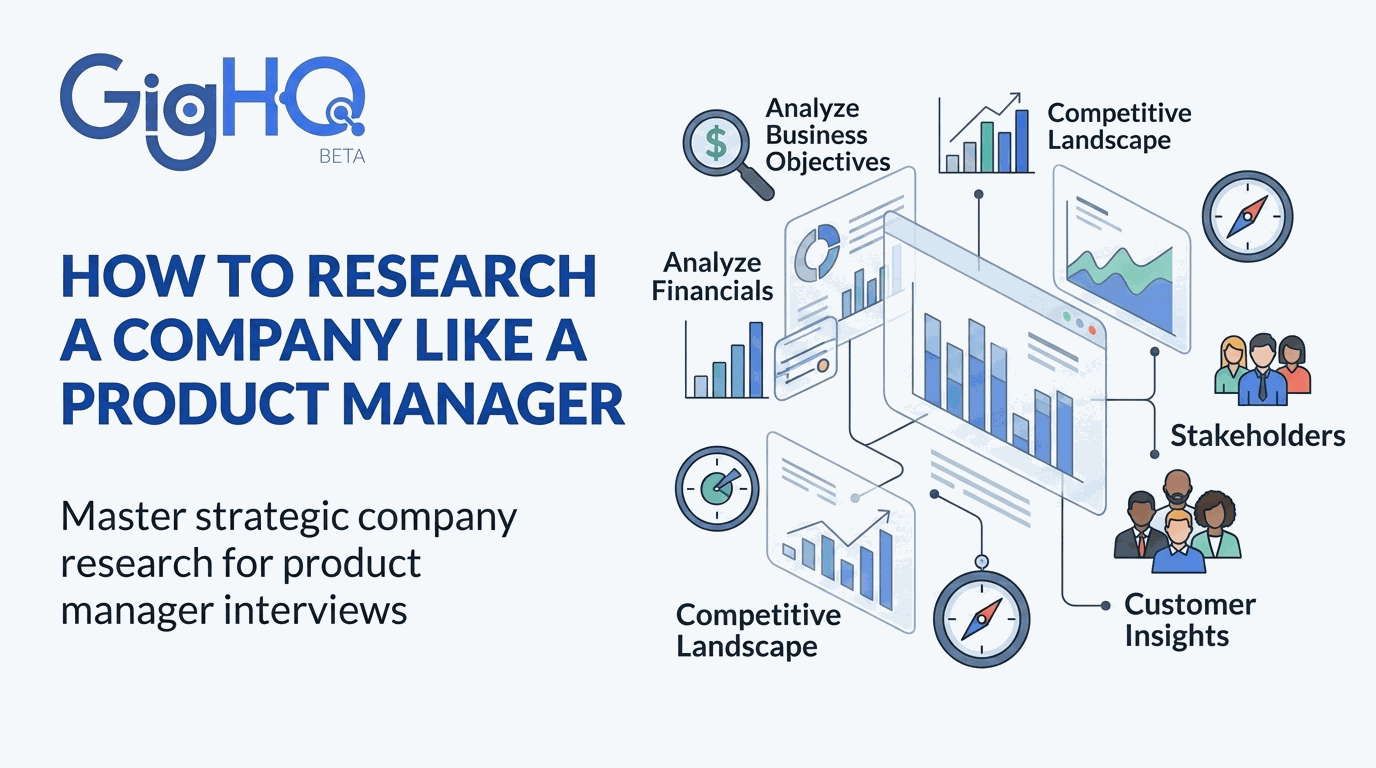
Understand the Business Objectives
Before you dive into product features, start at the highest level: what drives the company’s growth and profitability. For public companies, the investor relations site and recent SEC filings (10-K and 10-Q reports) are gold mines. Look for the CEO’s letter in the annual report. This often highlights strategic priorities, whether that’s international expansion, a new vertical, or doubling down on a particular technology. For startups, seek out recent press announcements, blog posts, or coverage on sites like Crunchbase to gauge funding milestones, valuation, and market focus.
Example: If the CEO writes, “Our fastest growth came from enterprise clients,” you can frame your interview answer around how your experience launching B2B features aligns with that push.
Map the Product Portfolio and Roadmap Signals
Next, inventory the company’s core products and services. Browse the product pages on their website, review feature release notes, and scan user reviews on platforms like G2 or Capterra. Pay attention to which features are most talked about. Are customers praising ease-of-use, integration capabilities, or customer support? This clues you into where the product team has invested energy and where opportunities remain.
Then, triangulate your findings with public “What’s New” communications: blog posts, help-center updates, even LinkedIn posts from product team members announcing launches. This composite view lets you infer the company’s near-term roadmap. When you reference these in an interview (“I saw your team rolled out feature X last quarter, and user feedback highlights Y as top request”), you demonstrate that you’re already thinking like a PM.
Decode the Competitive Landscape
A PM’s job is to steer a product toward a unique position in the market. That means understanding both direct competitors and adjacent alternatives. Start by listing the main players offering similar solutions. Use search queries like “[Company Name] alternative” or “[Industry] top tools” to uncover common comparisons. Then, for each competitor, note their key differentiators: pricing models, target customer segments, or standout features.
Pro Tip: Put together a simple competitive matrix in a spreadsheet—with rows for each competitor and columns for features, pricing, and customer sentiment—so you can articulate where the company you’re interviewing with wins or needs to improve. You might say, “Compared to Competitor A, your free-trial model is more flexible, but I see an opportunity in offering deeper analytics during the trial to drive conversions.”
Identify the Key Stakeholders
Product management is cross-functional by nature, so knowing who you’ll work with—and what motivates them—helps you tailor your “questions for us” and narrative. LinkedIn is your best friend here: filter the company’s “People” page by title, and note the names and backgrounds of product leadership (VP of Product, Head of PM, Chief Product Officer). Pay attention to their career trajectories. If they came from a larger corporation, they might value process and documentation; if they rose through a startup, they may prize agility and experimentation.
Once you’ve mapped the org, look for any public content those leaders have produced—podcasts, Medium articles, or conference talks. Quoting their perspectives shows you’ve done your homework and positions you as someone who’s already aligned with their vision.
Dive into Customer Insights
Great PMs build with empathy for end users. To get inside customers’ heads, scour user forums, social-media groups, and review sites for frequent praise or criticism. Notice repeated themes: do users struggle with onboarding complexity? Are they raving about a new mobile feature? You can also search for case studies or customer success stories on the company blog, which often spotlight how particular customers use the product to solve pain points.
Interview Application: “I read several reviews mentioning that onboarding is smooth but that reporting features feel limited. In my prior role, I led a project to revamp dashboards. Happy to share how we approached requirement gathering and rollout.”
Prepare Insightful, Data-Driven Questions
Armed with your research, craft questions that reflect strategic thinking and domain expertise. Rather than asking, “What’s the company culture like?” go deeper: “In last quarter’s earnings call, the CEO emphasized profitability over top-line growth. How does the PM team balance feature investment with monetization priorities?” Or, “I noticed your freemium tier drives 40% of new sign-ups. What metrics do you use to decide when and how to convert those users to paid plans?”
These kinds of questions demonstrate you’re thinking about trade-offs, metrics, and long-term strategy—not just surface-level features.
Synthesize Your Findings into Your Interview Narrative
Finally, transform your research into compelling stories. Whether you’re answering a “Why do you want to work here?” question or suggesting a roadmap improvement, weave in data points: market share stats, user feedback insights, or competitive gaps. Use concise language: set the context (“I saw your market penetration in EMEA grew 25% last year”), state your proposal (“I’d explore localized in-app tutorials to support that growth”), and close with the impact (“which could reduce support tickets by 15% and improve adoption”).
Practice Your Research-Informed Responses
Once you’ve gathered all this intelligence, the next step is practicing how to weave it naturally into your interview answers. Use SmartPrep to practice with questions tailored to product management roles—you can upload your resume along with the specific job description and company research you’ve gathered. This helps you rehearse incorporating your strategic insights into responses that feel natural rather than rehearsed.
Consider joining our Discord community to share your research approach with other PMs and get feedback on how effectively you’re connecting company insights to your own experience.
Research Resources and Tools
Need help organizing your research process? Check out our free job search tools which include templates for tracking company research, competitive analysis, and interview preparation across multiple opportunities.
For additional context on building a systematic approach to your entire job search, including research strategies, see our guide on building your job search marketing plan.
Conclusion
Researching a company like a product manager means going beyond the homepage and press releases. It requires methodical data gathering across financials, product usage, competition, leadership, and customer sentiment—and then using those insights to inform your interview dialogue. When you demonstrate this level of diligence, you signal that you’re not just a candidate, but a future PM who can chart clear product strategies from day one.
Next Steps
Return to the Ultimate Guide to Acing Your Job Interview for additional resources on frameworks, mistakes to avoid, and post-interview recovery tactics. Your thorough preparation will make you unforgettable.
Our Platform Tools:

ResumeRank
Scan your resume, get a score, fix what matters.

CoverGenius
Generate personalized, AI-powered cover letters in seconds.

OutreachAgent
Craft perfect networking and AI-powered follow-up emails with ease.

CareerCompass
Instantly generate a personal marketing plan from your resume to define your brand and attract the right opportunities.

Smart Prep
Simulates a real interview based on your resume and the job description, giving you real-time feedback to build your confidence.

Profile Spark
Optimize your LinkedIn profile to attract recruiters and opportunities.