This article is part of a larger guide on navigating LinkedIn as a Job Seeker. To read the full guide, click here.
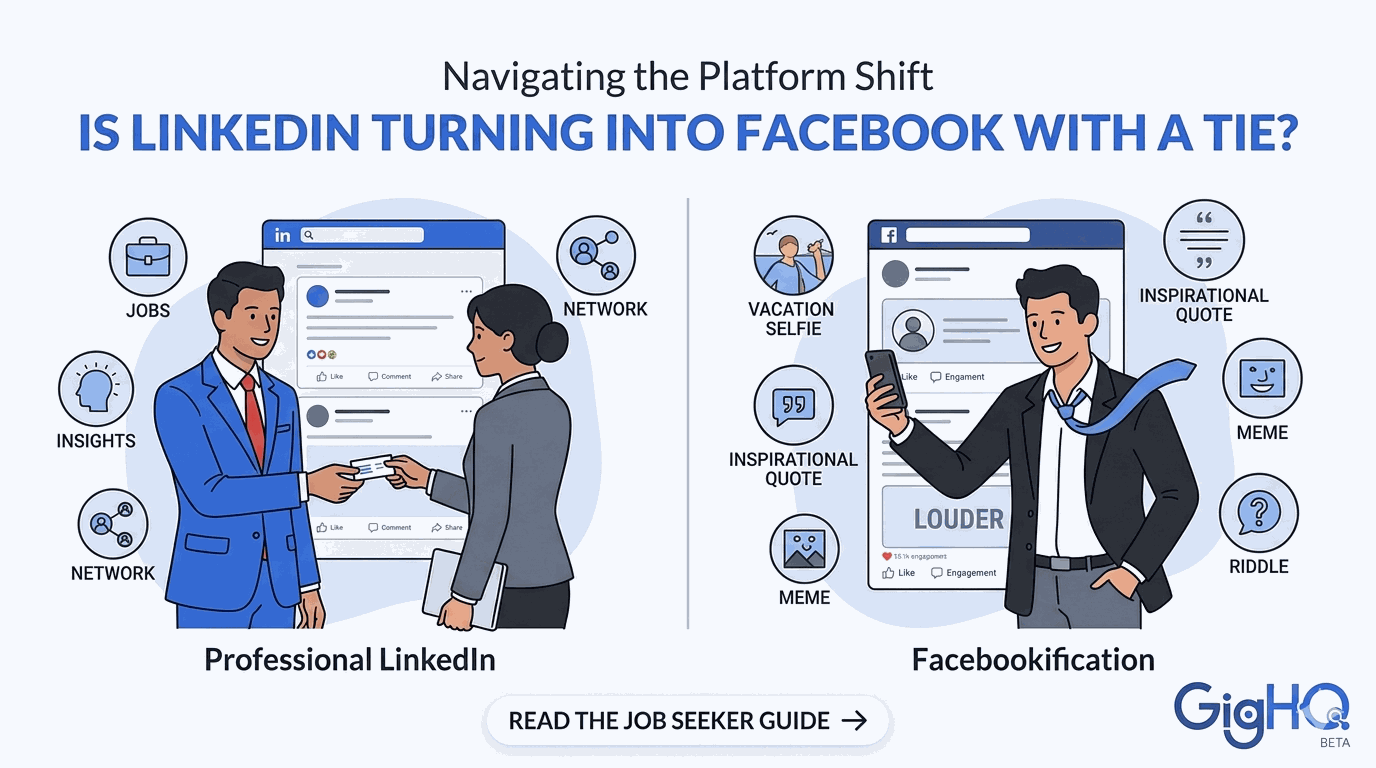
Scroll through your LinkedIn feed lately. What do you see? Alongside the job updates, industry news, and professional achievements, you’re increasingly likely to find personal stories of triumph over adversity, vacation selfies, debates on non-work topics, inspirational quotes bordering on cheesy, memes, and maybe even a riddle or puzzle.
It’s a shift many have noticed and are actively debating: Is LinkedIn, the platform built for professional networking, slowly morphing into Facebook 2.0?
For years, the distinction was clear. Facebook was for friends, family, and casual updates. LinkedIn was the digital office park – buttoned-up, focused on careers, networking, and industry insights. But the lines have blurred. Now, LinkedIn often feels like a “professional version of Facebook”, prompting discussions about whether this evolution is beneficial or detrimental to its core purpose.
What’s Driving the Shift?
Several factors seem to be fueling this “Facebookification”:
- Algorithm Changes: Like many social platforms, LinkedIn’s algorithms likely prioritize content that generates engagement (likes, comments, shares). Personal stories, emotional appeals, and even controversial takes often drive more interaction than dry industry reports.
- Blurring Work-Life Boundaries: The pandemic accelerated the merging of our personal and professional lives. Sharing more of our authentic selves online feels more natural to some now.
- Search for Community: As users pull back from other platforms perceived as more toxic or fragmented, some may be seeking a sense of community and connection on LinkedIn, leading to more personal sharing.
- Platform Encouragement: LinkedIn itself has introduced features and made changes that facilitate more social interaction, likely aiming to increase user time spent on the site and potential revenue. Some argue the platform was always intended as social media, just for professionals.
The Downside: Is LinkedIn Losing Its Professional Edge?
Many users lament this shift, arguing that LinkedIn is becoming a “dumpster fire” or “glorified Facebook” that dilutes its professional value. Concerns include:
- Distraction: The influx of personal, viral, or “cringey” content makes it harder to find relevant industry news, valuable professional insights, or even job postings.
- Reduced Utility: For those using LinkedIn primarily for job searching or serious professional networking, the platform feels less efficient and focused. Some feel it now caters more to “engagement farmers” or those building personal brands than those seeking core professional functions.
- Unprofessionalism: The sharing of overly personal details, strong political opinions, or content better suited for other platforms can blur professional boundaries uncomfortably.
- Inauthenticity: There’s a perception that much of the personal storytelling is performative, aimed at generating engagement or projecting a certain image rather than genuine connection.
The Potential Upside: Humanizing the Network?
Not everyone sees the trend as entirely negative. Arguments in favor include:
- Authenticity & Connection: Seeing the “human side” of professionals can foster deeper connections and build rapport beyond job titles and accomplishments.
- Employer Insight: Some employers appreciate seeing a candidate’s personality, hobbies, and values, which can help assess cultural fit beyond a resume.
- Personal Branding: Sharing personal experiences (relevant to one’s career journey) can be a powerful personal branding tool.
Navigating the Noise: Staying Focused on Your Goals
For job seekers and professionals trying to use LinkedIn effectively, this changing landscape presents a challenge. How do you leverage the platform’s reach without getting bogged down in irrelevant content or feeling pressured to overshare?
While the debate continues on whether LinkedIn should be more like Facebook, the reality is that managing your professional life requires focus. This is where tools designed specifically for career management, like GigHQ.ai , become invaluable.
LinkedIn’s feed might be evolving, but the core tasks of a job search – tracking applications, managing communications, tailoring documents, understanding response rates – remain critical. GigHQ.ai provides a dedicated, organized space to manage these essential activities, cutting through the social media noise.
- Stay Organized: Automatically track every application, attach specific resumes/cover letters, and see your entire pipeline at a glance, regardless of what’s trending in your LinkedIn feed.
- Focus on Data: Instead of relying on anecdotal feed content, use GigHQ.ai to track real metrics – which applications get responses, how long processes take, which sources are most effective.
- Maintain Professionalism: Keep your job search communications and notes centralized and professional within your GigHQ.ai dashboard.
Conclusion: Be Intentional
LinkedIn is undeniably becoming more social. Whether this is ultimately good or bad depends on your perspective and goals. The key is to use the platform intentionally. Curate your feed, be mindful of what you share (maintaining a level of professionalism is still advisable), and engage purposefully.
Most importantly, don’t let the platform’s evolution derail your core professional objectives. Use dedicated tools like GigHQ.ai to keep your job search or career management organized, efficient, and data-driven, ensuring you stay focused on what truly matters amidst the growing social chatter.
Our Platform Tools:

ResumeRank
Scan your resume, get a score, fix what matters.

CoverGenius
Generate personalized, AI-powered cover letters in seconds.

OutreachAgent
Craft perfect networking and AI-powered follow-up emails with ease.

CareerCompass
Instantly generate a personal marketing plan from your resume to define your brand and attract the right opportunities.

Smart Prep
Simulates a real interview based on your resume and the job description, giving you real-time feedback to build your confidence.

Profile Spark
Optimize your LinkedIn profile to attract recruiters and opportunities.