Marcus had the perfect final-round interview. Three weeks of preparation, five different interviewers, genuine excitement about the AI product management role. The CEO even said they were “very impressed.”
The rejection email was crushing: “We’ve decided to move forward with another candidate who has more direct experience in our specific vertical.“
That was six weeks ago. Marcus hasn’t applied anywhere since.
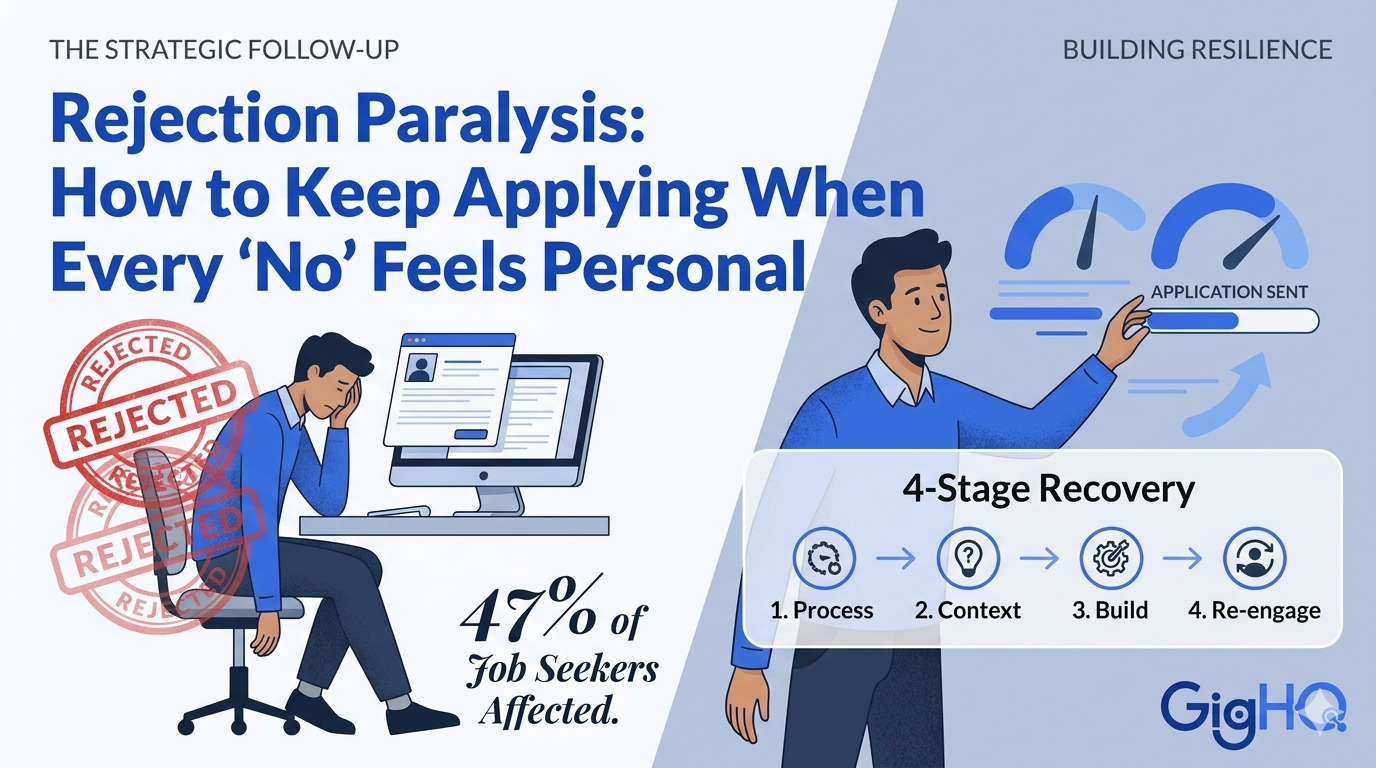
The brutal truth: After experiencing significant rejection, 47% of job seekers report feeling demotivated by rejection letters, and many stop applying altogether. But here’s what research reveals: the people who eventually succeed aren’t more talented—they’re better at processing rejection as market data rather than personal judgment.
The Rejection Reality Check
Before diving into recovery strategies, let’s establish what normal rejection actually looks like in today’s market:
- Popular roles receive 250+ applications within the first 48 hours
- Only 2-3% of applications result in interviews for competitive positions
- Even qualified candidates get eliminated for budget changes, internal hires, or timing issues that have nothing to do with their capabilities
When you understand these numbers, individual rejections stop feeling personal and start feeling statistical.
The 4-Stage Recovery System
If you’re currently frozen by rejection paralysis, here’s a systematic approach to get back to strategic applying:
Stage 1: Emotional Processing (Days 1-3)
Allow yourself to feel disappointed. Significant rejections, especially after extensive processes, represent real losses that deserve acknowledgment.
Write out the experience. Document what happened objectively, separating facts from interpretations. “They said I lacked specific vertical experience” is different from “I’m not qualified for senior roles.”
Reach out to one supportive person. Share the experience with someone who can provide perspective without trying to “fix” your feelings.
Stage 2: Market Context Building (Days 4-7)
Research the company and role further. Look up the person who got hired on LinkedIn. Often, you’ll discover they had very specific background that wasn’t obvious from the job posting.
Gather intelligence. Use tools like GigHQ’s company analysis to understand typical hiring patterns and competition levels for similar roles.
Calculate your actual response rate. If you’re getting 15-20% response rates, you’re performing well. If it’s below 10%, focus on application optimization rather than taking rejections personally.
Stage 3: Skill Building (Days 8-14)
Analyze feedback for patterns. If multiple employers mention similar concerns, there might be a genuine skills gap to address.
Strengthen one specific area. Choose one capability mentioned in rejections and spend a week building expertise through online courses, projects, or conversations with experts.
Practice interviewing. Record yourself answering common questions. Often, rejection paralysis comes from interview anxiety rather than qualification issues.
Stage 4: Strategic Re-engagement (Days 15+)
Start with lower-stakes applications. Apply to 2-3 roles that are interesting but not your absolute dream jobs. Success here rebuilds confidence for higher-stakes opportunities.
Develop a portfolio approach. Instead of falling in love with individual opportunities, maintain 5-7 active applications at different stages. This reduces the emotional impact of any single rejection.
Create a rejection tracking system. Start collecting rejections as data points. One study found that successful job seekers averaged 6-10 rejections before finding their role—rejection becomes progress toward your goal.
The Strategic Follow-Up Framework
Turn rejections into networking opportunities with this approach:
Within 24 hours: Send a brief thank-you note expressing continued interest in the company for future opportunities.
After 2 weeks: Connect with interviewers on LinkedIn with personalized messages referencing your conversation.
After 3 months: Reach out to see if similar roles have opened up. Many companies have multiple openings throughout the year.
This framework has led to job offers months after initial rejections, as hiring managers remember candidates who handled rejection professionally.
Quick Confidence Rebuilders
When rejection paralysis strikes, try these immediate confidence boosters:
Review past successes. Create a document listing your top 10 professional accomplishments with specific metrics and outcomes.
Seek low-pressure validation. Offer to help former colleagues with projects or provide advice in your area of expertise.
Update your LinkedIn activity. Share industry insights or comment thoughtfully on posts. Visibility reminds your network of your expertise.
Practice your value proposition. Record a 60-second elevator pitch. Being able to articulate your value confidently changes how you feel about applications.
The Mindset Shift That Changes Everything
Instead of thinking “Why did they reject me?” start asking “What can I learn from this market feedback?”
This isn’t about positive thinking—it’s about accurate thinking. Research shows that 70-85% of jobs are filled through networking rather than applications, meaning most rejections reflect process limitations rather than your qualifications.
When you start viewing rejections as market research rather than personal judgment, you can extract valuable intelligence: Which companies are genuinely hiring? What skills are most in demand? How can you improve your positioning?
Building Rejection Resilience
The goal isn’t to avoid rejection—it’s to process it effectively. Here’s how the most successful job seekers think about rejection:
“Each rejection brings me closer to the right opportunity.” With limited positions available, eliminating poor fits actually accelerates your path to good fits.
“This company might not be ready for me now.” Timing, budget, and internal priorities often drive decisions more than candidate quality.
“I’m gathering market intelligence.” Every interview teaches you something about industry trends, company cultures, or skills gaps to address.
Your 48-Hour Rejection Recovery Plan
Hour 1-2: Allow yourself to feel disappointed. Order your favorite food, call a supportive friend, or take a walk.
Hour 3-6: Write down exactly what happened and what you learned about the company, role, or market.
Day 1: Research the person who got the role (if possible) to understand the decision context.
Day 2: Apply to 2 new roles to remind yourself that opportunities exist beyond the one that didn’t work out.
Week 1: Build your job search marketing plan based on patterns from multiple rejections rather than emotional reactions to individual ones.
Remember: The most successful professionals aren’t those who avoid rejection—they’re the ones who process it strategically and keep moving forward. Every rejection is data, not judgment, and the next application might be the one that changes everything.
The goal isn’t to eliminate the sting of rejection—it’s to prevent that sting from paralyzing your progress toward the opportunities that will recognize and reward your capabilities.
Our Platform Tools:

ResumeRank
Scan your resume, get a score, fix what matters.

CoverGenius
Generate personalized, AI-powered cover letters in seconds.

OutreachAgent
Craft perfect networking and AI-powered follow-up emails with ease.

CareerCompass
Instantly generate a personal marketing plan from your resume to define your brand and attract the right opportunities.

Smart Prep
Simulates a real interview based on your resume and the job description, giving you real-time feedback to build your confidence.

Profile Spark
Optimize your LinkedIn profile to attract recruiters and opportunities.