Beyond the Career Map: Tracking Real-Time Transitions in the 2026 Labor Market
As highlighted in a recent Minnesota DEED article by Molly Ingram, "observed transitions"—the moves workers actually make—are the most valuable piece of evidence in career mapping. Yet, because of data silos and reliance on delayed wage records, it is the hardest data to acquire.

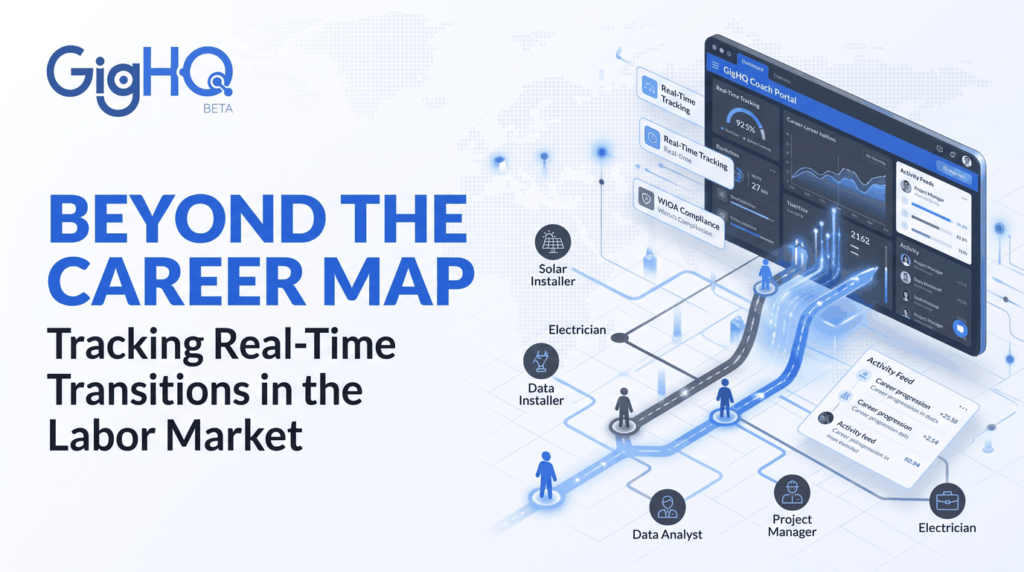
In workforce development, we spend a lot of time looking at where people could go. We rely on labor market information (LMI), O*NET data, and job-posting skills overlap to build career pathways. These tools are incredible for planning, but they leave a critical question unanswered: How do we track where workers actually go?
As highlighted in a recent Minnesota DEED article by Molly Ingram, “observed transitions”—the moves workers actually make—are the most valuable piece of evidence in career mapping. Yet, because of data silos and reliance on delayed wage records, it is the hardest data to acquire.
Simultaneously, workforce boards are under strict mandates to meet WIOA performance accountability metrics (such as those outlined by Wisconsin DWD and other state agencies). And with the recent NACE 2026 Environmental Scan indicating a massive shift toward “skills-based hiring” (used by almost 70% of employers), tracking outcomes has never been more complex—or more critical.
Here is how career centers and workforce development organizations can use modern AI tools to fix the broken marketplace through outcome data matching.
The Problem: Ladders vs. Lattices
Traditionally, career services relied on “career ladders”—straightforward, vertical progressions in fields like healthcare or traditional apprenticeships. But today’s economy looks more like a “career lattice.” Workers move sideways, cross into related occupations, and stack microcredentials.
When a student or client transitions from a Solar Installer to a Commercial Electrician, LMI says it’s possible. Employers say it’s expected. But until now, career coaches had no real-time way to see if it was observed. You usually don’t see those moves until a follow-up survey months later—if the client responds at all.
Achieving WIOA Compliance Through Real-Time Data
For organizations operating under WIOA Title I-B, performance accountability isn’t optional. Failing to meet adjusted levels of performance for Adult, Dislocated Worker, or Youth programs can result in sanctions or reorganization plans.
Relying on lagging indicators puts organizations at risk. You need to see where a pathway breaks down before it ends in a missed placement. Are clients getting interviews but failing to secure offers? Are they applying to roles that don’t match their skills?
The Solution: The GigHQ Coach Portal
Statewide data systems won’t change overnight, but your program-level tracking can. By shifting the AI narrative in career services, the GigHQ Coach Portal allows organizations to see real movement as it happens.
When your clients use GigHQ as their job search companion, the data syncs directly to your dashboard.
- Log Every Interaction: Clients track applications, job titles, and employers—giving you a granular view of their pipeline.
- Identify Stalls: See exactly who is getting interviews in a new field, who has applied widely without a response, and who needs an immediate check-in.
- Validate Pathways: Compare stated client goals to actual moves. If your cohort targets a specific transition but few get interviews, you have actionable evidence to bring to employer conversations.
Watch a demo of GigHQ in action here.
Embracing Skills-Based Hiring
With the NACE scan revealing that 95% of university leaders agree microcredentials will be vital, and employers increasingly prioritizing skills over degrees, candidates need help translating their experiences.
GigHQ’s built-in Career Journal helps clients log projects, wins, and challenges using a quantified framework (Scale, Result, Impact). This raw material is then fed into our AI-driven Smart Prep tools, helping clients articulate their skills in interviews.
If your team wants to see how clients and students actually move—not just where they could go—it’s time to upgrade your tracking.
Explore GigHQ for Workforce Development Organizations today.