If you’ve spent any time on LinkedIn over the past few years looking for resume advice, you’ve probably run into some version of this tip:
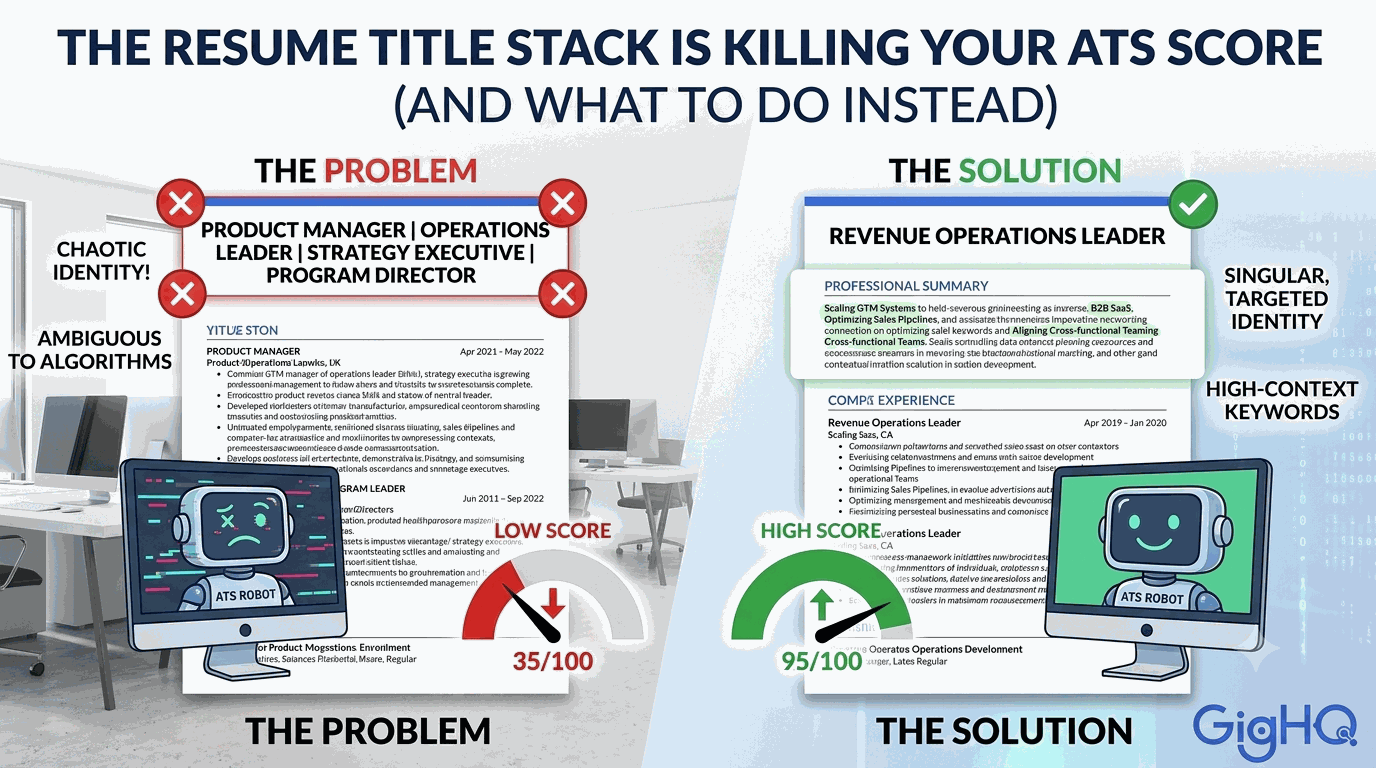
Put your target job title right at the top of your resume, bold it, and make sure it matches the job description exactly. If you’re versatile, stack a few of them together: Product Manager | Operations Leader | Strategy Executive.
On the surface, this sounds incredibly logical. You are front-loading keywords, signaling your versatility, and telling the reader exactly what you can do.
The problem? An Applicant Tracking System (ATS) doesn’t read your resume the way a human does. What looks like “versatility” to you registers as a chaotic identity crisis to an algorithm. In fact, that exact keyword stack at the top of your page might be the quiet culprit behind your lack of interview callbacks.
Here is why stacking keyword titles is secretly hurting your ATS score, and how a targeted Professional Summary—powered by the right strategy—can fix it.
How the ATS Actually Reads Your Resume
To understand why keyword stacking backfires, we have to look under the hood of parsing engines like Greenhouse, Lever, Ashby, or Workday.
When you upload your resume, the parser doesn’t admire your clean margins or visual hierarchy. It extracts a raw, linear stream of text—from top to bottom, left to right—to construct a candidate profile.
The first few lines carry disproportionate weight. They set the interpretive frame for the algorithm. When the very first substantive line the parser encounters is:
Product Manager | Operations Leader | Strategy Executive | Program Director
The algorithm processes this as: This candidate is four different things.
In the logic of an ATS optimizing for a highly specific role, being four different things is not a strength. It is a dilution of your professional identity. The system is trying to answer a binary question: Is this person a match for this specific job?
Your keyword stack answers with: I could be a few things, take your pick.
Ambiguity is the fastest way to get filtered out of the pipeline.
The Congruency Problem: Why Specificity Wins
The core of a successful application is congruency. Every single line of your resume should point in the exact same direction, telling a unified story about why you are the perfect fit for this specific role.
Stacking multiple disconnected titles does the exact opposite. It introduces competing identities before you’ve even established your value.
Think of it this way: the ATS wants to place you in a very specific box. Your job is to make it incredibly easy for the algorithm to do so. You win the match by proving you are exactly what the job description is asking for—not a multi-hyphenate generalist, but the precise answer to their immediate hiring problem.
Trying to be everything to everyone makes you highly irrelevant to anyone.
Why the Professional Summary Works Better
A professional summary solves the keyword problem that “title stacking” attempts to address, but it does so in a language the ATS actually understands.
Instead of delivering a disconnected list of nouns, a professional summary weaves those crucial keywords into a contextual narrative.
Parsers don’t just count keyword frequency anymore; modern systems look for context. They check whether your skills are surrounded by relevant terms that make sense for the role. A professional summary allows you to hit those high-value keywords naturally within three to five powerful sentences.
A high-performing professional summary accomplishes four things simultaneously:
- Establishes a Singular Identity: It positions you as one specific professional (e.g., “Revenue Operations Leader”), calibrated directly to the job post.
- Embeds Keywords in Context: It places your top skills inside active, outcome-oriented sentences.
- Appeals to the Human Recruiter: When a hiring manager finally opens your file, they read a compelling hook rather than a dry list of labels.
- Signals Target Intent: Ending your summary with a nod to the target company (e.g., “Excited to bring this experience to [Company] as they scale…”) instantly tells both the human and the machine that this document was custom-built for them.
Anatomy of a High-Impact Professional Summary
What does this look like in practice? A strong professional summary is short, punchy, and structured:
- Sentence 1 (Who you are): Direct, specific professional identity + years of experience + environment.
- Example: “Revenue operations leader with eight years of experience scaling GTM systems in high-growth B2B SaaS environments.”
- Sentence 2 & 3 (What you’ve done + keywords): Highlight 2-3 core competencies from the job description, woven into outcomes.
- Example: “Proven track record of optimizing sales pipelines and aligning cross-functional marketing and product teams to eliminate operational friction. Led system integrations that reduced data discrepancies by 40%.”
- Sentence 4 (The landing): Target the exact company you are applying to.
- Example: “Excited to bring this background in data-driven systems scaling to GigHQ as they build the future of workforce intelligence.”
What Happens to the Rest of Your Keywords?
If you remove the keyword title stack from the top of your resume, those terms don’t need to disappear. They simply migrate to more logical, authoritative places on your page:
- Your Professional Experience: Move high-level keywords into your bullet points, where they are backed by concrete achievements.
- A Dedicated Skills Section: Group technical and functional keywords (like SQL, Salesforce, or Agile Methodology) into a clean, ATS-scannable table or bulleted list at the bottom of your resume.
The Strategic Shift: Managing Tailored Resumes Without Burning Out
If your resume needs to be highly congruent and customized for every single job path, how do you manage that without turning job hunting into a grueling, 80-hour-a-week administrative nightmare?
The secret is not to rewrite your resume from scratch every time.
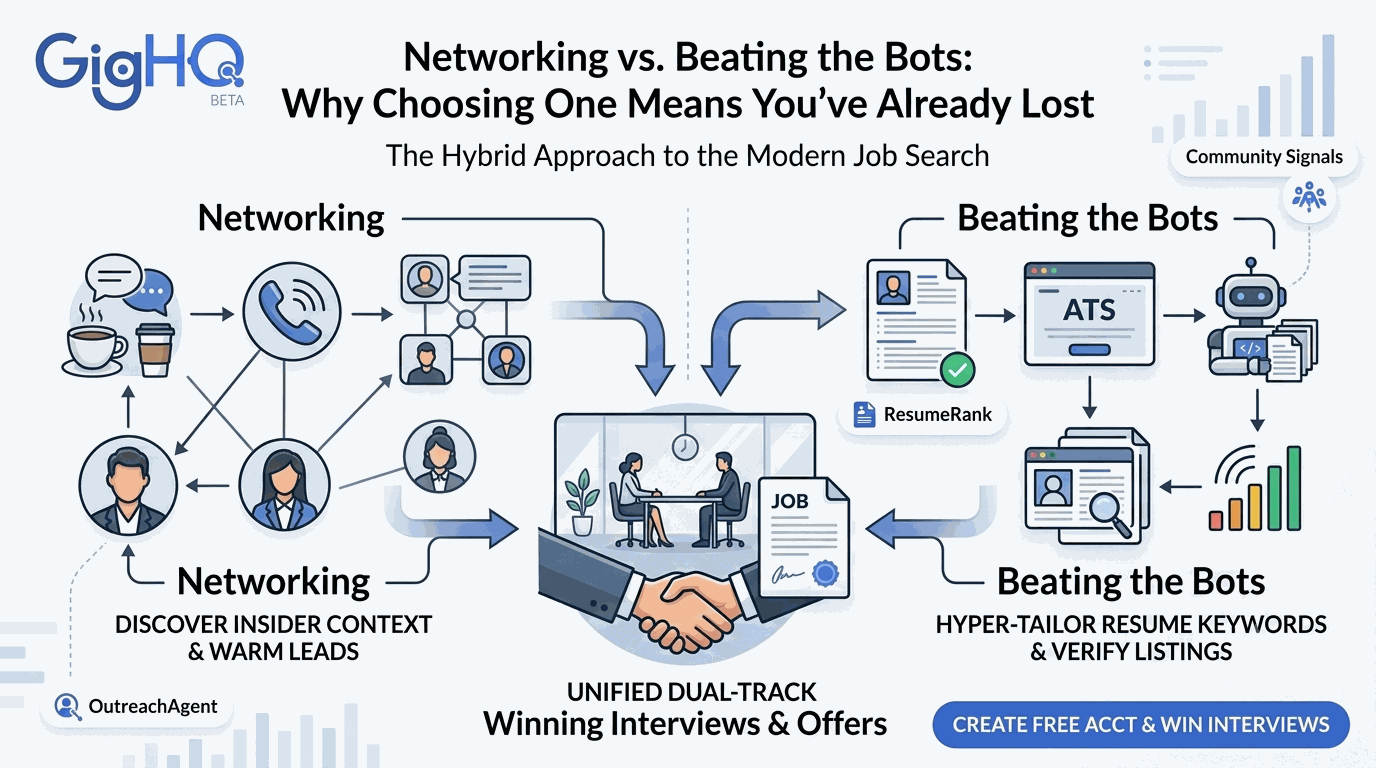
Instead, maintain one master resume per distinct career path. If you are open to both Product Management and Program Management, you should have two separate master resumes—each with its own dedicated professional summary, core keywords, and framed experience.
To make this customization seamless, you need an automated copilot. That’s why we built GigHQ.ai.
- Score Your Resume Instantly: Before you hit apply, run your resume through ResumeRank to see exactly how your summary and experience stack up against the job description. Our AI highlights missing keywords, analyzes your match score, and shows you exactly what gaps to fix.
- Research and Save on the Go: With the GigHQ Chrome Extension, you can evaluate jobs directly on LinkedIn, Indeed, and Workday. Get community signals on hiring activity, check if a job is a “ghost posting,” and save the role with one click.
- Stop Copy-Pasting Prompts: You don’t need to spend hours writing custom prompts for ChatGPT. Our deeply integrated AI tools allow you to generate customized resumes and cover letters directly from your dashboard. (Check out how to connect your data effortlessly in our MCP Server Setup Guide!)
The Bottom Line
The ATS does not reward versatility; it rewards fit.
The keyword title stack was designed for an older era of recruiting. In today’s algorithmic job market, it is nothing but noise. Switch to a singular, targeted professional summary that tells a coherent story of your expertise.
Our Platform Tools:

ResumeRank
Scan your resume, get a score, fix what matters.

CoverGenius
Generate personalized, AI-powered cover letters in seconds.

OutreachAgent
Craft perfect networking and AI-powered follow-up emails with ease.

CareerCompass
Instantly generate a personal marketing plan from your resume to define your brand and attract the right opportunities.

Smart Prep
Simulates a real interview based on your resume and the job description, giving you real-time feedback to build your confidence.

Profile Spark
Optimize your LinkedIn profile to attract recruiters and opportunities.