The American labor market is undergoing a seismic structural shift. For decades, the four-year degree was the undisputed “gold standard” of career entry. Today, that hegemony is fracturing. According to the 2026 NACE Environmental Scan, the labor market for recent college graduates has flattened, while a staggering 45% of bachelor’s degree holders remain underemployed six months after graduation.
In response, we’ve seen an explosion of short-term credentials, micro-credentials, and bootcamps. From IT certifications to nursing certificates, these programs promise a faster, cheaper path to economic mobility. But for states and Workforce Innovation and Opportunity Act (WIOA) administrators, this “skills-first” revolution creates a massive accountability crisis:
How do you prove which credentials actually “spend” in the real world?
The “Train and Pray” Problem
Under current WIOA and Workforce Pell mandates, programs must demonstrate verifiable proof of employment success—often requiring a 70% placement threshold to maintain funding eligibility.
However, most administrators are forced to rely on “First Destination Surveys” (FDS) or manual self-reporting. These methods are notoriously flawed:
- Lagged Data: Outcomes data often arrives 6–12 months too late to influence policy or help struggling students.
- Low Response Rates: Relying on alumni to self-report their employment status results in incomplete cohorts and anecdotal “evidence.”
- The Black Box: Administrators lack visibility into the process. They know if someone got a job, but they don’t know if the specific credential was the signal that actually triggered the hire.
Defining “Credentials of Value” Through Empirical Data
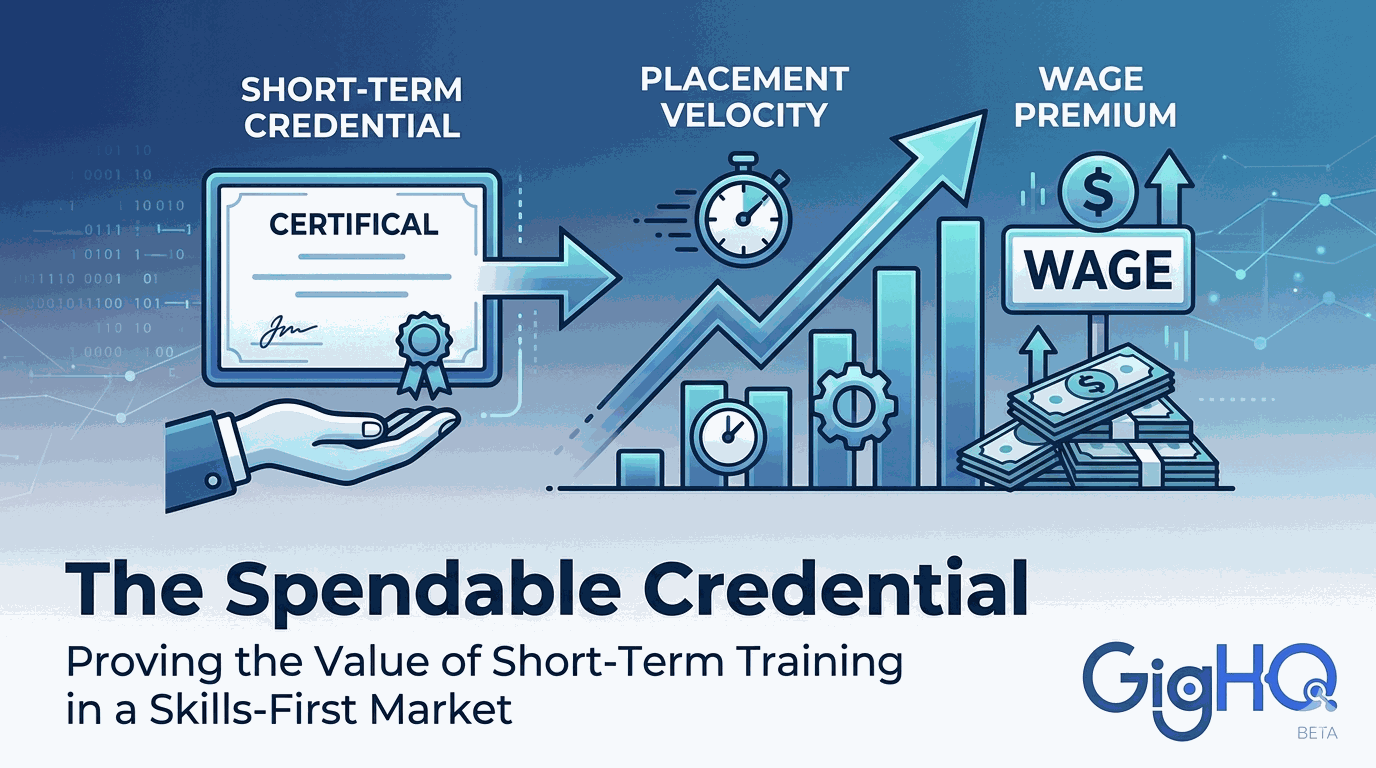
To build a truly outcomes-driven Eligible Training Provider List (ETPL), states need more than graduation rates. They need real-time metrics on Wage Premium and Placement Velocity.
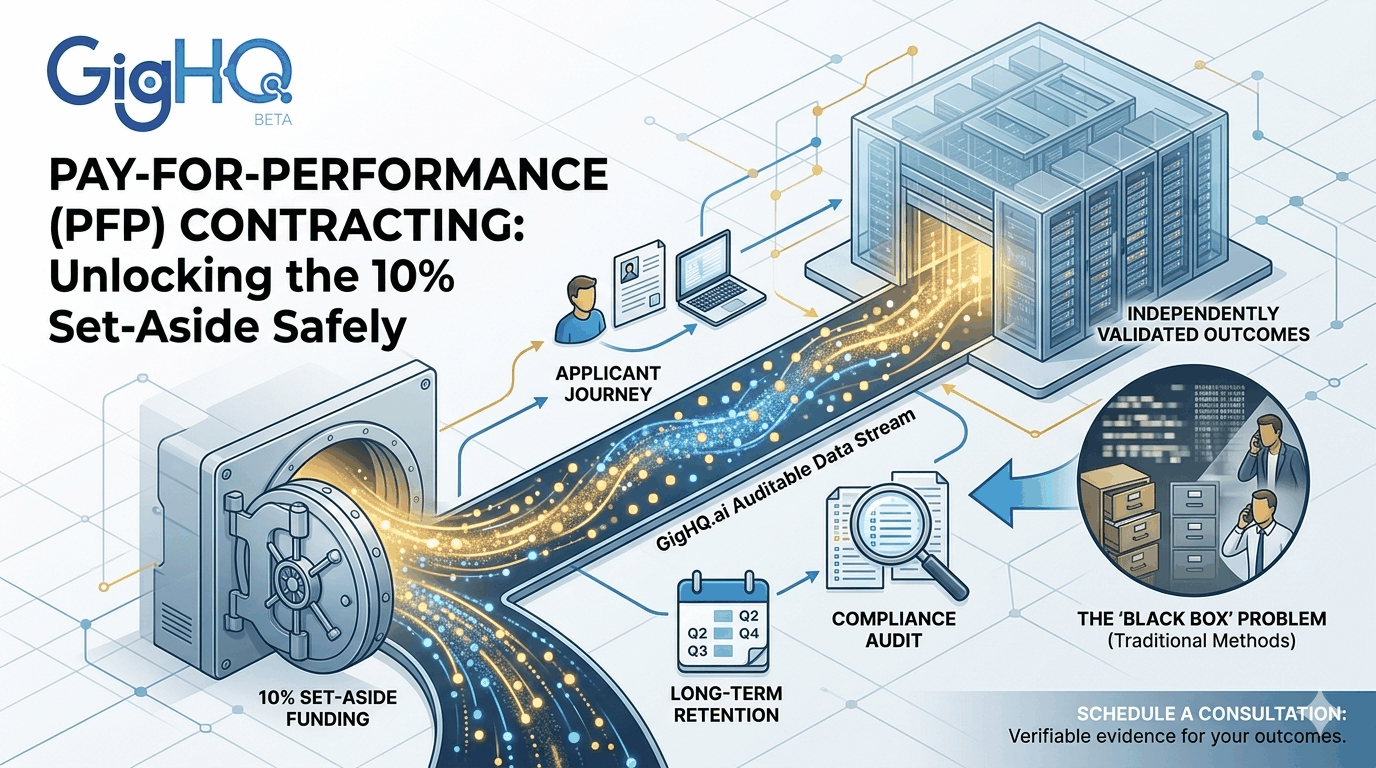
At GigHQ.ai, we’ve built the data layer that converts the chaotic job search into a structured, auditable stream. By tracking thousands of applications through our community of job seekers via the Job Market Radar, we provide states with two critical indicators:
1. Placement Velocity
“Placement Velocity” measures the speed at which a specific certification moves a candidate from application to offer. In a market where a new graduate typically takes six months to find a role, identifying credentials that cut that time in half is vital for fiscal efficiency. GigHQ tracks the average time spent in “Interviewing” or “Offer” stages for holders of specific certifications, identifying which programs provide the highest “hiring momentum.”
2. The Real-Time Wage Premium
While many studies, such as those from the Strada Institute for the Future of Work, show that short-term training can lead to a 4.5% inflation-adjusted pay increase (roughly $2,000/year), these figures are often retrospective.
GigHQ tracks the “Offer Wages” associated with specific skills and credentials in real-time. This allows WIOA administrators to see exactly how much more an employer is willing to pay for a candidate with a specific cybersecurity certification versus a general IT background today, not last year.
Building an Outcomes-Driven ETPL
States like Texas (via HB 8) are already leading the way by prioritizing “Credentials of Value”—those where the economic benefits explicitly exceed the cost of the training. GigHQ supports this mission by providing:
- Passive Employment Evidence: Our platform automatically logs when a user receives a job offer through their dedicated @gighq.ai email, creating an objective, auditable data point for WIOA compliance.
- Gap Analysis: We map the skills taught in training programs against the live demand signals from employers. If a bootcamp is teaching a programming language that has a declining “Placement Velocity” in the current quarter, administrators can intervene before more taxpayer dollars are spent.
- Longitudinal Stability: By tracking career progression through our Career Copilot, we can measure if a short-term credential leads to “Retention with the Same Employer”—a primary indicator of performance under WIOA Section 116.
The Future: From “Reporting” to “Verifying”
The “skills-first” market shouldn’t be a guessing game for the government. By moving beyond unreliable surveys and embracing real-time outcome matching, we can ensure that every taxpayer-funded credential is a “spendable” asset that leads to a high-paying, stable career.
Ready to see how GigHQ.ai can transform your workforce outcomes?
Explore Our Platform Tools:
- ResumeRank: See how your current credentials match job descriptions.
- CareerCompass: Map your skills-first career path.
- CoverGenius: Generate AI-powered cover letters that highlight your certifications.
Our Platform Tools:

ResumeRank
Scan your resume, get a score, fix what matters.

CoverGenius
Generate personalized, AI-powered cover letters in seconds.

OutreachAgent
Craft perfect networking and AI-powered follow-up emails with ease.

CareerCompass
Instantly generate a personal marketing plan from your resume to define your brand and attract the right opportunities.

Smart Prep
Simulates a real interview based on your resume and the job description, giving you real-time feedback to build your confidence.

Profile Spark
Optimize your LinkedIn profile to attract recruiters and opportunities.