The shift to remote and hybrid work has opened doors for many early-career professionals. Offering flexibility, broader access to opportunities, and new ways to learn. According to Handshake’s “Big Dreams, Bigger Challenges” report, 75% of Gen-Z candidates say flexible work arrangements are a top priority, and nearly two-thirds worry that stepping away from an office could hinder their growth. If you’re just starting out, it’s essential to understand not only the benefits but also the pitfalls of working off-site, and to put guardrails in place so you can flourish, wherever your desk is.
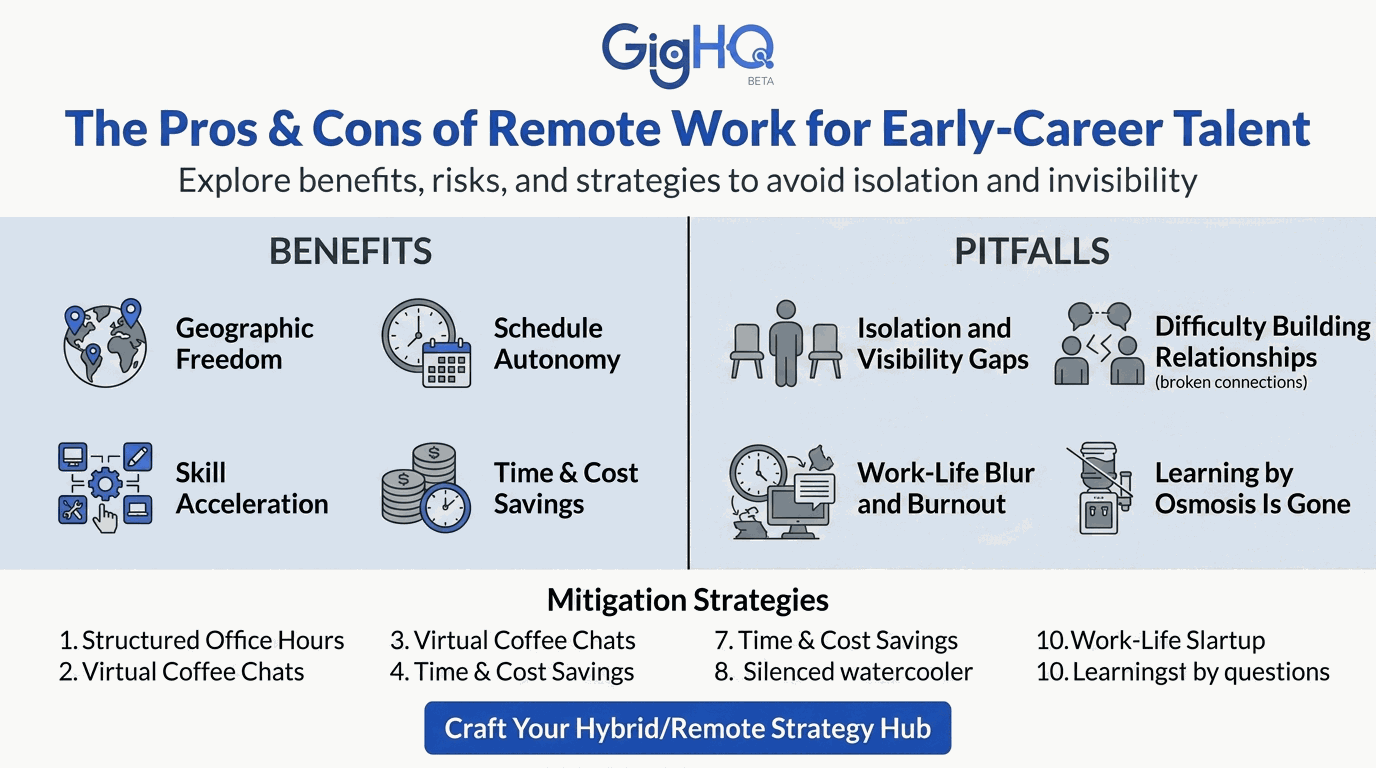
Benefits of Remote Roles
- Geographic Freedom
You’re no longer tied to a specific city or commute. Early in your career, this means you can chase the right opportunity, whether it’s with a startup across the country or an international team half a world away, without uprooting your life. - Schedule Autonomy
Remote work often comes with more control over your daily routine. Want to tackle deep-focus work early in the morning or split your day around personal responsibilities? Remote roles frequently let you shape your hours, improving work-life balance and accommodating different productivity rhythms. - Skill Acceleration
Working remotely accelerates your digital fluency. From mastering video-conference tools to leading async written updates, you quickly build competencies that are in high demand. You’ll learn to communicate clearly in writing, self-manage tasks without constant supervision, and collaborate across time zones, skills that will serve you for the rest of your career. - Cost and Time Savings
No daily commute means saved time and money, things you can reinvest in personal development, side projects, or simply more rest. That extra hour each way can translate into an online course, mentorship session, or dedicated work-life recharge.
Pitfalls to Watch
- Isolation and Visibility Gaps
Without in-person interactions, you risk feeling disconnected. It’s easier to be “out of sight, out of mind” when you’re not popping by a manager’s desk or chatting in the break room. That can impact your access to informal mentorship, spontaneous collaboration, and recognition for your contributions. - Difficulty Building Relationships
Early career stages hinge on relationships—peers who share tips, senior colleagues who open doors. Virtual introductions and DMs can feel awkward or transactional compared to organic hallway conversations, making it harder to establish rapport. - Work-Life Blur and Burnout
When home is also your office, setting boundaries becomes a daily challenge. Without a commute or physical “leaving” ritual, you may find yourself answering messages late into the evening or working weekends, leading to stress and burnout. - Learning by Osmosis Is Gone
In-office environments let you overhear discussions, observe workflows, and pick up knowledge casually. Remote roles require you to be more deliberate: if you don’t schedule learning opportunities, you may miss out on critical informal training.
Mitigation Strategies
1. Create Structured “Office Hours”
Block out core hours on your calendar during which colleagues can schedule meetings or check-ins. Publicize these windows in your status messages so you remain visible while protecting focused work time.
2. Set Up Virtual Coffee Chats
Schedule regular 15-minute one-on-ones with peers and mentors. Rotate through a “coffee chat roster” so you get exposure across different teams. These informal check-ins build rapport and keep you top of mind.
3. Carve Out a Dedicated Workspace
Whether it’s a home office nook or a co-working desk, having a physical boundary signals to your brain—and your network—that you’re “at work.” When the day ends, step away from that space to psychologically disconnect.
4. Document Your Wins Publicly
Use a shared channel or weekly update email to highlight your achievements. A simple “This week I…” note ensures stakeholders see your contributions, even if they never walk by your desk.
5. Plan Intentional Learning Sprints
Schedule short, focused sessions for skill building—pair programming, online tutorials, or group “show & tell” demos. Treat these like meetings: put them on your calendar, invite a peer, and stick to the agenda.
A Balanced Approach
Remote work offers early-career talent unmatched flexibility and growth potential, but it requires proactive effort to avoid isolation, lost visibility, and burnout. By combining structured routines, intentional relationship-building, and clear boundaries, you can enjoy the best of both worlds: the autonomy of remote roles and the mentorship and camaraderie often found in an office.
What’s Next?
Dive into our full Hybrid/Remote Career Strategy hub to explore:
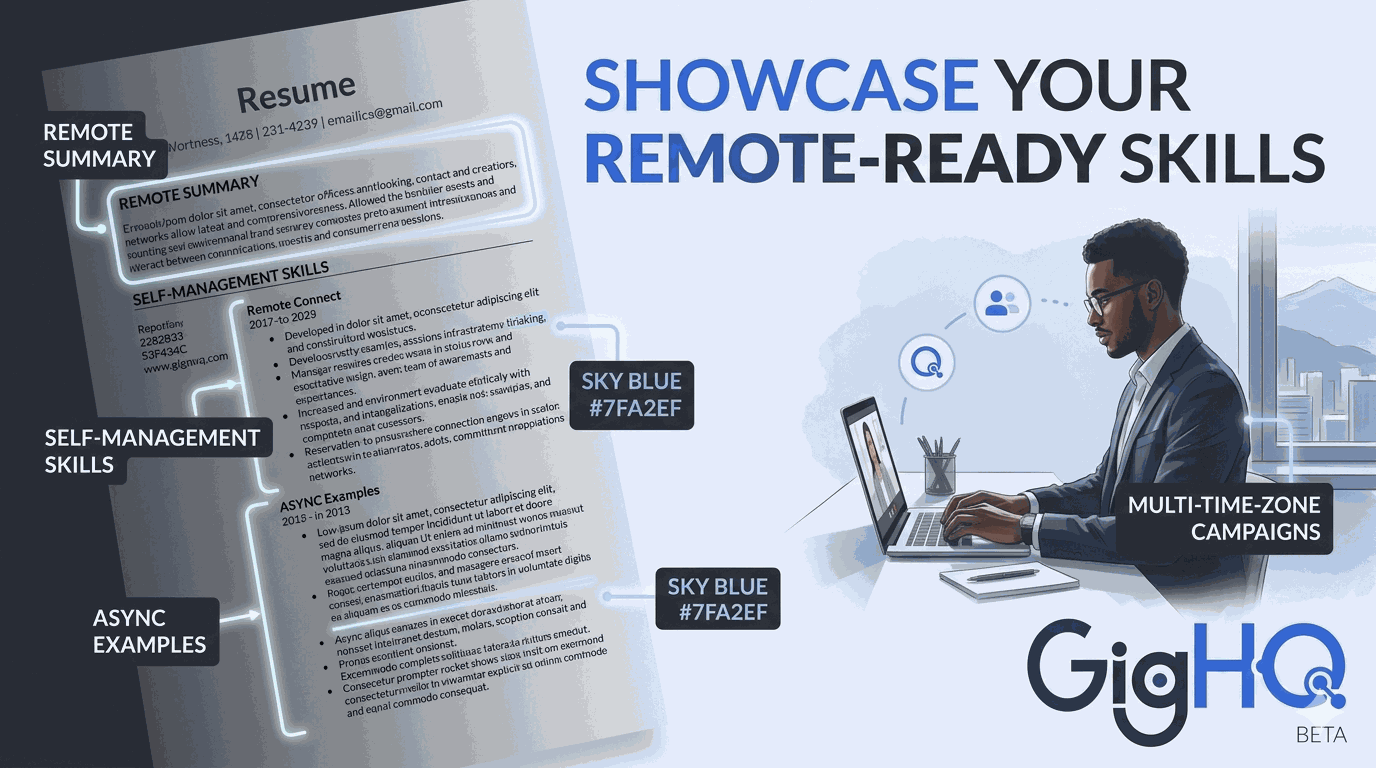
- How to showcase remote-ready skills on your resume
- Networking tactics for virtual environments
- Self-driven learning routines when your team is distributed
- Best practices for maintaining work-life balance in hybrid roles
Start here: Crafting Your Hybrid/Remote Career Strategy Hub
Our Platform Tools:

ResumeRank
Scan your resume, get a score, fix what matters.

CoverGenius
Generate personalized, AI-powered cover letters in seconds.

OutreachAgent
Craft perfect networking and AI-powered follow-up emails with ease.

CareerCompass
Instantly generate a personal marketing plan from your resume to define your brand and attract the right opportunities.

Smart Prep
Simulates a real interview based on your resume and the job description, giving you real-time feedback to build your confidence.

Profile Spark
Optimize your LinkedIn profile to attract recruiters and opportunities.