Even the most prepared candidates can walk out of an interview feeling deflated—whether it was a question you fumbled, an unexpected curveball, or simply a mismatch in chemistry. Left unaddressed, that sting can turn into anxious self‐doubt and wasted energy. Learning to reset quickly, extract lessons, and move forward not only protects your confidence but actually improves your performance in the next round. Here’s a compassionate, step-by-step playbook to decompress, debrief, and refocus after any interview setback.
Part of the Ultimate Guide to Acing Your Job Interview.
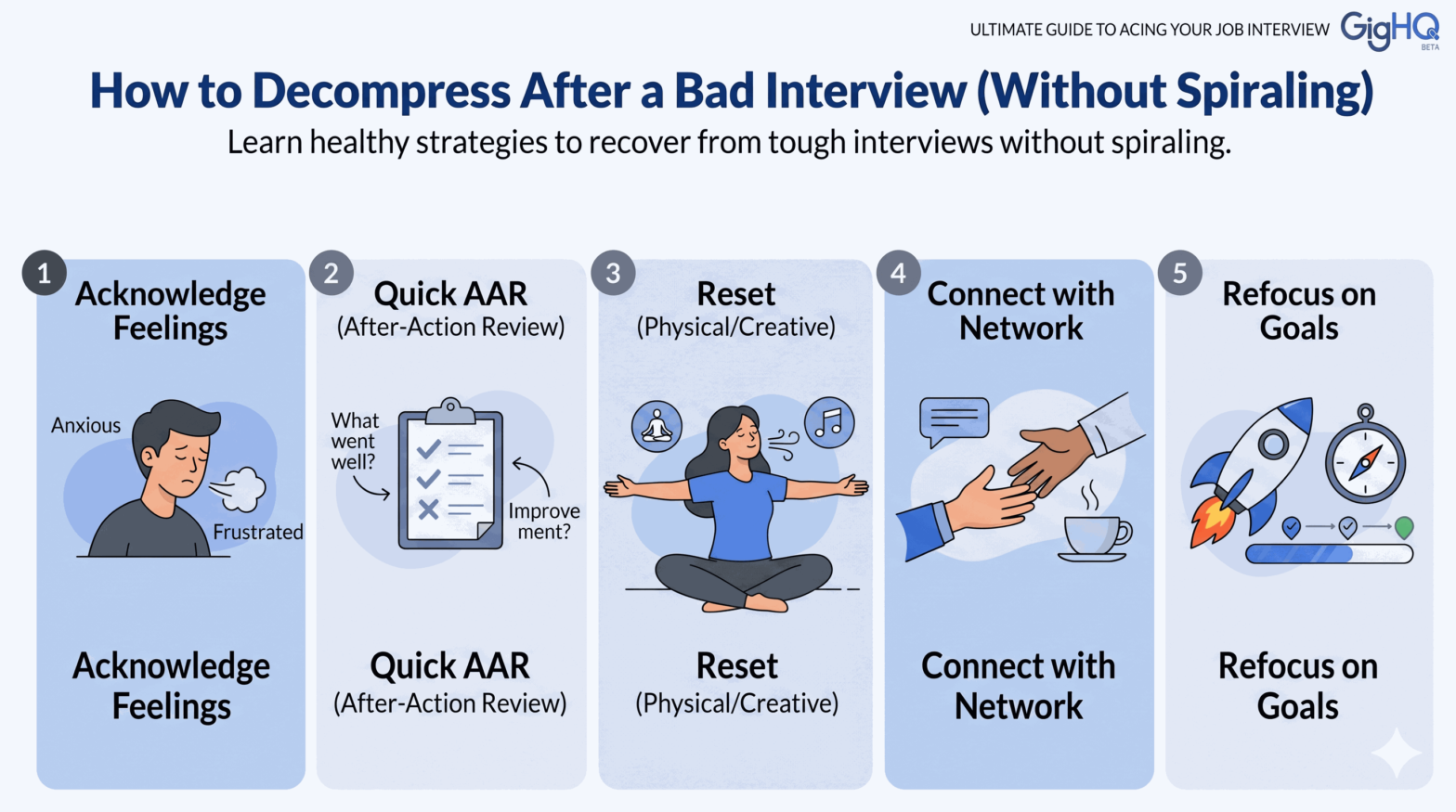
1. Acknowledge and Name Your Feelings
It’s tempting to shove disappointment under the rug and “push on,” but unacknowledged emotions tend to resurface later, often at the worst possible time. The moment you leave the call or the office, take two minutes to sit quietly and label what you’re feeling—”frustrated,” “embarrassed,” “angry,” or “deflated.” Naming your emotion helps you externalize it instead of letting it stew in your head. If you’re comfortable, jot a quick note in your phone or a journal:
“I felt anxious when the technical question caught me off‐guard, and I’m annoyed that I blanked on my own project details.”
2. Do a Quick “After-Action Review”
Treat each interview like a mini project. Within 24 hours, run a brief retrospective:
What went well? Remember even small wins. Perhaps you framed one answer particularly clearly or maintained steady eye contact.
What could be improved? Identify one or two specific areas—maybe it was a case‐study question, a cultural‐fit scenario, or your pacing.
Action Step for Next Time Turn your insights into a concrete practice goal. For example: “Tomorrow I’ll rehearse that case question three times using STAR structure,” or “I’ll record myself answering behavioral prompts to work on pacing.”
Document this AAR in your notes. Seeing a clear list of wins and growth areas keeps you from spiraling into vague regrets and guides your prep for the next opportunity.
3. Engage in a Brief Physical or Creative Reset
Your brain and body are tightly linked—mental stress often shows up as tight shoulders or a racing heart. Commit to a 10- to 15-minute reset ritual that interrupts that stress cycle:
Movement Break: Go for a quick walk around the block, do a short yoga flow, or dance to your favorite song.
Creative Outlet: Sketch, doodle, free‐write, or play a short piece of music. Shifting to an unrelated creative task helps contextualize the interview as just one moment in your day.
Mindfulness Pause: Close your eyes and follow a guided three-minute breathing exercise (apps like Headspace or simple YouTube clips work).
These resets give your nervous system a chance to settle before you plunge back into application mode.
4. Reconnect with Your Support Network
Isolation can magnify self‐critical thoughts, so reach out to a trusted peer or mentor. This isn’t the moment for anonymous ranting—it’s a quick, targeted check-in:
“Hey [Name], I just had an interview that didn’t go well—I blanked on X question. Could I get 10 minutes on your calendar tomorrow to run through that scenario?”
A fresh perspective often reveals that the setback was far less dramatic than it felt in the moment. If you’re part of our Discord community, drop in and get advice from fellow job seekers who’ve been there and bounced back.
5. Refocus on Your Long-Term Goals
A single interview is one data point in a multi-month search. This perspective becomes especially important if you’re experiencing broader job search challenges—sometimes what feels like a personal failure is actually part of a longer journey that requires sustained effort and resilience.
Anchor yourself by reminding yourself of the bigger picture:
Update Your Tracker: Log the outcome in whatever system you use—our free tracking tools can help organize your progress. Date, company, stage reached, debrief notes.
Review Your Pipeline: Identify which applications or networking follow-ups are moving forward.
Plan Your Next Moves: Block time this week for targeted prep on the areas you flagged in your AAR. Consider using SmartPrep to practice the specific question types that tripped you up, with scenarios tailored to your background and target roles.
By shifting from reactive angst to proactive planning, you regain a sense of control and momentum.
Building Interview Resilience Over Time
If you find yourself frequently struggling with interview disappointment, you’re not alone. Many job seekers experience this as part of what we call “comparison paralysis” or the emotional ups and downs of extended job searches. The key is developing systems that help you process setbacks constructively rather than letting them derail your confidence.
Remember: interviewing is a skill that improves with practice, and every “disappointing” interview is actually data that makes you better prepared for the next one.
Conclusion
A “bad” interview isn’t a brick wall—it’s a stepping stone. By pausing to acknowledge your feelings, conducting a focused after-action review, resetting your mind and body, leaning on supportive peers, and refocusing on your goals, you transform disappointment into actionable insight. With each cycle of practice and reflection, you’ll interview not just more often, but more confidently and effectively.
Next Steps
Explore our full Ultimate Guide to Acing Your Job Interview for additional tactics.
Share your after-action insights in our Discord for peer feedback.
Keep tracking, keep learning, and keep moving forward—you’ve got this.
Our Platform Tools:

ResumeRank
Scan your resume, get a score, fix what matters.

CoverGenius
Generate personalized, AI-powered cover letters in seconds.

OutreachAgent
Craft perfect networking and AI-powered follow-up emails with ease.

CareerCompass
Instantly generate a personal marketing plan from your resume to define your brand and attract the right opportunities.

Smart Prep
Simulates a real interview based on your resume and the job description, giving you real-time feedback to build your confidence.

Profile Spark
Optimize your LinkedIn profile to attract recruiters and opportunities.