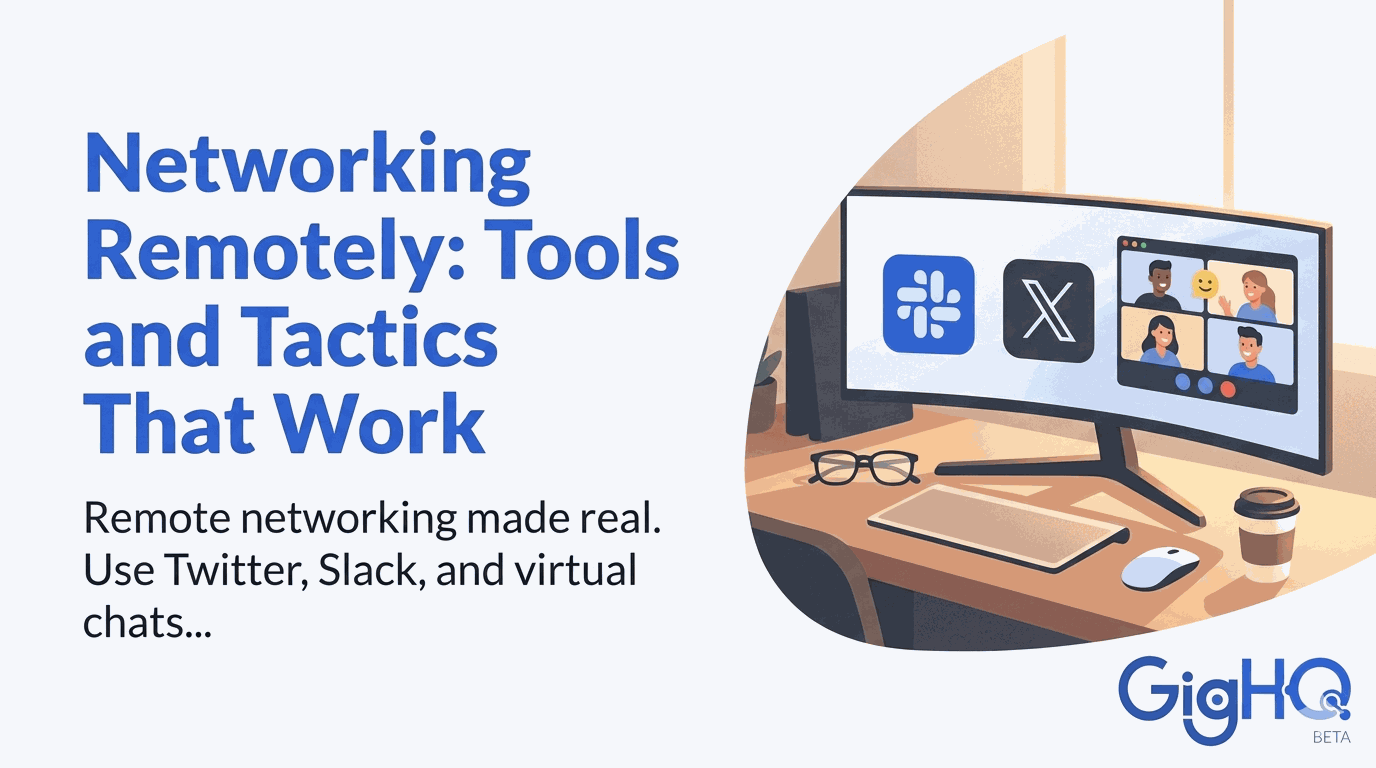
Building your professional network used to hinge on hallway chats, industry meetups, and office happy hours. In a distributed world, those spontaneous “water-cooler” moments are gone, but the opportunity to build deep, meaningful connections has never been greater. Here’s how to swap elevator pitches for asynchronous playbooks, and forge relationships that open doors no matter where you log in.
The New Networking Landscape
- No More Water-Cooler: You can’t bump into a mentor by the coffee machine, so you must be intentional about outreach.
- Wider Reach: Virtual communities let you connect globally, not just locally, if you know where to look.
- Asynchronous Rhythm: Messages, forums, and DMs replace in-person meetups. You need tactics to cut through digital clutter.
1. Choose the Right Platforms
Slack & Discord Communities
- Why? Niche channels (e.g., #product-management, #edtech-careers) attract peers and experts.
- How to Join: Browse lists like “Remote Startups on Slack” or ask in Twitter threads for active invites.
- Quick Win: Introduce yourself in the welcome channel: your role, what you’re learning, and one question you have.
- Bonus!: You don’t have to wait to join a community you like after you get the job. Why not try our Discord?
Twitter (X) Chats & Lists
- Why? Twitter is the go-to for live conversations and thought leadership.
- Tactic: Follow and engage with industry hashtags (#RemoteWork, #CareerAdvice).
- Quick Win: Create a “Career Circle” Twitter List of 20 people whose insights you value. Engage with one of their tweets daily.
Virtual Events & Meetups
- Why? Platforms like Hopin, Meetup | Find Local Groups, Events, and Activities Near You , or Eventbrite host targeted events. Often free.
- Tactic: Register early, prepare two questions, and post a follow-up “thank you” in the event chat.
- Quick Win: After a panel, message one speaker: “Loved your point on X, can you share a resource to learn more?”
2. Master the Outreach Playbook
Cold outreach can feel awkward, but a clear structure makes it feel human.
The 4-Part DM Framework
- Greeting & Context: “Hi [Name], I saw your talk on async collaboration…”
- Value Offer: “I recently wrote a two-page summary on async tools that teams swear by.”
- Clear Ask: “Would you be open to a 15-minute call to compare notes?”
- Friendly Close: “No worries if your calendar’s full, thanks for inspiring my work!”
Cadence
- Day 1: Send initial DM
- Day 3–5: Brief follow-up (“Just checking in. No rush!”)
- Day 10–14: Final note, offering to share a resource instead of a call
3. Give First, Then Ask
Generosity builds goodwill in virtual spaces.
- Answer Questions: In Slack/Discord, if someone asks how to set up Notion, share your template.
- Share Resources: Post articles, tools, or template links that helped you.
- Highlight Others: Tweet a brief shout-out (“Just saw @JaneDoe’s guide to async meetings—game changer!”).
Every helpful post cements your reputation as a contributor, not a taker.
4. Organize Your Networking in Batches
Treat networking like a sprint:
- Map Your Targets: List 10–15 people or communities you want to engage with this month.
- Block “Network Hours”: Two 30-minute sessions per week, no multitasking.
- Log Every Interaction: Note date, platform, topic, and follow-up action in your tracker (or a simple spreadsheet).
Batching prevents scattershot DMs and ensures consistent progress.
5. Turn Conversations into Relationships
A single DM or event introduction isn’t enough. Nurture your connections:
- Follow-Up Summaries: After a call, send a bullet-point recap with next steps or promised resources.
- Periodic Check-Ins: Every 4–6 weeks, share a quick update (“Just wrapped up X project—thought you’d find it interesting”).
- Offer Mutual Introductions: If two contacts could benefit from knowing each other, make the intro.
These practices transform cold contacts into a thriving, supportive network.
Conclusion & CTA
Remote networking demands strategy and persistence, but it unlocks a world of opportunities. By choosing the right platforms, structuring your outreach, giving value first, batching your efforts, and nurturing relationships over time, you’ll build a network that spans geographies and industries.
Next Steps:
- Pick one platform (Slack, Twitter, or virtual meetups) and make your first introduction this week.
- Use the 4-Part DM Framework for your outreach.
- Log every interaction for visibility on progress.
Ready to systematize your network growth? Head back to the Hybrid/Remote Career Strategy Hub or dive into Spoke #4: Managing Distributed Learning & Growth next.
Our Platform Tools:

ResumeRank
Scan your resume, get a score, fix what matters.

CoverGenius
Generate personalized, AI-powered cover letters in seconds.

OutreachAgent
Craft perfect networking and AI-powered follow-up emails with ease.

CareerCompass
Instantly generate a personal marketing plan from your resume to define your brand and attract the right opportunities.

Smart Prep
Simulates a real interview based on your resume and the job description, giving you real-time feedback to build your confidence.

Profile Spark
Optimize your LinkedIn profile to attract recruiters and opportunities.