Here’s a reality that might surprise you: the median unemployment duration in the United States is 20.6 weeks, i.e, over 5 months.
Yet most people start their job search expecting results within weeks, not months.
This gap between expectation and reality creates a predictable pattern where hope turns to frustration, frustration becomes desperation, and desperation leads to either giving up entirely or making poor decisions that damage long-term career prospects.
Recent research reveals the psychological toll: the average job seeker loses confidence after just 5 rejections, and 34% stop job searching altogether when their confidence wavers. Meanwhile, career coaches report that normal application response rates are just 10-30%—meaning 70-90% rejection rates are standard market behavior, not personal failure.
This isn’t about laziness or lack of commitment. Job search burnout is a predictable response to a process that most people approach with unrealistic expectations.
Why Job Search Burnout Is Inevitable (For Most People)
Job searching attacks multiple psychological pressure points simultaneously: identity disruption, loss of control, social comparison, financial pressure, and cognitive overload—all while you’re dealing with rejection rates that would be considered failure in any other context.
The numbers tell the story. When 70-90% rejection rates are normal but people lose confidence after just 5 rejections, psychological collapse is mathematically inevitable without proper preparation and realistic expectations.
Most people hit a breaking point not because they’re weak, but because they’re operating without realistic expectations about how hiring actually works.
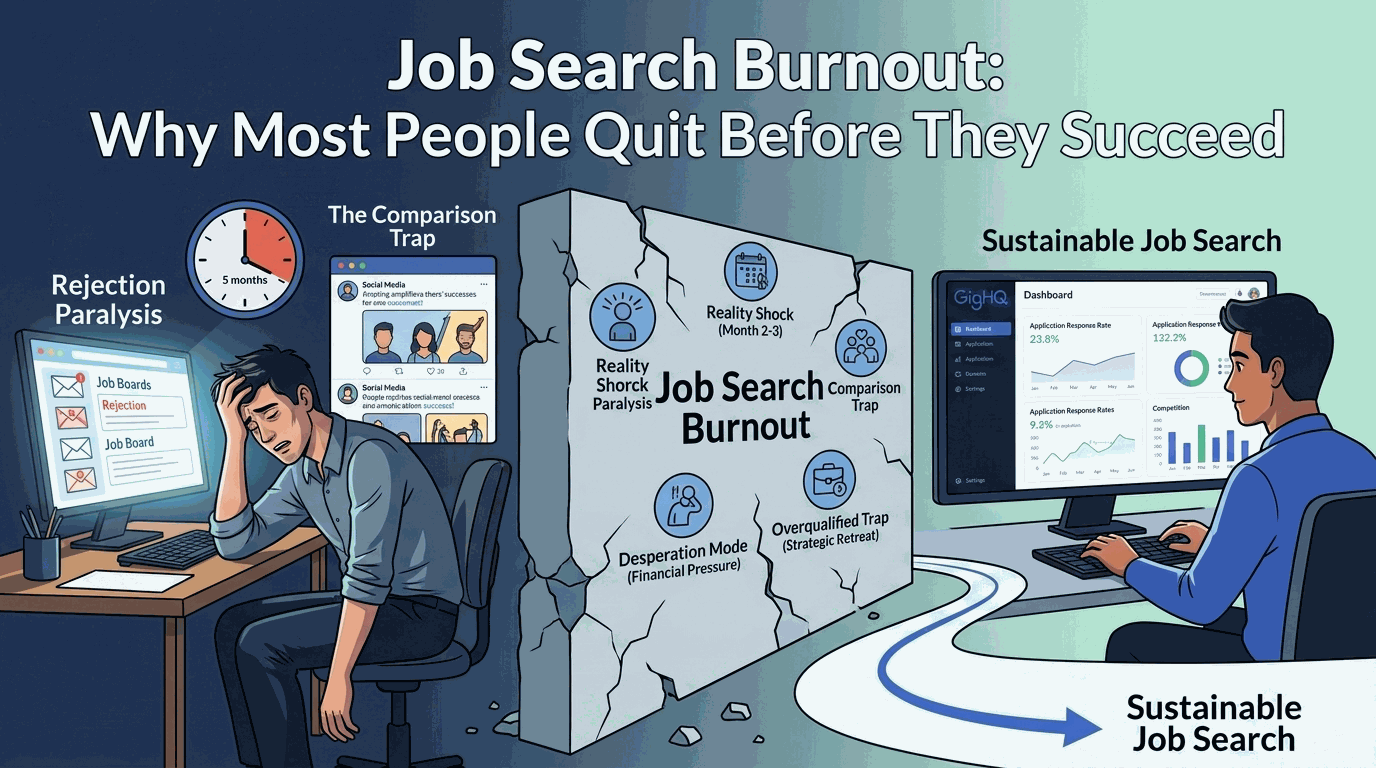
The Five Critical Failure Points
Through analyzing career transition research, five distinct failure points emerge where job seekers abandon strategic searching:
1. The Reality Shock (Month 2-3)
When initial optimism crashes into market reality. With professional job searches averaging 5-6 months, month three represents normal progress, not failure. But without this context, many conclude they’re doing something fundamentally wrong and either quit or switch to desperate strategies.
2. Rejection Paralysis (The Confidence Collapse)
When normal market rejection rates feel personal. Research shows job seekers lose confidence after just 5 rejections, but with 70-90% rejection rates being normal, 5 rejections should feel like early-stage market feedback, not evidence of personal failure.
3. The Comparison Trap (Social Media Amplification)
LinkedIn creates constant exposure to other people’s career wins while you’re experiencing normal market challenges. Algorithm amplification makes success seem more common than it actually is, shifting focus from strategic improvement to self-doubt.
4. Desperation Mode (Financial Pressure Override)
46% of workers say they would quit their current job without another one lined up if feeling too burned out—indicating how financial desperation affects decision-making even before unemployment begins. When searches extend past initial expectations, strategic thinking breaks down entirely.
5. The Overqualified Trap (Strategic Retreat)
When frustration peaks, many convince themselves that applying for roles below their experience level will be “easier.” But 30% of job seekers leave a job within 90 days of starting—often because these “easier” roles create underemployment situations that force another search within months.
The Real Solution: Market Intelligence Over Volume
The antidote isn’t more motivation—it’s approaching the process with realistic expectations based on market data rather than wishful thinking.
Understanding that median job search duration is over 5 months changes how you interpret two months without offers. Knowing that 70-90% rejection rates are normal helps you process individual rejections as market feedback rather than personal judgment.
This is where GigHQ’s dashboard becomes invaluable—instead of guessing about market conditions, you can see actual data about competition levels and response rates for roles you’re targeting.
Building a Sustainable Approach
Creating a burnout-resistant job search requires three fundamental shifts:
From wishful thinking to market realities. Why your job search needs a marketing strategy explains how treating job search strategically rather than optimistically changes everything.
From reactive to systematic. Building your job search marketing plan provides frameworks for tracking and decision-making that prevent emotional overwhelm during normal market challenges.
From isolation to sustainability. The sustainable job search approach emphasizes maintaining balance for realistic timelines rather than sprint-based approaches.
What’s Next
In our deep-dive articles, we’ll explore each critical failure point with specific strategies for recognition, prevention, and recovery:
- The 90-Day Wall: Why the 2-3 month mark is when unrealistic expectations crash into market reality
- Rejection Paralysis: How to keep applying when normal market rejection rates feel personal
- The Comparison Trap: Why other people’s success stories sabotage your strategic thinking
- Desperation Mode: How to maintain strategy when financial pressure intensifies
- The Overqualified Trap: Why applying for “easier” jobs sabotages your career
Your job search doesn’t have to follow the typical pattern of optimistic start, reality shock, and eventual burnout. With realistic expectations based on actual market data, you can navigate this process strategically rather than reactively.
The question isn’t whether you’ll face challenges—with 5+ month average timelines and 70-90% rejection rates, you will. The question is whether you’ll be prepared for these challenges when they arrive.
Our Platform Tools:

ResumeRank
Scan your resume, get a score, fix what matters.

CoverGenius
Generate personalized, AI-powered cover letters in seconds.

OutreachAgent
Craft perfect networking and AI-powered follow-up emails with ease.

CareerCompass
Instantly generate a personal marketing plan from your resume to define your brand and attract the right opportunities.

Smart Prep
Simulates a real interview based on your resume and the job description, giving you real-time feedback to build your confidence.

Profile Spark
Optimize your LinkedIn profile to attract recruiters and opportunities.