The landscape of higher education and career preparation is undergoing its most significant legislative evolution in decades.
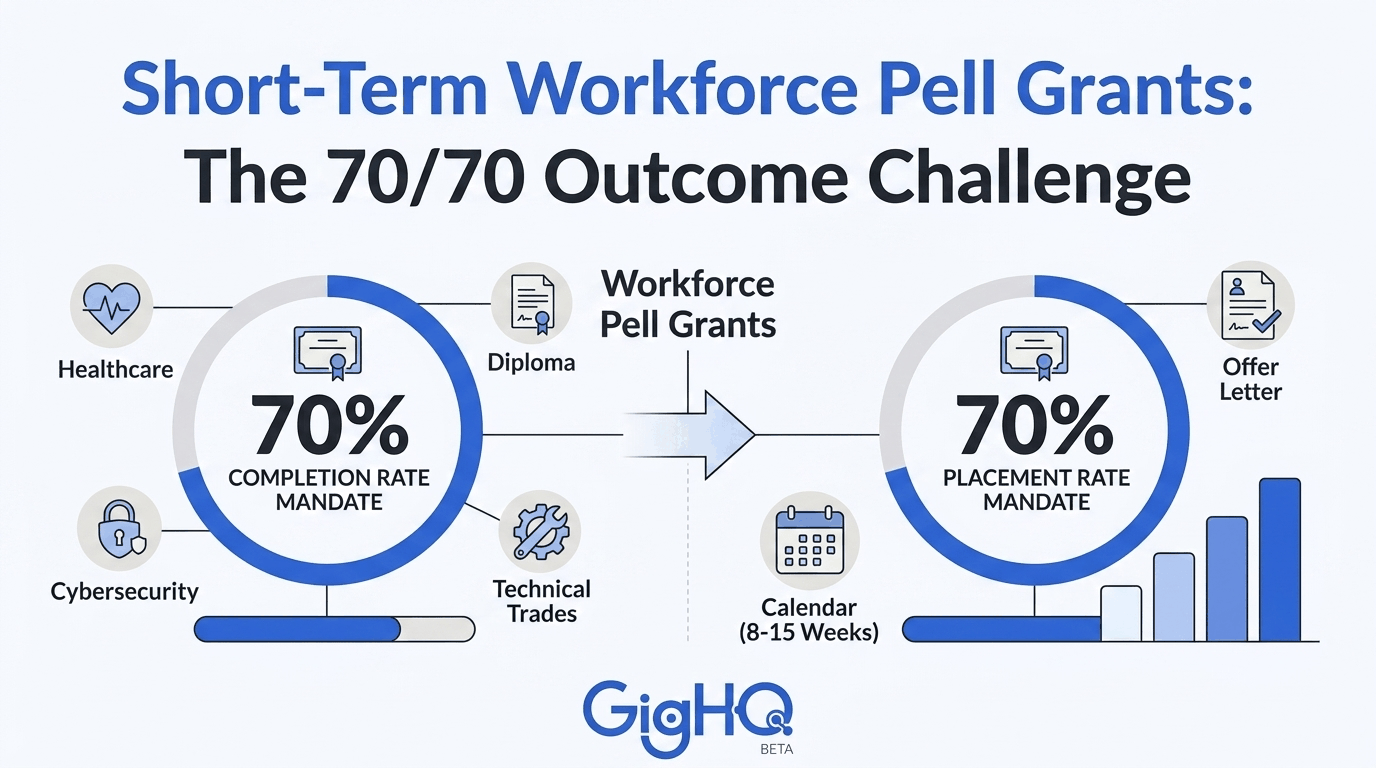
For over ten years, community college leaders, workforce advocates, and policymakers have pushed to open federal aid to fast-track, career-aligned programs. That push has officially materialized. Under new federal legislation, Workforce Pell Grants expand federal Pell eligibility to short-term workforce programs running between 8 and 15 weeks (150 to 600 clock hours).
Unlocking an estimated $1.5 billion in federal funding over the next decade, this policy shift expands access for over 100,000 students annually into high-demand industries like healthcare, cybersecurity, advanced manufacturing, and technical trades.
However, this massive opportunity comes with unprecedented administrative and compliance hurdles. To stay eligible for Workforce Pell funding, institutions must satisfy strict accountability metrics: a 70% program completion rate and a 70% job placement rate within six months of exit.
Here is what higher ed leaders, workforce development directors, and career services teams need to know to navigate this transition—and how modern AI tools can help prove outcome compliance in real time.
The High Stakes of Workforce Pell Eligibility
Historically, financial aid compliance was tied primarily to enrollment and credit hours. Workforce Pell flips the script toward outcomes-based accountability.
To qualify and maintain federal funding starting in July 2026, qualifying nondegree, certificate, and microcredential programs must satisfy rigorous criteria:
- Duration & Accreditation: Must run between 8–15 weeks (150–600 clock hours) and be offered by an accredited public, non-profit, or for-profit institution.
- State Governor Certification: Programs must lead to credentials recognized as “high-skill, high-wage, or in-demand” by local labor market standards and certified by state leadership.
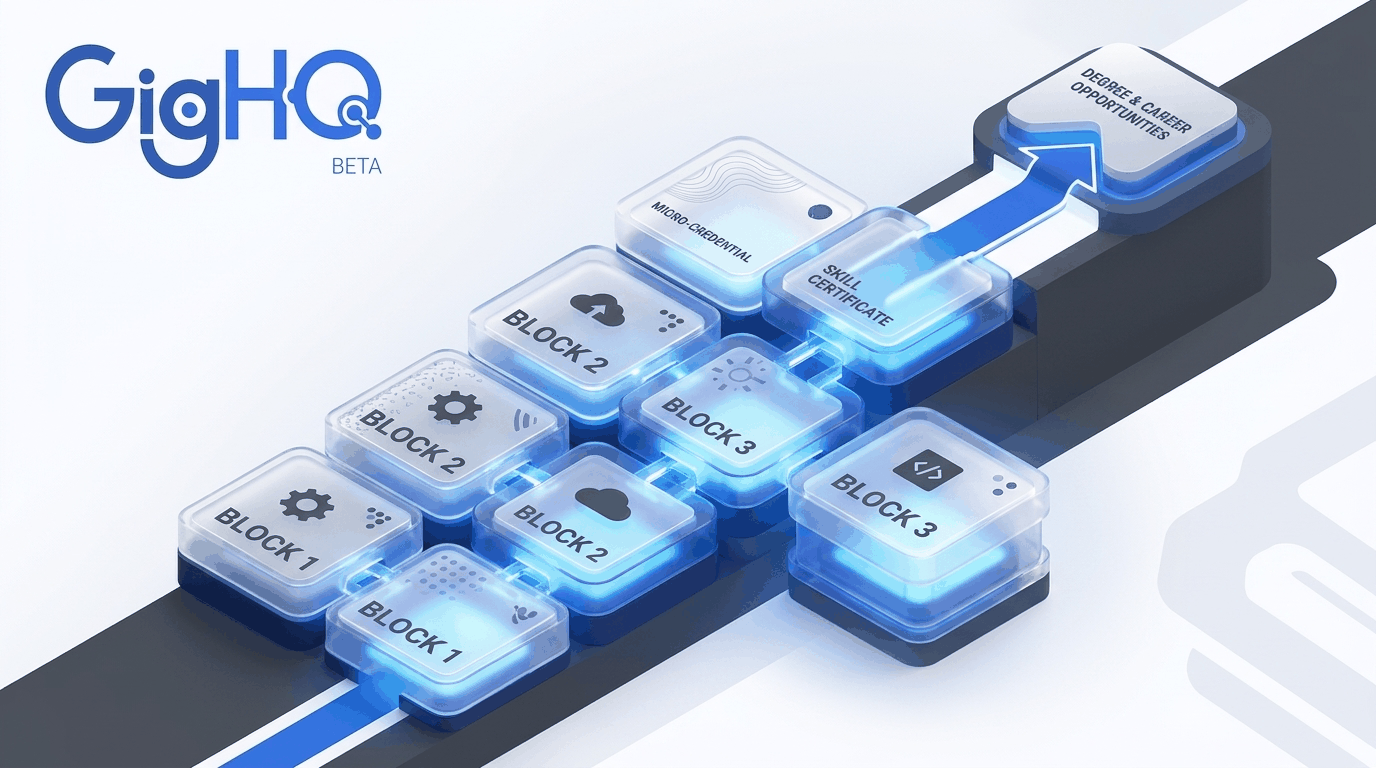
- Stackable & Portable: Credentials must articulate into longer credit-bearing pathways or be recognized across multiple employers in the region.
- The 70/70 Performance Rule:
- 70% Completion Rate: At least 70% of enrolled students must complete the course within the expected timeframe.
- 70% Placement Rate: At least 70% of graduates must secure employment in their field within six months of exiting the program.
- Earnings ROI Threshold: The Department of Education must certify that a program’s tuition and fees do not outweigh its graduates’ projected 3-year earnings gains.
If a program fails to meet these thresholds, it risks losing its Workforce Pell eligibility altogether.
The Data Crisis: Why Traditional Alumni Surveys Will Fail
While the mandate is clear, the mechanism for proving compliance remains a major operational bottleneck for higher education.
Most community colleges and career centers rely on traditional post-graduation methods to collect placement data:
- Alumni Surveys: Infamous for low response rates (often 15–20%), survey fatigue, and severe reporting delays.
- Lagged State Wage Records (UI Data): Unemployment Insurance data takes 6 to 12 months to clear, misses out-of-state employment, and omits key occupational details.
- Manual Staff Outreach: Career coaches spend hundreds of hours chasing graduates over phone calls and spreadsheets rather than coaching active students.
Under a strict 70% verification threshold, incomplete survey data is a major financial risk. If 80% of your graduates actually land jobs, but only 30% fill out your survey, your program appears non-compliant on paper—putting your funding stream at risk.
Colleges can no longer afford to treat career services and outcome tracking as an after-the-fact administrative chore. To learn more about rethinking career workflows, read our analysis on shifting the AI narrative in career services.
Bridging the Gap: Real-Time Intelligence & Passive Verification
To satisfy Workforce Pell requirements, institutions need to move from periodic, retrospective surveys to continuous, automated outcome verification.
This is where GigHQ.ai transforms the institutional workflow:
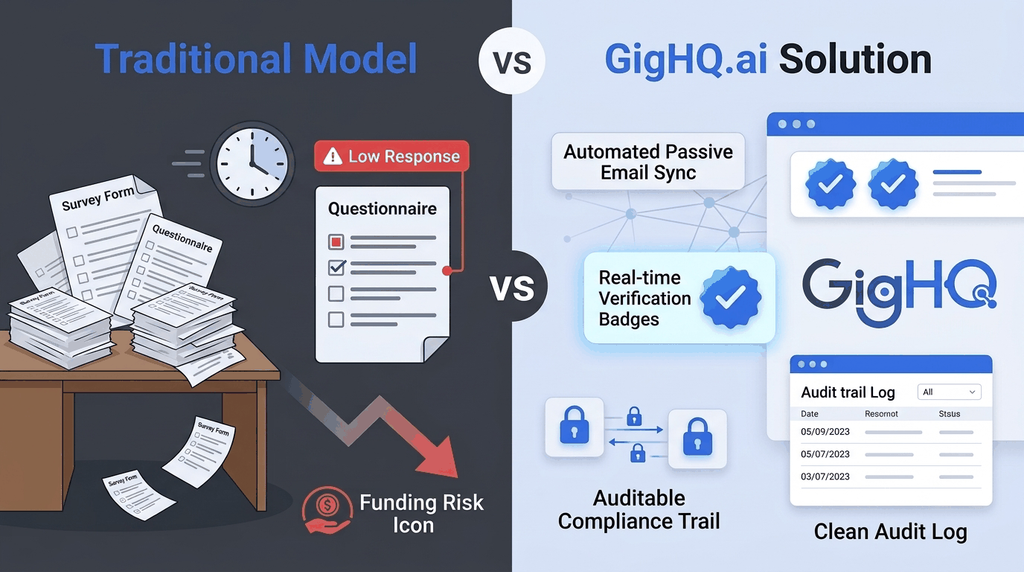
1. Automated Offer Letter Verification
GigHQ.ai acts as a personal job search copilot for students. When learners apply to jobs using their dedicated @gighq.ai job-search email, official interview invitations and offer letters are automatically recognized, time-stamped, and logged. This creates an auditable 3rd-party record of employment without requiring students to complete manual surveys after graduation.
2. Early Intervention Before Failure Occurs
Rather than discovering six months after graduation that a cohort struggled to find jobs, GigHQ’s Coach Dashboard surfaces real-time leading indicators. If a student submits 50 applications with zero interview requests, coaches receive early intervention alerts to optimize the student’s resume before they become a negative outcome statistic.
3. Cutting Through “Ghost Jobs”
In an era filled with automated posting tools and stale job listings, students often waste dozens of hours applying into the void. Through our Job Market Radar, GigHQ tracks employer response rates and flags ghost postings, helping workforce students target active, responsive employers.
4. Meeting Students in Their Native AI Workflows
GigHQ integrates directly into the environments modern job seekers already use every day. Students can leverage our Chrome Extension while browsing job boards, connect via GigHQ in ChatGPT and GigHQ in Claude, or plug into custom AI assistants with our MCP Server.
The Path Forward for Higher Ed Leaders
The arrival of Workforce Pell Grants provides a unique opportunity to expand non-traditional student enrollment, build deeper regional employer partnerships, and drive economic mobility for lower-income workers.
However, capturing this growth requires an operational upgrade. Institutions that build robust, data-driven tracking infrastructure today will be well-positioned to capitalize on new federal funding streams while delivering measurable, lifelong value to their students.
Ready to Secure Your Program Funding and Validate Impact?
Discover how GigHQ.ai helps Workforce Development Organizations and Higher Education institutions turn chaotic job searches into auditable, real-time success metrics.
Our Platform Tools:

ResumeRank
Scan your resume, get a score, fix what matters.

CoverGenius
Generate personalized, AI-powered cover letters in seconds.

OutreachAgent
Craft perfect networking and AI-powered follow-up emails with ease.

CareerCompass
Instantly generate a personal marketing plan from your resume to define your brand and attract the right opportunities.

Smart Prep
Simulates a real interview based on your resume and the job description, giving you real-time feedback to build your confidence.

Profile Spark
Optimize your LinkedIn profile to attract recruiters and opportunities.