In the quiet corridors of state capitals, a legislative shift is occurring that threatens the very lifeblood of public higher education: federal financial aid.
Across states like Iowa, where House Study Bill 550 (HSB 550) was recently introduced, public universities are being mandated to transition from legacy regional accreditors (like the Higher Learning Commission – HLC) to new, outcome-based bodies such as the Commission for Public Higher Education (CPHE).
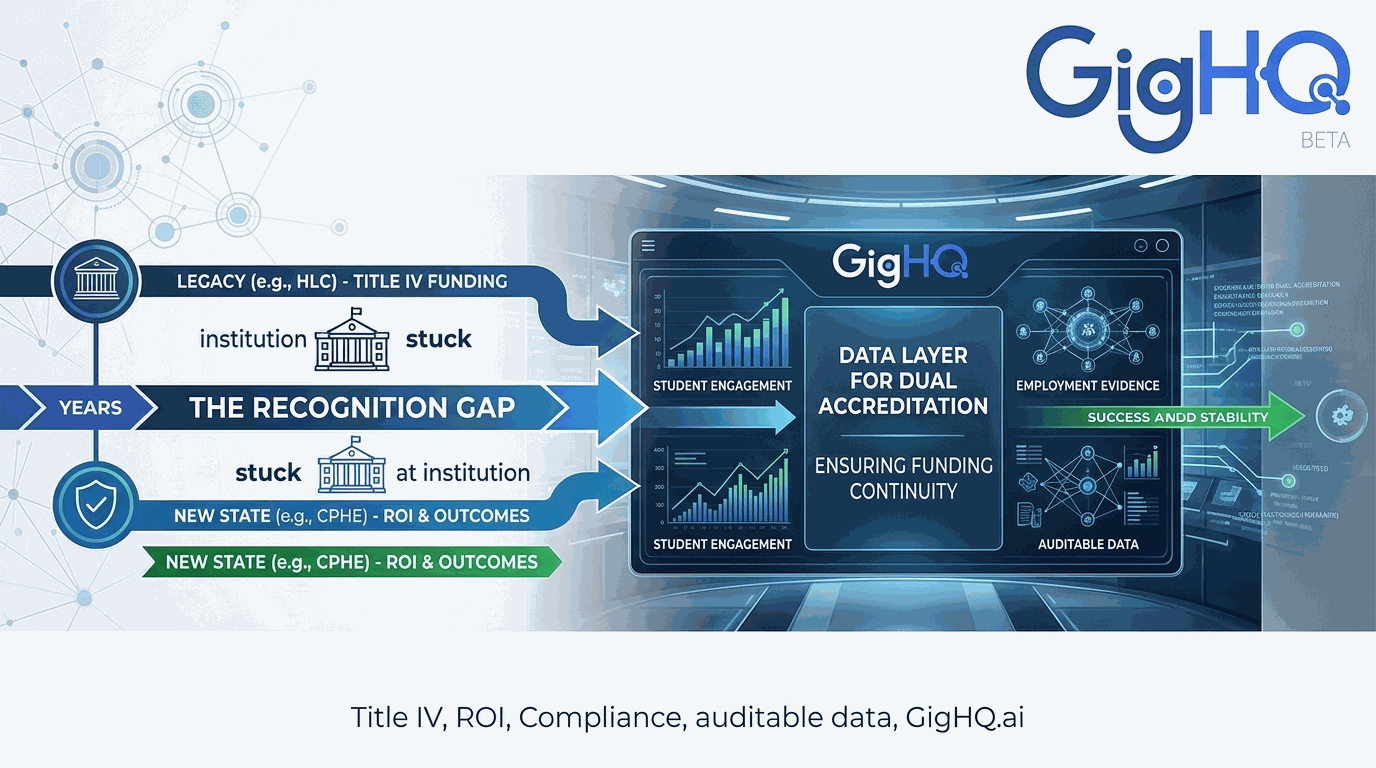
While these shifts are often framed as a quest for greater institutional accountability and higher ROI, they create a perilous “Recognition Gap”—a multi-year window where an institution is caught between two worlds.
Understanding the Recognition Gap
Higher education accreditation isn’t just about quality control; it is the gatekeeper for Title IV funding. For a university to receive federal student aid, its accreditor must be recognized by the U.S. Department of Education (USDE).
As nascent bodies like the CPHE move toward federal recognition, a process that can take years, institutions face a “Dual Accreditation” mandate. They must maintain their legacy status (to keep the lights on with Pell Grants and student loans) while simultaneously adopting the rigorous, ROI-focused standards of the new state-mandated body.
This creates an immense administrative burden:
- Legacy Requirements: Continued compliance with HLC’s evolving Student Success Outcomes and federal compliance filings.
- New Mandates: Preparing for CPHE’s strict Accreditation Standards, which prioritize economic return, process efficiency, and direct labor market alignment.
GigHQ: The “Safe Harbor” for Institutional Data
At GigHQ.ai, we recognize that “you can’t measure what you can’t see.” During this transition, institutions cannot rely on the “Frankenstein spreadsheets” or low-response alumni surveys of the past.
GigHQ provides a high-fidelity data layer that bridges the Recognition Gap:
1. Satisfying the Legacy “Assurance Argument”
Legacy accreditors like the HLC are increasingly focused on “Persistence and Completion” linked to educational intent. GigHQ’s automated tracking provides a real-time stream of student engagement with the labor market, offering the “objective evidence” required for HLC’s Federal Compliance Program.
2. Preparing for the CPHE ROI Mandate
The CPHE model is unapologetically outcome-driven. Its standards focus on “academic excellence” through the lens of student success. By deploying GigHQ’s Compliance Platform, universities can move from self-reported “placement rates” to auditable, high-intent employment evidence. GigHQ captures the “Community Signal”—tracking exactly where students are applying, who is responding, and which credentials are truly delivering value.
3. Protecting WIOA and Workforce Pell Funding
Legislation like the Stronger Workforce for America Act (H.R. 6655) and the rollout of Workforce Pell demand verifiable proof that short-term programs lead to high-wage jobs. GigHQ acts as a WIOA Compliance Engine, ensuring that even as the institutional accreditor changes, the underlying data stream protecting student funding remains unbroken.
Navigating the Shift
The legislative landscape is moving faster than most institutional reporting cycles. Whether your institution is navigating Iowa’s HSB 550 or the Talent Strong Texas mandate, the need for a “source of truth” in student outcomes has never been higher.
Don’t let the “Recognition Gap” become a funding crisis. Join the institutions using GigHQ.ai to turn the chaotic job search into a structured, auditable data stream.
Explore Our Compliance Tools:
- Compliance Platform: gighq.ai/compliance
- WDO Partnerships: gighq.ai/wdo
- About Our Mission: gighq.ai/about-us
Our Platform Tools:

ResumeRank
Scan your resume, get a score, fix what matters.

CoverGenius
Generate personalized, AI-powered cover letters in seconds.

OutreachAgent
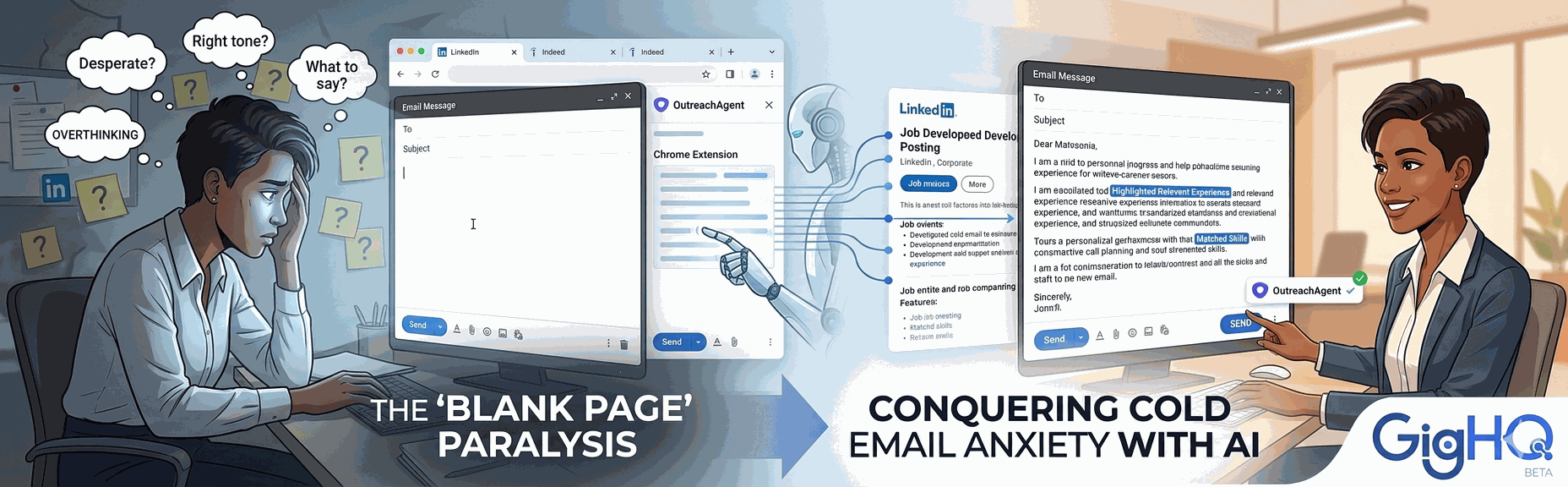
Craft perfect networking and AI-powered follow-up emails with ease.

CareerCompass
Instantly generate a personal marketing plan from your resume to define your brand and attract the right opportunities.

Smart Prep
Simulates a real interview based on your resume and the job description, giving you real-time feedback to build your confidence.

Profile Spark
Optimize your LinkedIn profile to attract recruiters and opportunities.