For the last two years, the loudest headline on the internet has been some variation of: “AI is coming for every entry-level job.”
If you are a recent graduate, an early-career switcher, or a career coach guiding cohorts through this turbulent market, that narrative feels all too real. You open job boards only to be greeted by postings demanding 3 to 5 years of experience for “junior” roles, an endless sea of ghost jobs, and silence after submitting dozens of applications.
A groundbreaking report from the Strada Institute for the Future of Work—Entry-Level Hiring in the AI Era: What Employers Are Thinking (and Doing)—analyzed responses from nearly 1,500 executives and senior talent leaders across the United States.
The real story behind hiring desks is nuanced, counterintuitive, and loaded with tactical takeaways for anyone trying to land or place talent in 2026.
Here is what employers are actually doing—and how job seekers and career organizations can adapt to win.
1. The Myth vs. Reality: Is AI Eliminating Entry-Level Jobs?
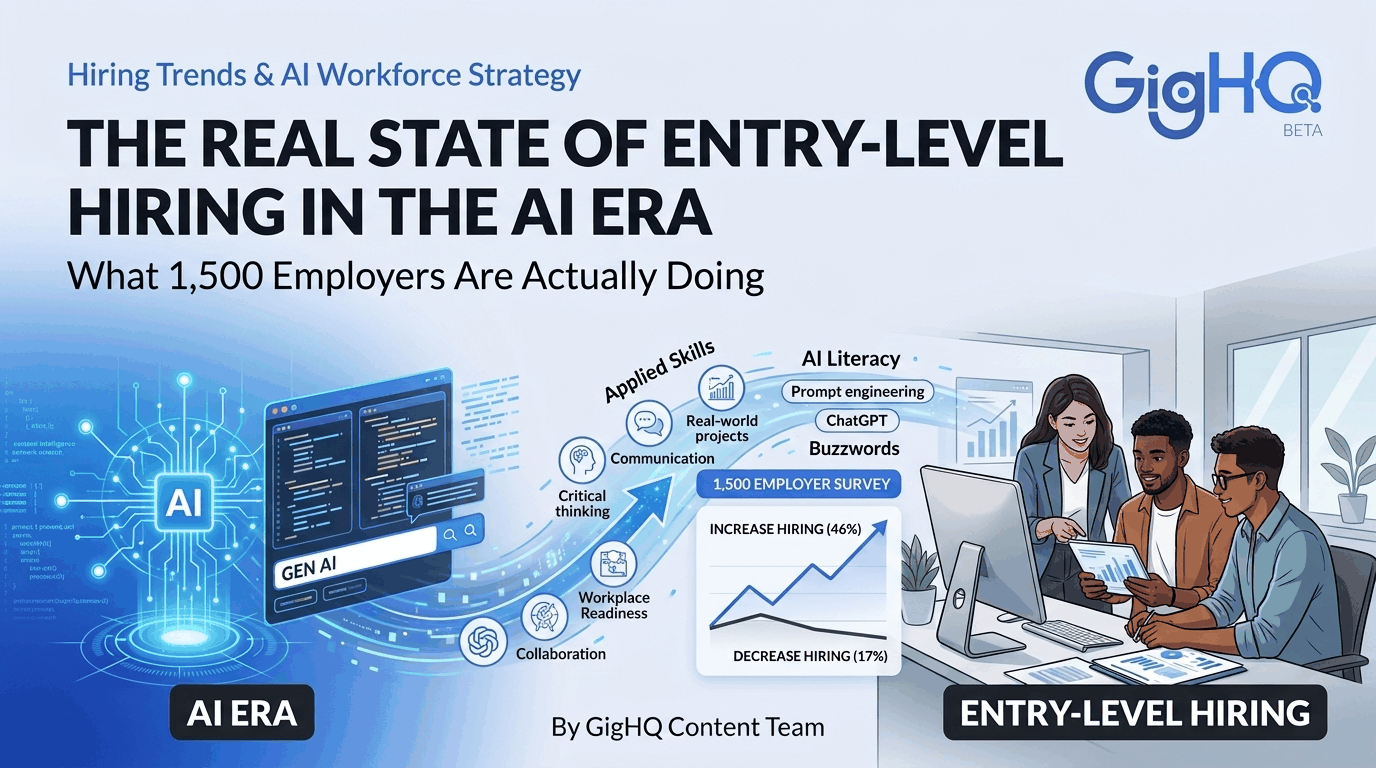
Despite the apocalyptic rhetoric, the data shows that employers are more likely to increase than decrease entry-level hiring because of AI.
- Nearly 3x as many talent leaders (46% vs. 17%) expect AI use to increase entry-level hiring rather than decrease it.
- In fact, 27% of employers cite greater adoption of AI tools within their organization as the single most significant positive driver of entry-level hiring growth.
| Expected Impact of AI on Entry-Level Hiring | Percentage of Employers |
| Increase Hiring | 46% (11% significantly, 35% moderately) |
| Decrease Hiring | 17% (2% significantly, 15% moderately) |
| Net Outlook | Nearly 3-to-1 positive ratio |
Where is the contraction actually coming from?
When employers report shrinking their entry-level headcount, the culprit is rarely the AI model itself. Instead:
- Broader economic uncertainty and market factors remain the #1 negative driver (cited by 33% of shrinking firms).
- A lack of qualified, job-ready candidates ranks second (23%).
- Only 16% point to internal AI replacement as the primary negative driver.
Companies aren’t killing entry-level roles just because AI exists; they are restructuring what those roles do.
2. The Great Task Shift: Raising the Entry-Level Bar
While headcount isn’t disappearing, the nature of junior work is undergoing radical transformation.
Historically, entry-level professionals spent their first 12 to 18 months performing rote administrative tasks: formatting slides, manually sorting rows in spreadsheets, data entry, and basic filtering.
AI has automated the training wheels.
- 41% of employers report that AI has reduced routine administrative tasks in junior positions.
- 42% report that AI has increased the analytical and judgment-based responsibilities required of entry-level workers on day one.
In technology and manufacturing, this trend is pronounced: 60% of tech firms and 51% of manufacturing leaders report assigning higher-level judgment and problem-solving to their junior personnel.
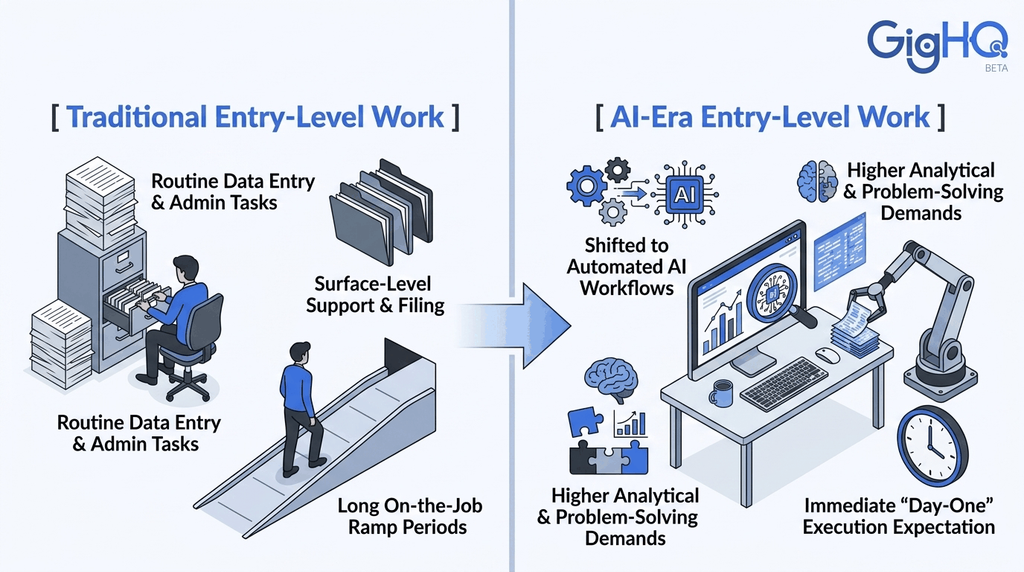
This explains why so many job seekers feel stuck. Employers aren’t hiring less; they are asking for more on day one.
3. The Big Skill Paradox: Critical Thinking Trumps “AI Literacy”
In a frantic race to stand out, thousands of job seekers are stuffing their resumes with buzzwords: “Prompt Engineering,” “ChatGPT Specialist,” or “Generative AI Native.”
Employers rate AI literacy as the single least important skill among candidates evaluated.
Employer Rating of Importance vs. Candidate Performance (5-Point Scale)
- Critical Thinking: 4.3 Importance (4.0 Performance)
- Communication: 4.3 Importance (4.0 Performance)
- Collaboration: 4.2 Importance (4.0 Performance)
- Workplace Readiness: 4.2 Importance (3.9 Performance)
- Technical Proficiency: 4.1 Importance (4.0 Performance)
- AI Literacy: 3.5 Importance (3.6 Performance)
Talent leaders already assume Gen Z and early-career candidates know how to open a chat interface and query an LLM (candidate performance in AI literacy was rated higher than employer demand). What hiring managers struggle to find are candidates who can:
- Synthesize fragmented data to make sound judgment calls.
- Communicate cross-functionally without ambiguity.
- Work collaboratively across multi-generational teams.
AI tools handle execution speed; human judgment dictates direction.
4. Experience vs. Pedigree: Why a 4.0 GPA Isn’t Enough
Perhaps the most striking finding in the Strada report is how talent leaders evaluate candidate backgrounds. When presented with distinct candidate profiles, employers rated candidates in this exact order:
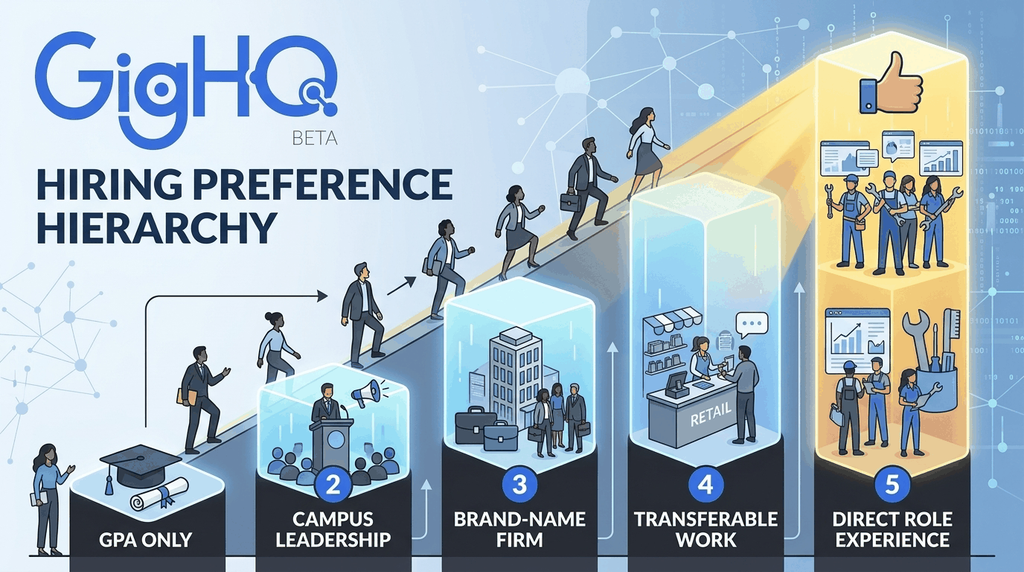
A stellar GPA with zero applied experience ranked dead last.
Employers do not have the bandwidth for prolonged ramp-up periods. They seek evidence of applied capability: concrete projects, internships, quantifiable business outcomes, and proven workplace readiness.
5. What This Means for Your Job Search Strategy
If you are an early-career candidate, how do you navigate this landscape?
1. Build a Living Record of Applied Impact
Don’t rely on course titles or static GPA scores. Document the projects, challenges, and measurable results of your work.
- Instead of: “Researched marketing metrics for classroom assignment.”
- Frame it with metrics: “Analyzed retention drop-off across 400 user onboarding records, identifying 3 friction bottlenecks that reduced churn risk.”
With GigHQ.ai’s Career Journal, you can capture these achievements, quantify your real-world projects, and automatically translate them into structured interview talking points.
2. Ditch the “Spray and Pray” Game
Because employers receive hundreds of boilerplate, AI-generated applications per role, HR teams are filtering aggressively. Applying to 500 random jobs through one-click portals yields diminishing returns.
- Focus your energy on companies showing genuine hiring activity.
- Use the GigHQ Chrome Extension to see live company signals, inspect actual ATS response patterns, and steer clear of inactive listings.
- Discover real hiring momentum via our Job Market Radar.
3. Bring Human Context into the Loop
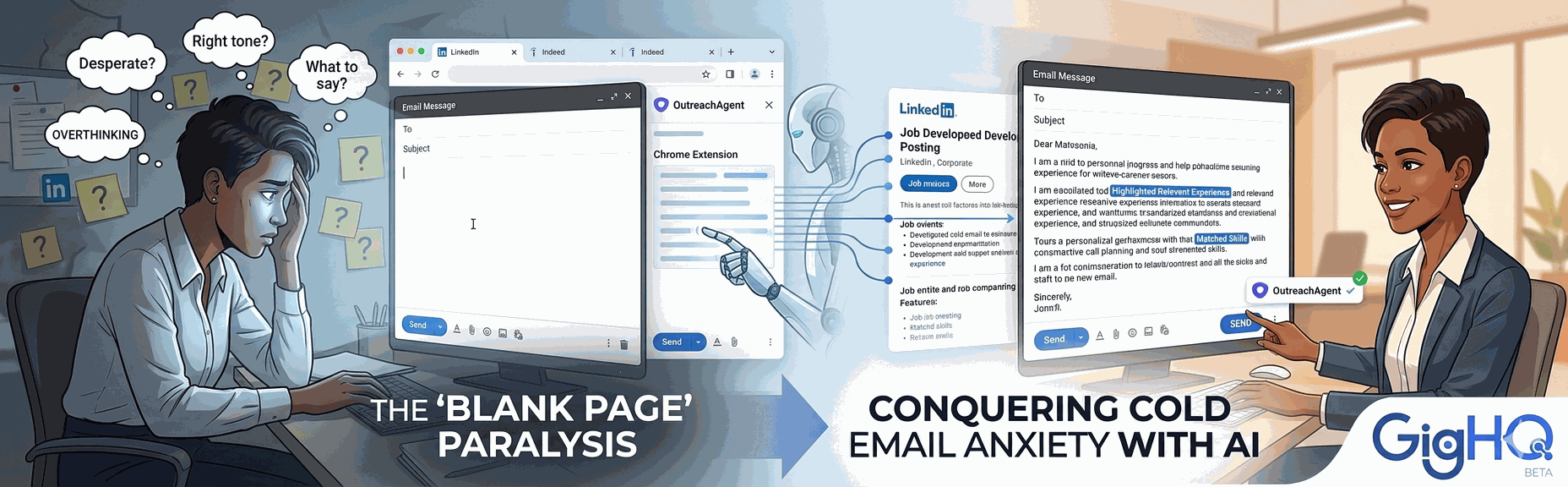
If you use AI in your job search, use it as a strategic thinking partner—not a spam engine. Connect your workflow with our GigHQ MCP Server or directly within your AI environments via GigHQ in ChatGPT and GigHQ in Claude to identify skill gaps against target descriptions and craft high-signal, authentic outreach.
6. What This Means for Career Services & Workforce Development Organizations (WDOs)
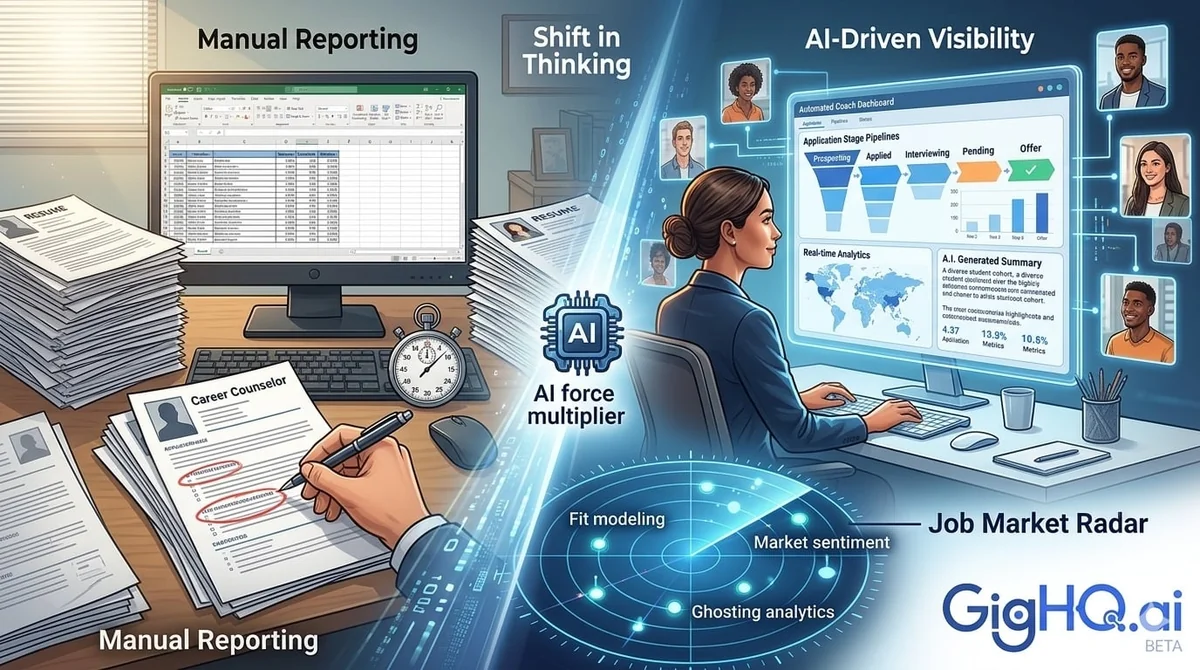
For higher ed institutions, bootcamps, and workforce development leaders, the Strada findings echo a growing operational challenge: evaluating degree-to-job outcomes requires real-time labor market telemetry.
Traditional First Destination Surveys (FDS) that poll alumni 6 to 12 months after graduation are lagging indicators. By the time an institution realizes that graduates in a specific major are hitting application roadblocks, the cohort has already dispersed.
To satisfy emerging accountability standards—from state-level performance-based funding models to federal WIOA performance measures:
- Career advisors need leading indicators: Who is applying, where are they dropping off, and which job requirements are creating roadblocks?
- Cohorts need active workflow copilots: Equipping learners with job search command centers allows career offices to identify at-risk job seekers long before they become an unplaced statistic.
See How GigHQ Powers Modern Career Navigation
Watch how GigHQ.ai automates the application grind, uncovers real community signals, and helps job seekers take back control of their career journey:
- 📺 Watch: GigHQ.ai Walkthrough & Automated Application Tracking
- 📺 Watch: Demystifying Job Board Data with the GigHQ Chrome Extension
- 📺 Watch: Connecting Real-Time Market Trends to Your Search Strategy
- 📺 Watch: Bridging Career Services and Cohort Success
Stop Applying Blind. Start Applying Smart.
The entry-level market hasn’t vanished—it has evolved. The candidates and institutions that thrive in the AI era are those that replace manual spreadsheets and blind applications with data-backed strategy, verified competencies, and targeted execution.
Ready to take the guesswork out of your job search?
👉 Sign up for free at GigHQ.ai and track your path to your next role today.
Our Platform Tools:

ResumeRank
Scan your resume, get a score, fix what matters.

CoverGenius
Generate personalized, AI-powered cover letters in seconds.

OutreachAgent
Craft perfect networking and AI-powered follow-up emails with ease.

CareerCompass
Instantly generate a personal marketing plan from your resume to define your brand and attract the right opportunities.

Smart Prep
Simulates a real interview based on your resume and the job description, giving you real-time feedback to build your confidence.

Profile Spark
Optimize your LinkedIn profile to attract recruiters and opportunities.