
In the world of workforce development, the goalposts just moved.
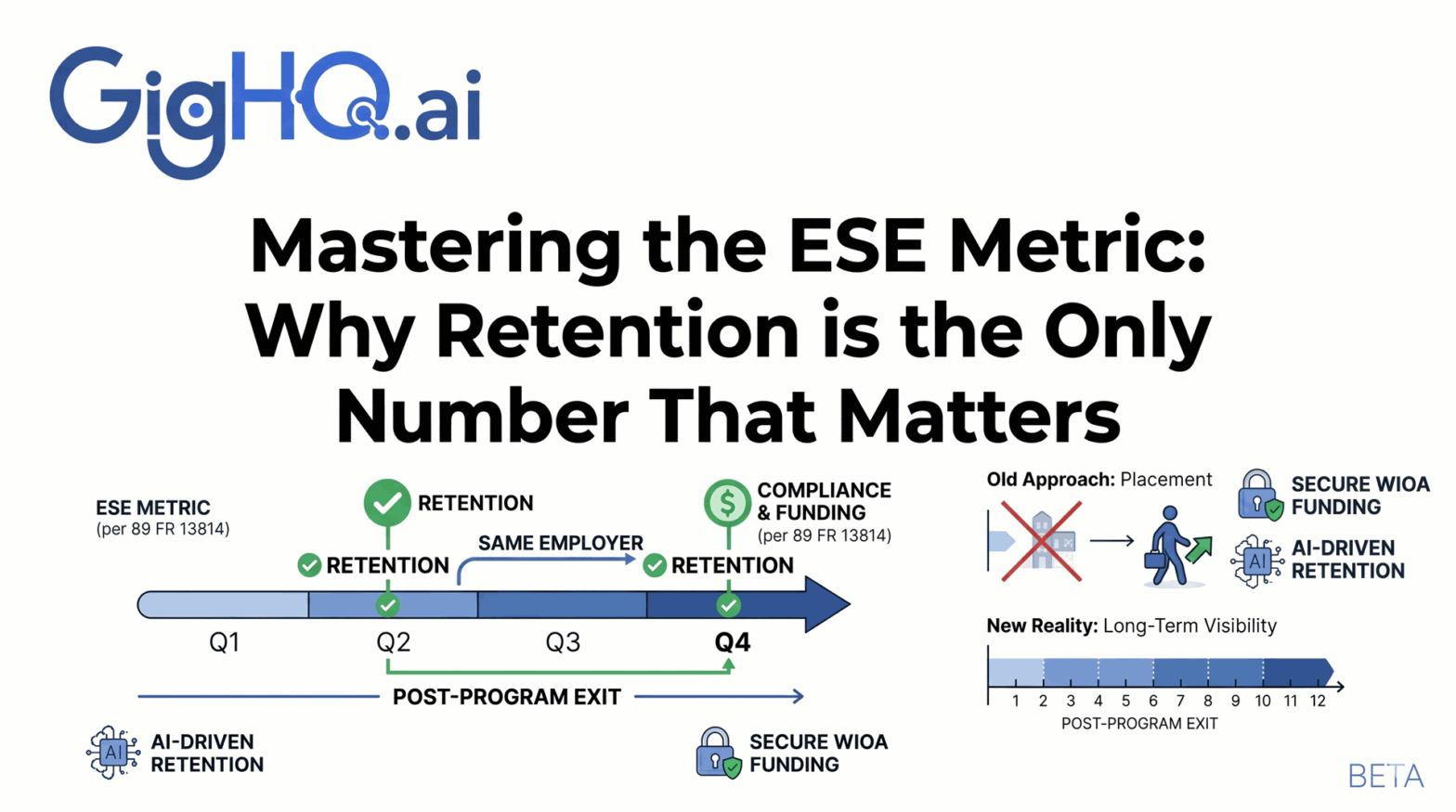
For years, “Effectiveness in Serving Employers” (ESE) was a pilot program with various interpretations. That changed recently when the U.S. Department of Labor (DOL) finalized the rule (89 FR 13814), strictly defining the ESE indicator as Retention with the Same Employer. Specifically, it tracks whether a participant remains with the same employer during both the second (Q2) and fourth (Q4) quarters after exiting a program.
For Workforce Development Organizations (WDOs), this isn’t just a new reporting line—it’s a paradigm shift. It means that “placement” is no longer the finish line; it’s just the beginning.
The Longitudinal “Black Box”
The challenge with the ESE metric is simple: Time. Traditional WDO tracking often stops the moment a student or constituent confirms they’ve been hired. But to satisfy the ESE mandate, an organization must maintain visibility into that employment for up to a full year.
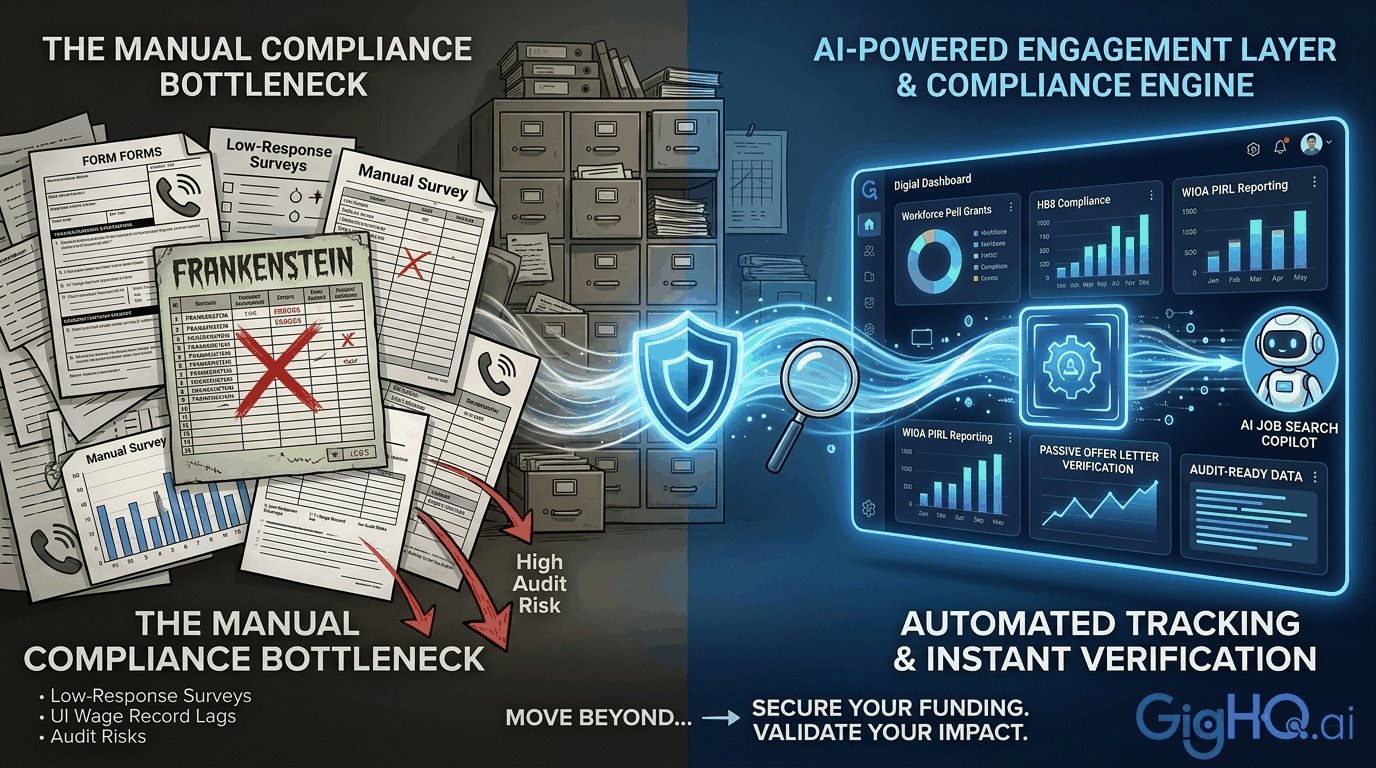
According to the DOL’s TEGL 26-16, Change 1, states are now required to report this as a shared indicator across all six core WIOA programs. Yet, most organizations rely on what we call “Frankenstein Spreadsheets” or generic case management software.
These legacy systems fail for three reasons:
- Survey Fatigue: Manually calling or emailing alumni 12 months later results in abysmal response rates (often less than 20%).
- Lagged Data: By the time you realize a participant has left an employer, it’s far too late to intervene.
- Manual Entry Errors: Relying on self-reporting is inherently “dirty” data that often fails strict federal audits.
The Compliance Gap: Why Generic Software Fails the ESE Test
Most generic case management tools were designed as digital filing cabinets—built for static data entry rather than dynamic tracking. When it comes to the new ESE mandate, these systems present three critical failure points:
- Reporting Rigidity: Generic platforms often struggle to generate the specific longitudinal reports required by the DOL. Building a query that tracks the same employer across non-contiguous quarters (Q2 and Q4) often requires expensive custom development or manual data manipulation outside the system.
- Workflow Disconnect: These tools assume a linear path from enrollment to exit. They lack the automated “heartbeat” necessary to monitor post-exit status without constant, manual updates from a counselor.
- Static Data Moats: Because generic software is passive, it creates a “data desert.” If a graduate changes their job title or moves to a different department within the same company, a static database won’t reflect it, potentially leading to a “false negative” in your retention reporting.
But when a participant is six months into a new job, they aren’t calling their old career counselor to give updates. They’ve moved on. This creates a data desert that puts WIOA funding and Pell eligibility at risk.
The GigHQ Solution: AI-Driven Retention
At GigHQ, we believe you can’t measure what you can’t see. We solve the ESE challenge by moving from “reporting” to “verifying” through two key strategic layers:
1. Prioritizing Initial Hiring Fit
Retention starts with the right match. If a candidate is “spray-and-praying” applications, they are 50% more likely to leave within the first six months. GigHQ’s platform tools, like ResumeRank and CoverGenius, ensure that applicants are highly intentional.
When a WDO member uses GigHQ, they aren’t just applying; they are analyzing. They match their verified skills against the job description before the application is sent. This “High-Intent Signal” is what keeps employees in their seats through Q4.
2. Continuous, Passive Engagement
GigHQ doesn’t lose sight of the user after the hire. Because our platform acts as a “Career Copilot”—a personal CRM for the user’s professional life—the engagement remains active.
- The Chrome Extension: Our users keep the GigHQ Chrome Extension active to track their own career growth, professional development, and networking.
- Passive Evidence: This creates an auditable, real-time data stream. WDOs no longer have to “chase” graduates. The system captures employment evidence passively, ensuring that Q2 and Q4 retention data is available at the click of a button.
Prove Your Impact, Secure Your Funding
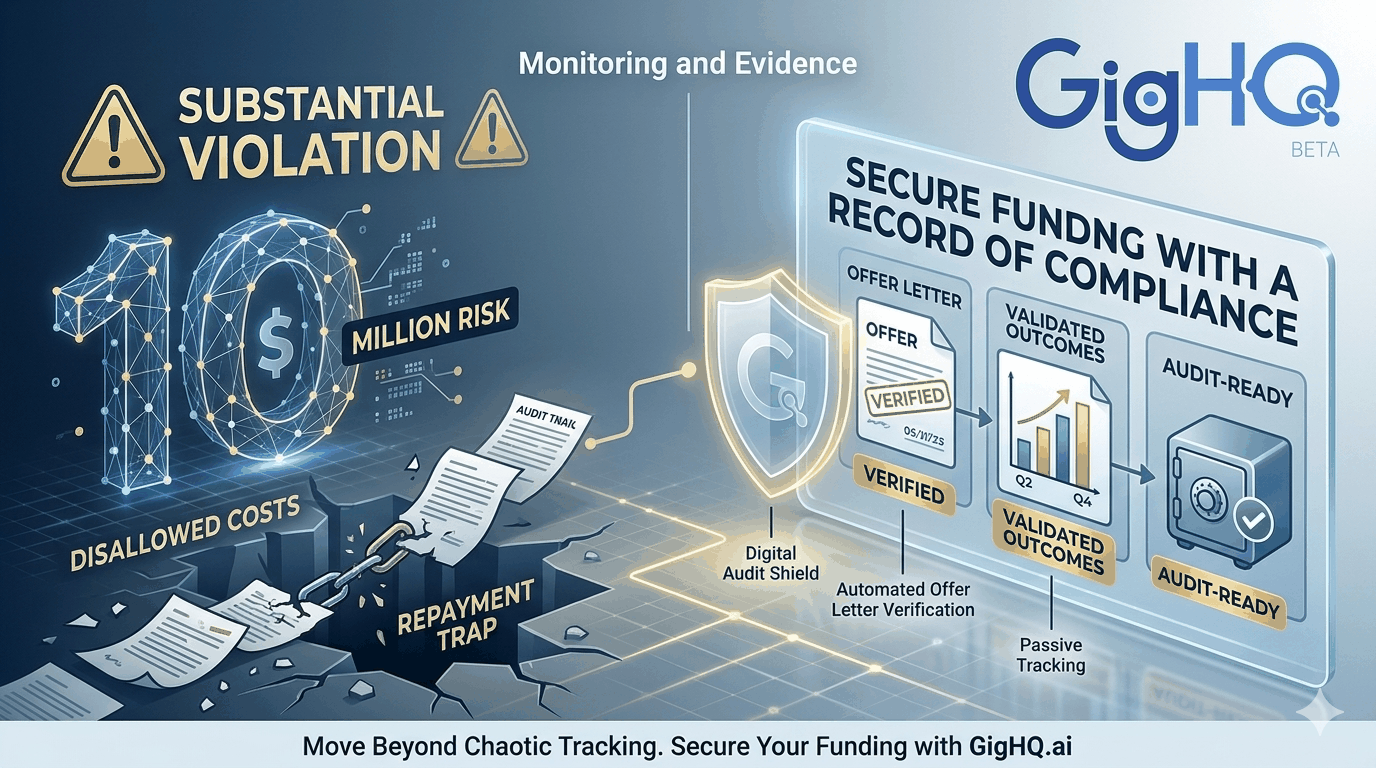
The stakes are high. States that fail to meet negotiated performance levels face a 5% reduction in their Governor’s Reserve Allotment. In a landscape where outcomes are the only currency that matters, manual tracking is a liability.
GigHQ transforms the chaotic job search into a structured, auditable data layer. We help you move beyond “Knowledge Rates” and into the era of Verified Retention.
Ready to stop acting like a call center and start acting like a data-driven powerhouse? Request a Demo today and see how GigHQ.ai automates ESE compliance while empowering your members to win.
Our Platform Tools:

ResumeRank
Scan your resume, get a score, fix what matters.

CoverGenius
Generate personalized, AI-powered cover letters in seconds.

OutreachAgent
Craft perfect networking and AI-powered follow-up emails with ease.

CareerCompass
Instantly generate a personal marketing plan from your resume to define your brand and attract the right opportunities.

Smart Prep
Simulates a real interview based on your resume and the job description, giving you real-time feedback to build your confidence.

Profile Spark
Optimize your LinkedIn profile to attract recruiters and opportunities.