
Transform your job search from random applications to strategic career advancement. Learn how marketing principles accelerate hiring outcomes, enable career transitions, and position you for upward or lateral moves.
Understanding the Marketing Approach
Treating job search as marketing means applying proven business strategies to your career transition. Instead of randomly applying to jobs, you research your target market (employers), define your value proposition (unique skills), position yourself strategically (career brand), choose optimal channels (networking vs. applications), and track metrics that predict success. This framework transforms job searching from reactive hoping into proactive strategy, typically reducing search time from 9 months to 3 months.
Most job searches fail because candidates use the “spray and pray” method—submitting generic applications everywhere and hoping something sticks. This approach ignores that 75% of jobs are never posted publicly, and posted positions often receive 100+ applications. Without strategic targeting, candidates compete in the most crowded, least effective channels. Successful job seekers research their market, focus on quality over quantity, build relationships before they need jobs, and track what actually generates interviews rather than just counting applications sent.
The five elements mirror product marketing: (1) Product Development – understanding your unique value proposition and key differentiators, (2) Market Research – identifying which companies are actually hiring versus posting ghost jobs, (3) Customer Segmentation – defining target industries, company sizes, and culture fits, (4) Channel Strategy – balancing direct outreach (75% of jobs), networking (75-80% effectiveness), and strategic applications, (5) Relationship Marketing – building connections before you need them and providing value to your network. Each element requires active work but dramatically improves outcomes.
Career Transitions and Positioning
Career transitions require strategic positioning that bridges your past experience to your future role. Start by identifying transferable skills that apply across industries or functions. Create a positioning statement: “I am a [current identity] with skills in [transferable capabilities] who delivers [specific results] for [new target market].” For example, a teacher transitioning to corporate training might say: “An education professional with proven skills in curriculum design and adult learning who creates effective training programs that improve employee performance and retention.” Use your resume and LinkedIn to tell this bridge story, not just list past duties.
Yes, but the strategy differs. For upward moves (promotions): emphasize leadership outcomes, P&L responsibility, team development, and strategic thinking. Position yourself as ready for the next level by demonstrating you’re already operating there. For lateral moves (different function or industry): highlight transferable skills, relevant side projects, industry knowledge gained through learning, and culture alignment. Lateral moves require more market research to understand what your new target values. Both directions benefit from the same framework: research what your target market needs, position yourself accordingly, and choose channels where decision-makers will see your value.
Analyze your market positioning honestly. Move up when: you’re consistently performing above your current level, you have demonstrated leadership wins, your current industry is growing, and you’re energized by greater responsibility. Move laterally when: you’re hitting a ceiling in your current path, you want to develop new skills before moving up, your industry is contracting, or you’re unfulfilled despite success. Use GigHQ’s market intelligence to research demand, competition levels, and salary ranges for both paths. Sometimes the fastest route to senior leadership is a strategic lateral move that builds broader experience.
Industry changes require the strongest positioning strategy. First, research your target industry deeply—understand their challenges, language, key players, and what they value. Second, identify skill bridges: which of your capabilities translate directly? Third, build credibility through learning (certifications, courses), networking (industry events, informational interviews), and visible work (thought leadership, volunteer projects). Fourth, target smaller or growing companies more open to non-traditional backgrounds. Finally, accept that you may need to step back in seniority temporarily to break in, then advance quickly once established. The marketing framework still applies, you’re just repositioning for a different customer.
Market Research and Targeting
Effective market research goes beyond browsing job boards. Start with industry dynamics: which sectors are hiring versus contracting? Use platforms like GigHQ to see actual hiring patterns—ghost job rates, competition levels, average response times. Research specific companies: recent funding, leadership changes, team expansion signals, employee reviews. Analyze role requirements: what skills appear repeatedly? What salary ranges are realistic? Track your target companies systematically: when did they post roles? How many applicants? How long do positions stay open? This data reveals where to focus energy versus waste time.
Posted jobs appear on job boards and company websites, representing only 25% of the market. These positions face intense competition (100+ applicants common) and lower success rates. Hidden jobs (75% of opportunities) are filled through referrals, internal promotions, or direct outreach before public posting. Accessing hidden jobs requires relationship building, networking, direct company research, and informational interviews. The marketing approach prioritizes hidden job access through proactive outreach rather than reactive applications. Use GigHQ to identify companies actively hiring (even before posting) based on patterns like team expansion and multiple role additions.
Ghost jobs are postings companies aren’t actually filling—used for data collection, legal compliance, or maintaining candidate pipelines. Red flags include: vague descriptions, positions open for months, unusually wide salary ranges, immediate requests for personal information, companies with minimal online presence. Use GigHQ’s job database to see when roles were first posted and track activity patterns. Real opportunities show: recent posting dates, specific requirements, active company hiring (multiple roles), recruiter engagement on LinkedIn, and typical posting-to-hire timelines (30-60 days for most roles). Focus energy on verified active opportunities.
Company size significantly impacts your experience and advancement. Startups ($5M-$50M): need generalists, offer high growth potential and equity upside, require comfort with ambiguity and rapid change. Mid-size ($50M-$500M): need specialists, offer proven processes with room for impact, provide scaling experience valuable for future moves. Enterprise ($500M+): need deep specialists, offer stability and resources, require navigating complex politics and slower decision-making. For upward mobility, mid-size companies often provide the best balance—established enough for real responsibility, small enough to move quickly. For lateral industry moves, larger companies may offer better training and resources.
Channel Strategy and Execution
Allocate effort based on effectiveness, not ease: 70% Direct Relationship Building – informational interviews, industry events, warm introductions, content engagement with target companies. 20% Strategic Applications – GigHQ-verified opportunities, referral applications, timing-optimized submissions to active roles. 10% Brand Building – LinkedIn optimization, thought leadership, professional visibility. This inverts what most job seekers do (90% applications, 10% networking). The data is clear: networking yields 75-80% of successful job placements, while blind applications generate under 10% response rates.
Use LinkedIn Easy Apply selectively, not as your primary strategy. Easy Apply generates 2-3% interview rates versus 8-12% for direct company applications due to overwhelming competition (100+ applicants instantly). Reserve it for supplementary roles, recruitment agency postings, or when it’s the only option. For priority roles, always apply directly through company career portals, then use LinkedIn to connect with hiring managers afterward. This “dual approach” combines formal application strength with networking visibility. Track Easy Apply effectiveness using GigHQ—if you’re getting zero responses after 20 applications, abandon this channel entirely.
Networking is critical for transitions because referrals overcome the “unfamiliar background” barrier. When changing industries or functions, your resume alone may not clearly convey fit—but a warm introduction from a trusted connection provides credibility. For upward moves, networking with leaders at your target level helps you understand expectations and opens doors. Start networking before you need it: build relationships while employed, offer value without asking for jobs, and maintain connections consistently. During active search, aim for 5-10 meaningful conversations weekly with people in your target market. Quality networking accelerates all transitions—lateral, upward, or industry changes.
Stop tracking vanity metrics (applications sent). Track predictive metrics: Quality conversations per week (informational interviews, networking calls with decision-makers), Response rate to personalized outreach (should be 30%+ with good targeting), Interview conversion rate (applications to interviews), Pipeline velocity (first contact to offer timeline), Channel effectiveness (which sources generate interviews). GigHQ’s dashboard tracks these automatically. You need 5-7 active opportunities in your pipeline at any time to maintain momentum. If numbers drop, increase top-of-funnel activities (networking, outreach) before desperation sets in.
Building Your Marketing Plan
Your positioning statement is your value proposition in one sentence. Formula: “I am a [professional identity] with proven skills in [key capabilities] who delivers [specific value] for [target customer].” Example for upward move: “A customer success leader with proven skills in building scalable support teams who reduces churn by 40% and increases expansion revenue for fast-growing SaaS companies.” Example for lateral move: “A solutions-oriented educator with skills in adult learning design who creates effective corporate training programs that improve employee performance and retention.” Include quantifiable results (40% churn reduction, 100+ projects delivered) to differentiate from generic claims.
Start with 20 companies that match your criteria—the balance between focus and options. For each company, research: Business intelligence (recent funding, acquisitions, growth indicators, pain points your skills solve), Hiring intelligence (use GigHQ to see actual hiring patterns, response times, current team size in your target area), Cultural intelligence (employee reviews, LinkedIn content from team members, company blog themes). Rank each on: opportunity fit (1-10), experience match (1-10), hiring likelihood from data (1-10), cultural alignment (1-10). Focus energy on companies scoring 30+ out of 40. Update this list monthly as markets shift.
The marketing approach typically generates first interviews within 4-6 weeks and offers within 3-4 months versus 6-9 months for reactive job searching. The timeline depends on: Market conditions (recession extends timelines), Role competitiveness (specialized roles with fewer candidates move faster), Your network strength (existing relationships accelerate), Consistency (weekly networking and strategic applications compound). Month 1 focuses on building pipeline and having conversations. Month 2 shifts to active interviews. Month 3 enters offer negotiation. This isn’t faster because of tricks—it’s faster because you’re focusing energy on high-probability activities (networking, targeted applications) versus low-probability ones (mass Easy Apply).
The marketing approach actually saves time by eliminating wasted effort. Most job seekers spend 20+ hours weekly sending 50+ applications with 5% response rates—that’s 1-2 interviews for 20 hours work. Strategic job seekers spend 15 hours weekly on research (3 hours), targeted applications (5 hours), and networking (7 hours) with 30% response rates—generating 5-7 interviews for 15 hours work. The framework prevents time waste on ghost jobs, unresponsive companies, and poor-fit roles. Use GigHQ’s market intelligence to compress research time—instead of manually tracking companies, see verified hiring patterns instantly. Strategic beats frantic.
Advanced Positioning Strategies
Positioning for multiple paths requires a core narrative with flexible applications. Develop your foundational positioning statement highlighting transferable skills. Then create targeted variations: one resume/LinkedIn headline emphasizing leadership for upward moves, another emphasizing breadth for lateral moves, a third emphasizing industry transition skills. Use GigHQ to track which positioning yields better response rates for different role types. Test and iterate. However, avoid being so broad you seem unfocused—maintain coherence around 2-3 realistic paths maximum. Your network conversations can explore options, but each application should feel targeted and intentional.
Personal branding is your marketing presence beyond applications—what people find when they Google you or check LinkedIn. Strong personal brands: (1) Have clear positioning (known for something specific), (2) Demonstrate expertise (content, speaking, projects), (3) Show consistent activity (regular engagement without spam), (4) Build social proof (recommendations, endorsements, followers). For upward moves, establish thought leadership in your field. For lateral moves, show curiosity and learning in your target area. However, don’t let branding consume application time—it’s the 10% channel, not the 70% channel. Focus branding on target audience needs, not vanity metrics like follower counts.
The marketing approach creates negotiation leverage by generating multiple opportunities simultaneously. When you have 3-4 active conversations, you negotiate from abundance versus desperation. Your positioning statement becomes negotiation framing: “I deliver [specific value] and companies in this space typically invest [salary range] for this impact.” Use market research to justify asks: “Based on market data, similar roles at companies your size offer [compensation range].” The relationship marketing you’ve done means hiring managers see you as a valued addition, not a commodity. Start negotiations by understanding their constraints, then propose creative solutions beyond just salary—equity, title, scope, team size, learning budget.
Making It Actionable
Start with these immediate steps: (1) Write your positioning statement using the formula provided, (2) Create your target company list of 20 organizations, (3) Set up GigHQ to track applications and market intelligence automatically, (4) Schedule 2-3 informational interviews this week with people in your target market, (5) Optimize your LinkedIn headline to match your positioning. Don’t try implementing everything simultaneously—build the system incrementally. Week 1 is positioning and research. Week 2 adds strategic applications. Week 3 scales networking. This framework compounds: better positioning → better conversations → better referrals → better opportunities.
GigHQ provides the market intelligence and efficiency that makes strategic job searching sustainable. Use it to: Research smart – see which companies actually hire versus ghost post, understand competition levels before applying, identify timing patterns for optimal applications. Apply strategically – track all applications automatically via your @gighq.ai email, attach specific resumes/cover letters for each, see your entire pipeline at a glance. Track and optimize – measure which channels yield interviews, how long processes take, which sources work best, refine your strategy based on real data not guesses. The framework is the strategy; GigHQ is the system that executes it efficiently.
Conclusion
Treating your job search as marketing isn’t about tricks or hacks—it’s about applying proven business strategies to career advancement. Whether you’re moving up, laterally, or changing industries entirely, the framework remains constant: understand your value, research your market, position yourself strategically, choose effective channels, and build relationships.
The difference between 3-month and 9-month job searches isn’t luck. It’s strategy and execution.
Ready to transform your job search from chaotic to strategic? Use GigHQ.ai to access market intelligence, automated tracking, and AI tools that turn job searching into a competitive advantage.
Try Our Free Tools:
ResumeRank – Score your resume against any job description to land more interviews.
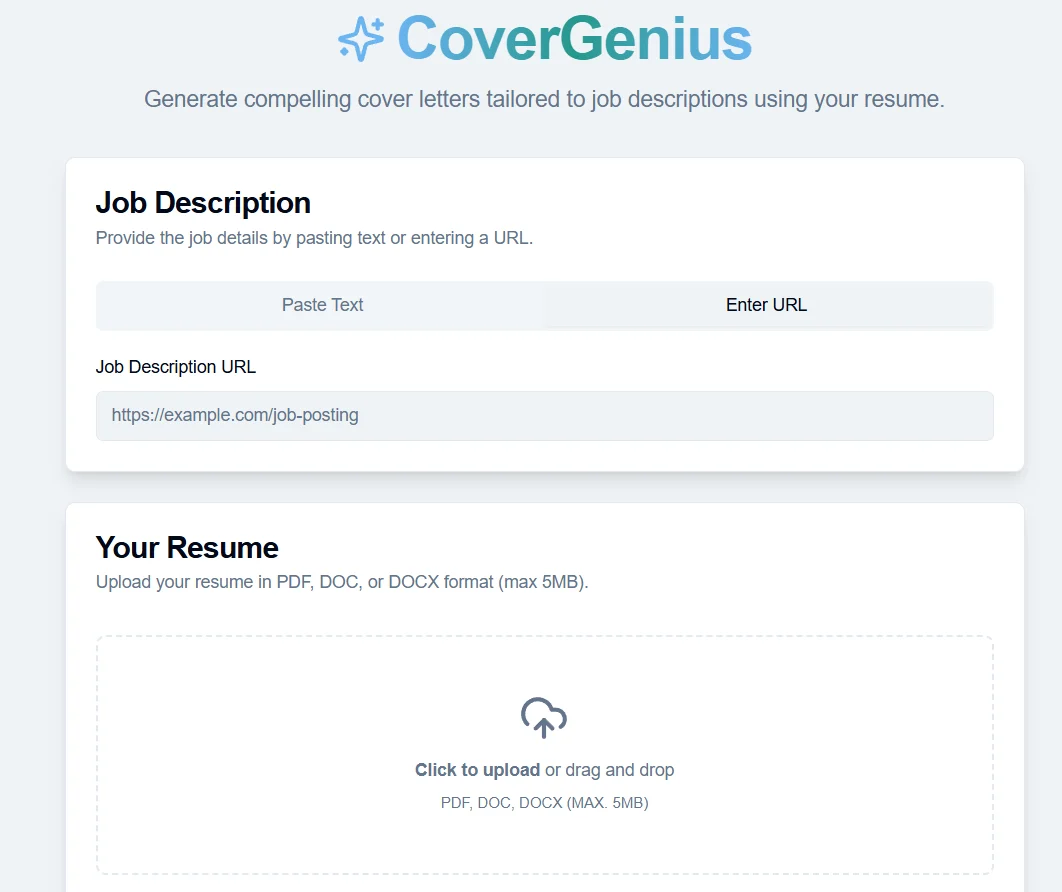
CoverGenius – Generate personalized, AI-powered cover letters in seconds.
OutreachAgent – Craft perfect networking and follow-up emails with ease.
CareerCompass – Generate a personal marketing plan from your resume to define your brand.
SmartPrep – Ace your next interview with AI-powered practice.
ProfileSpark – Optimize your LinkedIn profile to attract recruiters and opportunities.
Our Platform Tools:

ResumeRank
Scan your resume, get a score, fix what matters.

CoverGenius
Generate personalized, AI-powered cover letters in seconds.

OutreachAgent
Craft perfect networking and AI-powered follow-up emails with ease.

CareerCompass
Instantly generate a personal marketing plan from your resume to define your brand and attract the right opportunities.

Smart Prep
Simulates a real interview based on your resume and the job description, giving you real-time feedback to build your confidence.

Profile Spark
Optimize your LinkedIn profile to attract recruiters and opportunities.