Here’s an uncomfortable truth about modern job search: most people in the applicant pile look qualified. Same degree bands. Same tool stacks. Same “results-oriented” bullets. If the only story you tell is what you’ve done, you’re competing on the one axis where everyone else is competing too.
Simon Sinek’s Golden Circle idea — from Start With Why and his “Stand Out in the Job Market” framing — is useful here. People don’t just buy what you do; they’re drawn to why you do it. Translated to hiring: when candidates look similarly capable on paper, the ones who can name a clear purpose, then show how they work, then back it with proof, tend to feel more human — and more memorable — than a wall of tasks.
That doesn’t mean inventing a poetic mission statement overnight. It means leading with the belief or problem that actually energizes you, then connecting your methods and achievements to that thread. GigHQ isn’t here to “find your WHY” for you. We’re here to help you capture evidence, stay organized, and spend your energy on roles that still look real.
WHAT alone rarely stands out
Open ten resumes for the same mid-level role and you’ll see the pattern: responsibilities listed as if the job description itself were the story. Managed a team. Built dashboards. Supported stakeholders. None of that is wrong — it’s just incomplete.
Sinek’s point, in spirit, is that WHAT is the outer ring. It’s necessary. It’s not usually enough to differentiate. Two people can hold the same title and still leave a hiring manager with opposite feelings: one sounds interchangeable; the other sounds like someone you’d want on a hard project on a Tuesday.
A simple shift:
- WHAT-only: “Managed a team of eight analysts.”
- Closer to WHY + HOW + proof: “Cared about turning messy data into decisions people could trust — led eight analysts to ship a weekly operating review that cut decision lag across three teams.”
Same facts. Different signal. The second version tells you what drove the work and what changed because of it.
You don’t need Sinek’s exact mock letters or sample resumes to practice this. Use your own language. Keep it true. If a line wouldn’t survive a follow-up question, rewrite it until it would.
Start with WHY — without faking a personal brand
A lot of career advice turns “start with WHY” into theater. Suddenly every cover letter opens with a TED-Talk sentence that doesn’t match how the person actually talks.
Don’t do that.
Try three quieter prompts instead:
- What problem do you keep volunteering for? (Even when it’s not your job title.)
- What kind of outcome makes a hard week feel worth it?
- How do you prefer to work when you’re at your best? (That’s often your HOW.)
Then put a short version of that near the top of your materials — a resume summary line, a LinkedIn About opener, the first paragraph of a note to a hiring manager. Follow with HOW (your distinctive ways of working), then WHAT (roles, skills, measurable results).
If you’re mid-search and your “WHY” still feels fuzzy, that’s okay. Capture stories as you go. A Career Journal is useful here not as a branding exercise, but as a place to park: what you shipped, what you learned, what you’d repeat. Raw notes become better bullets later. Tools help you remember; they don’t invent your purpose.
Interview them back (lightly)
Sinek’s interview advice often lands in the same place: don’t only pitch yourself. Learn whether they are a place you can do good work.
Three questions that reveal more than a polished careers-page slogan:
- How does the team handle mistakes?
- What do you love about working here?
- Where is there room to grow and keep learning?
You’re not being difficult. You’re treating the interview as a two-way filter. “I’ll take anything” energy burns people out — and it shows.
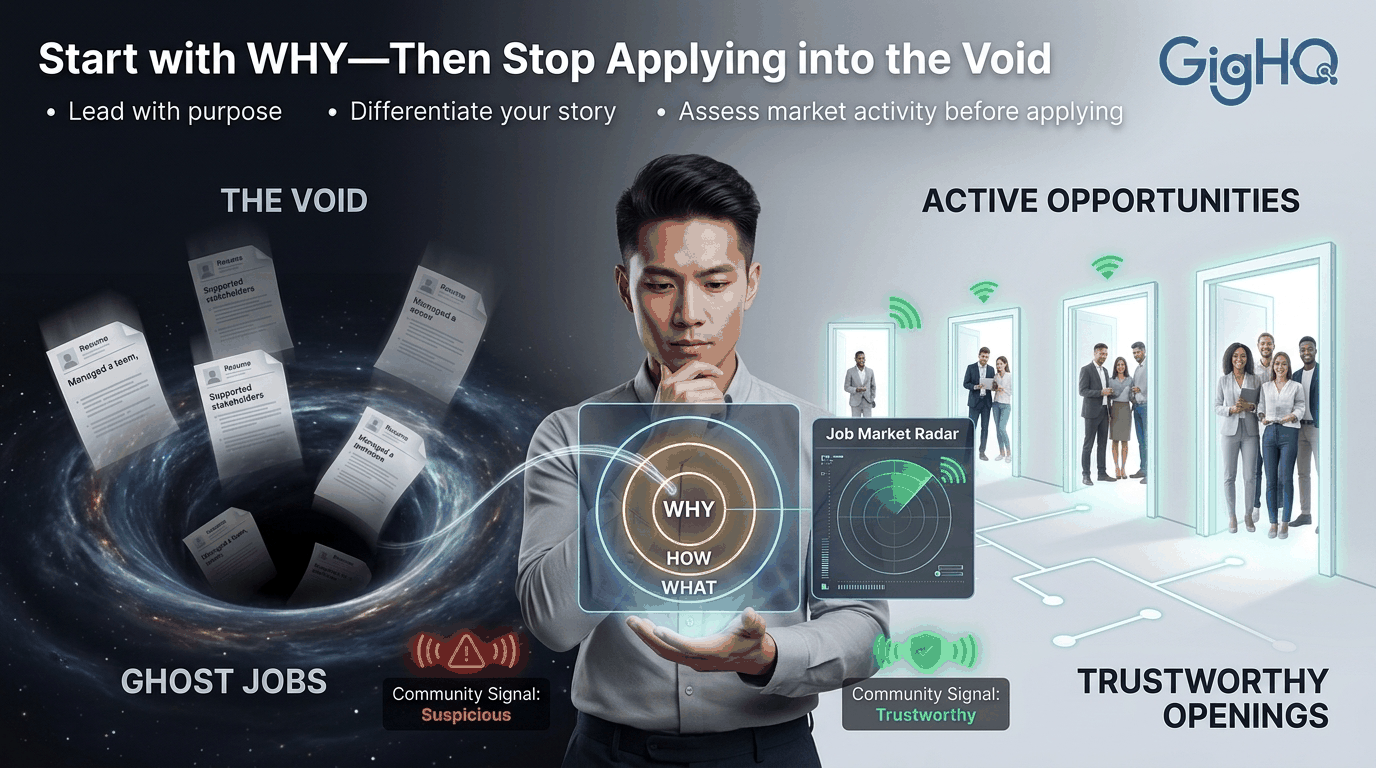
Here’s the GigHQ half: don’t pour authenticity into the void
This is the part career advice usually skips.
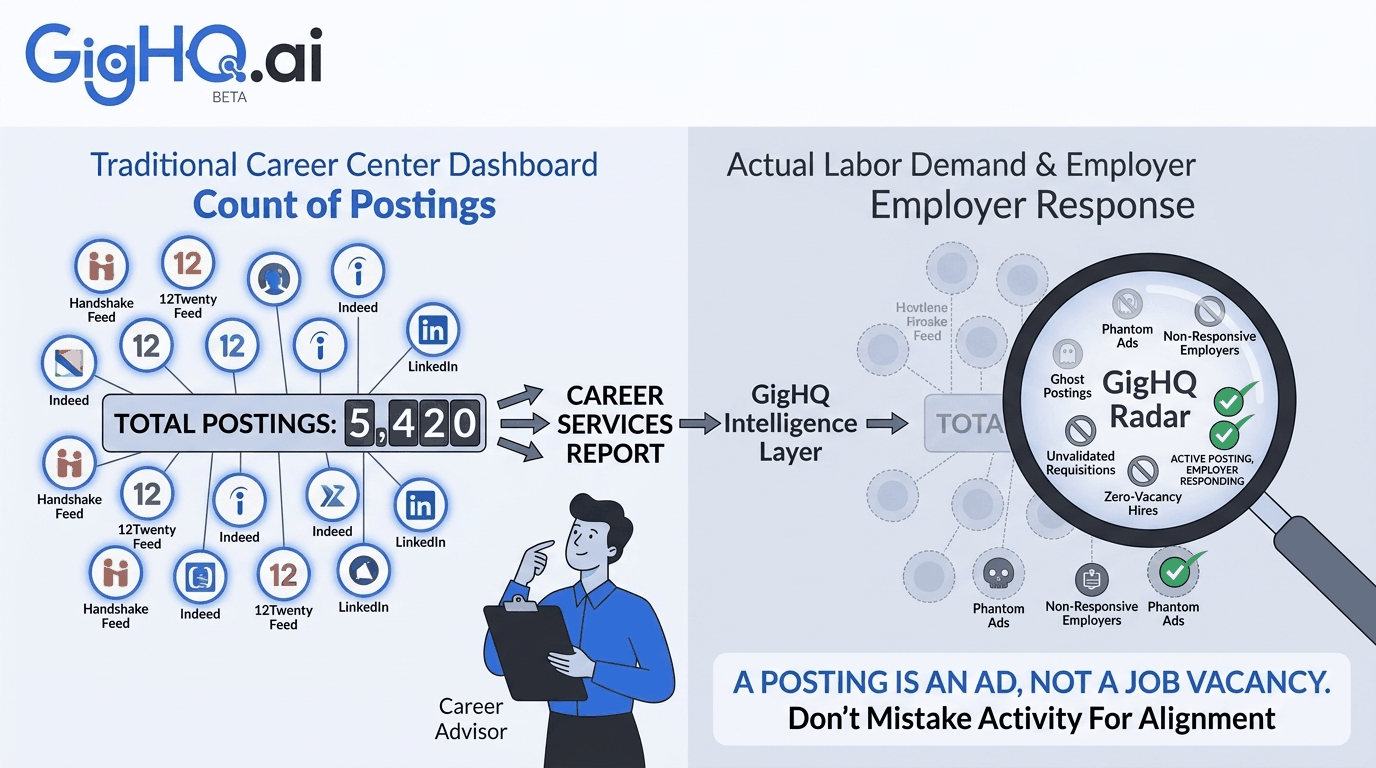
You can write a clear, honest, WHY-forward resume… and still disappear into a posting that hasn’t moved in months. Ghost jobs, stale reqs, and silent pipelines are real. Pouring your best story into a dead inbox isn’t noble — it’s expensive.
That’s why we built Job Market Radar and Community Signal into how GigHQ thinks about the search.
- Job Market Radar helps you look at what’s happening in the market before you spend another weekend rewriting materials for every listing that looks open.
- Community Signal surfaces how a posting feels to people paying attention — roughly: Trustworthy, Unknown, or Suspicious — so you can decide where your authenticity is worth spending.
We’re not claiming a magic score that guarantees an offer. We’re saying: pair a better story with a cleaner sense of which doors might still open.
And a practical reminder: a lot of roles still move through people you know, referrals, and conversations that never start as a cold apply. Soft networks matter. That’s not a substitute for strong materials — it’s a reason to keep both your story and your outreach organized.
What to do this week
- Rewrite three bullets from task → purpose + impact (true ones only).
- Draft a two-sentence “why I’m drawn to this kind of work” opener you can reuse and tailor.
- Before the next apply binge, check the posting against Radar / Community Signal — if it looks silent or suspicious, deprioritize it.
- Log applications and notes somewhere you’ll actually reopen (a tracker beats a pile of tabs).
If you want a free place to do that without turning your search into another unpaid internship, GigHQ’s seeker product includes an application tracker and Career Journal. Explore Job Market Radar here: https://www.gighq.ai/job-market-radar/. GigHQ is not a job board — it’s infrastructure for a clearer, less wasteful search.
Closing
Standing out isn’t only a writing problem. It’s a judgment problem: what you lead with, and where you spend that effort.
Borrow the Golden Circle discipline from Sinek — WHY, then HOW, then WHAT — carefully and in your own words. Then protect that work. Don’t gift your best story to a void.
Start with WHY. Then apply where someone might still be listening.
Our Platform Tools:

ResumeRank
Scan your resume, get a score, fix what matters.

CoverGenius
Generate personalized, AI-powered cover letters in seconds.

OutreachAgent
Craft perfect networking and AI-powered follow-up emails with ease.

CareerCompass
Instantly generate a personal marketing plan from your resume to define your brand and attract the right opportunities.

Smart Prep
Simulates a real interview based on your resume and the job description, giving you real-time feedback to build your confidence.

Profile Spark
Optimize your LinkedIn profile to attract recruiters and opportunities.