The empathy case for optimizing your application instead of raging at the system.
There is a version of the job search conversation that stays almost entirely inside the experience of the candidate.
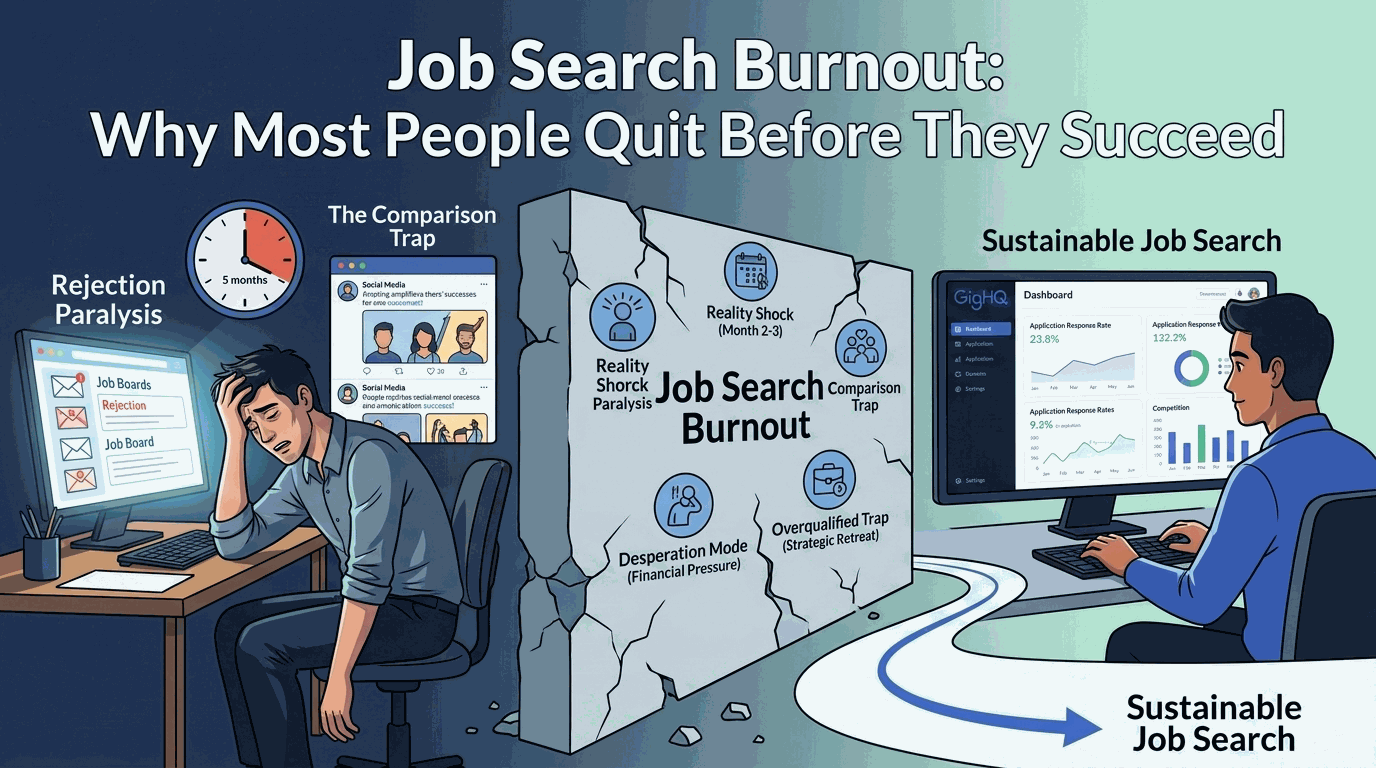
The rejection emails. The deafening silence. The algorithmic filters. The sense of being processed by a cold, faceless machine that has never heard your name and doesn’t care to. It is the deep, exhausting frustration of being qualified—genuinely, demonstrably qualified—and still not making it through.
That conversation is legitimate. The frustration is earned. The recruiting ecosystem has real, structural problems.
But there is another side of this equation that almost never gets discussed, and it turns out to be surprisingly important. Not because it magically fixes the problems, but because understanding it completely changes how you navigate them.
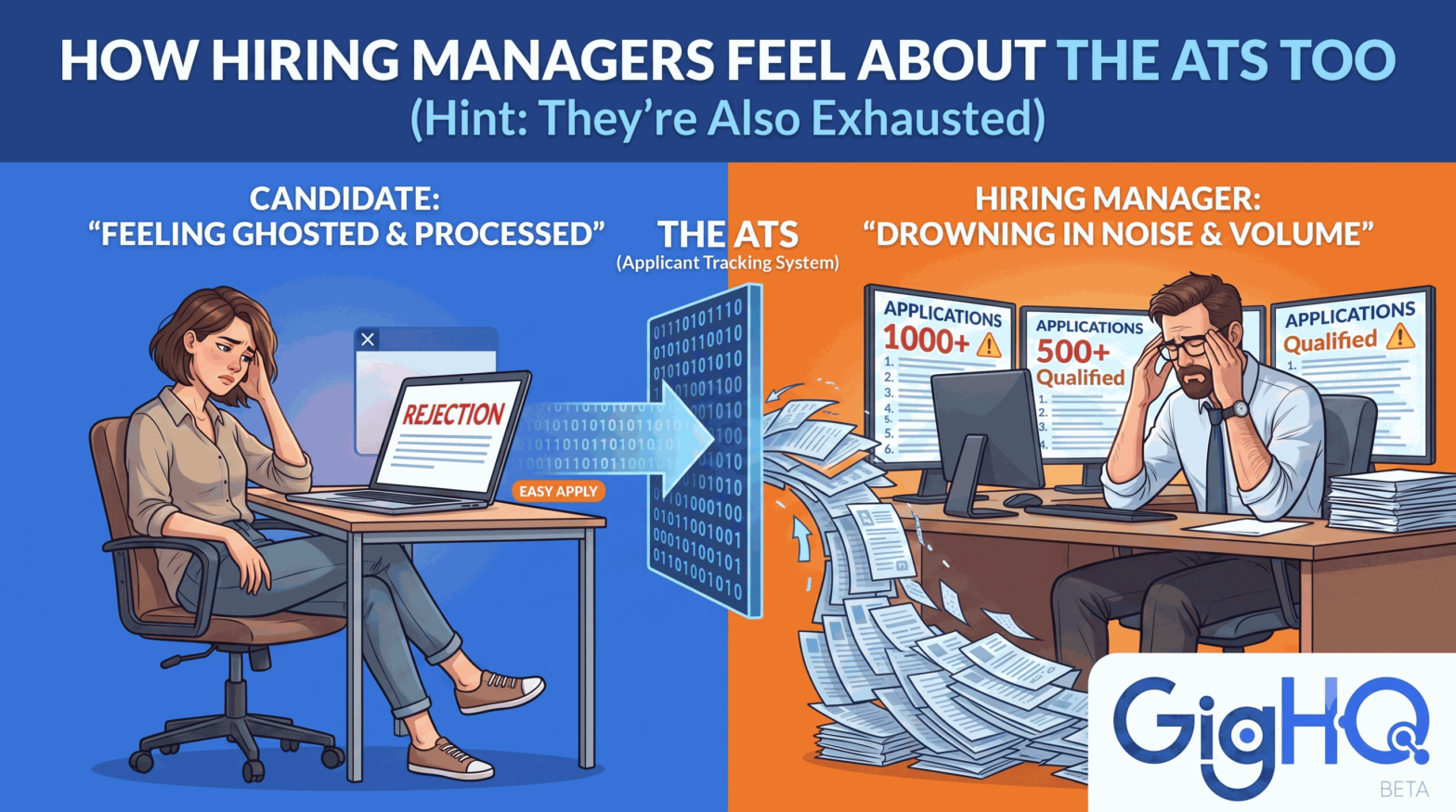
The hiring manager sitting on the other side of the Applicant Tracking System (ATS) is also exhausted. They are frustrated, checked out, and operating inside a broken system they didn’t design, don’t fully control, and often don’t fully trust.
They are not the enemy. In many cases, they are something closer to a fellow traveler—trapped in the same collapsing infrastructure, desperately trying to find a signal in a tidal wave of noise that neither side can comfortably manage.
Understanding that doesn’t fix the system. But it reframes everything. And that reframe, it turns out, has major, practical implications for how you run your search.
The Number Nobody Talks About
When you submit an application and hear nothing, your mental model of what happened probably looks like this: your resume entered the system, the algorithm scored it, it didn’t hit an arbitrary keyword threshold, and it got dumped in the trash before a human ever saw it.
That model is largely accurate. But what happens on the other side of the cut—when applications actually make it through the algorithmic filter—is a picture most candidates have never considered.
A competitive role at a mid-sized company can receive anywhere from several hundred to several thousand applications. The ATS will filter that number down, but “filter down” is doing a massive amount of work in that sentence. After basic algorithmic screening, a hiring manager might still be looking at a stack of two hundred, three hundred, or five hundred applications that the system has deemed “qualified” for human review.
Recruiter workloads have skyrocketed. According to industry data, average recruiter workloads can exceed 500+ active applications per open role.
There is no universe in which a single human being—or even a small, overworked recruiting team—can give genuine, thoughtful attention to 500 resumes while also doing the rest of their actual job. Hiring is almost never a hiring manager’s sole responsibility. They have a team to run, a product to ship, a quota to hit, and a roadmap to maintain. They are squeezed.
So, they do what any human does when faced with an impossible volume of work and insufficient time: they develop shortcuts. They pattern-match. They spend an average of three to eight seconds scanning each document. They look for immediate reasons to say “pass” because giving every application a holistic, deep review is a physical impossibility.
As industry veterans put it plainly: hiring managers are beyond exhausted. They don’t know how to address a situation where six thousand people have applied to a single role, so they let the bot do its thing because they have no other viable option.
That is not a defense of the system. It is a description of it. And it completely shifts how you must present yourself.
The Empathy Reframe: Why “Easy Apply” is the Real Villain
Here is what changes when you genuinely internalize the hiring manager’s experience:
You stop thinking of the ATS as a sentient gatekeeper out to get you, and you start seeing it as shared, broken infrastructure.
When you realize the person on the other side is drowning in volume, you stop being baffled by the silence. You understand it as a structural inevitability. They aren’t ignoring you specifically; they are managing an impossible situation with blunt tools. The silence is not a verdict on your worth. It is a symptom of system overload.
This is where the massive “Easy Apply” trend backfires. Tools that promise to auto-apply you to hundreds of jobs with one click are actually creating the very noise that is keeping you unemployed. They flood recruiters’ inboxes with unqualified, unvetted spam, forcing hiring managers to lean even more heavily on aggressive filters and 3-second visual shortcuts.
At GigHQ, we built the antidote to this cycle. We aren’t a mass-apply bot. We are an AI-powered Job Search Copilot built on a philosophy of quality, intent, and matching.
When a candidate uses the GigHQ Chrome Extension (watch the quick demo here), they aren’t blindly spamming the system. They are using data to identify actual, active roles, bypassing the “ghost jobs” that companies keep posted just to collect resumes, and applying with surgical precision.
What Hiring Managers Are Actually Looking For (The “Easy Yes”)
When a hiring manager sits down with a stack of applications, they are not conducting a careful, holistic evaluation of your potential. They are doing triage.
The question they are actually asking is: “Can I quickly tell whether this person is worth the time it takes to have a 30-minute conversation?”
To get placed in the “yes” pile in under eight seconds, your application must provide four things:
1. A Clear Professional Identity
They need to know what you are instantly. If your resume requires the reader to do heavy interpretive work to figure out your core focus, the answer for a time-pressed hiring manager is almost always “pass.”
2. Specific Evidence, Not Assertion
Saying you are a “highly motivated, results-oriented leader” tells a hiring manager absolutely nothing. A bullet point stating that you “rebuilt a checkout flow and increased conversion from 8% to 17%” gives them concrete, undeniable proof. Numbers and metrics are the universal language of credibility.
3. High-Quality Fit Signals
Hiring managers desperately want to find applications that make the decision easy. When your resume aligns cleanly with the job description, you aren’t just “gaming” an algorithm—you are relieving the recruiter’s stress. You are the application that makes their job easier instead of harder.
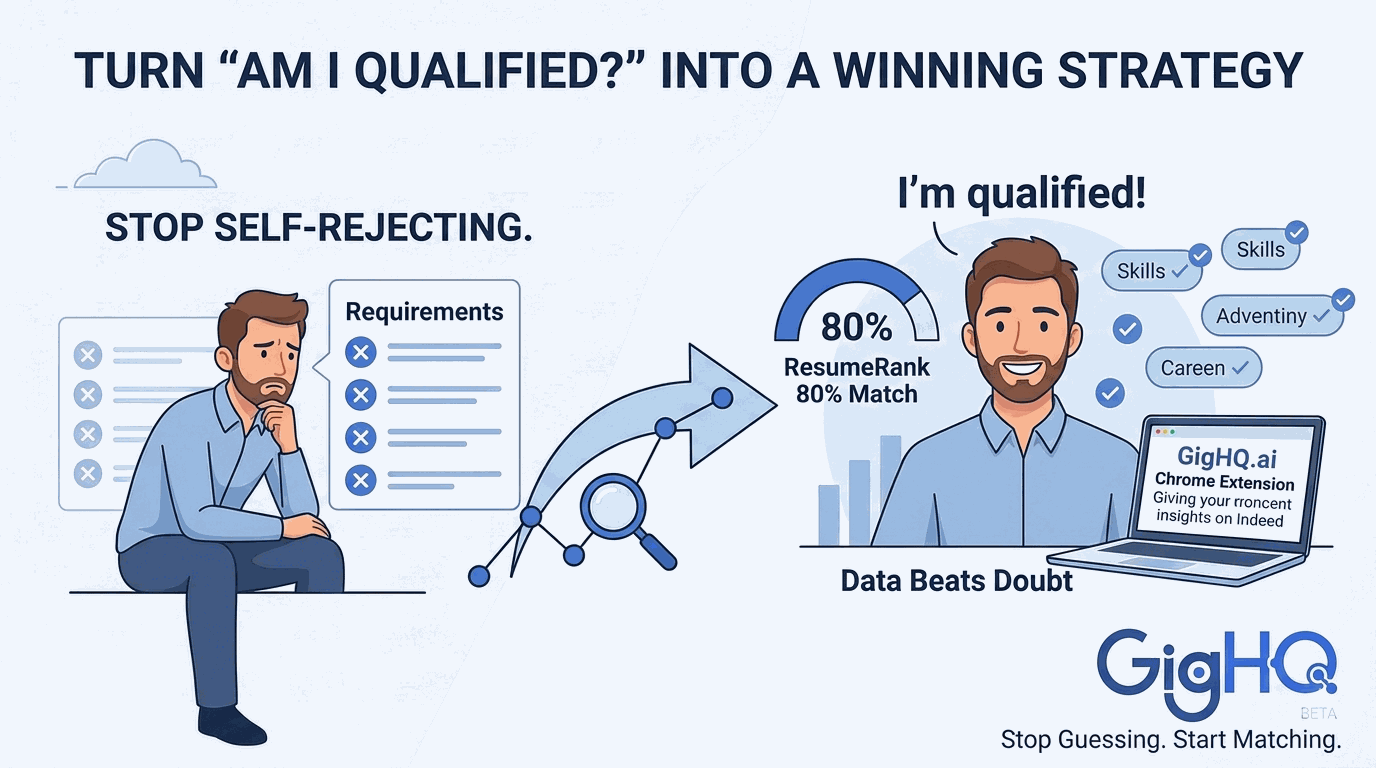
How to do this effortlessly: Before you hit send, run your resume through ResumeRank. It instantly scores your resume against the specific job description, highlighting missing keywords, analyzing critical gaps, and giving you the exact feedback an elite career coach would offer to ensure you pass both the bot and the 3-second human scan.
The Ghosting Problem (And How to Follow Up Well)
Post-interview ghosting is at an all-time high, with reports indicating that over 60% of candidates have been ghosted after an interview.
But while ghosting is deeply painful for candidates, it is rarely driven by malice. A role opens, applications flood in, interviews are scheduled, but then internal priorities shift, budget approvals stall, or the recruiter gets pulled onto another emergency. Candidates fall into an administrative “black box.”
Because this silence is usually a symptom of overwhelmed systems, following up is not aggressive—it is highly appropriate.
A brief, professional check-in a week or two after an interview is often the exact nudge a busy manager needs to pull your file back to the top of their pile. The candidates who follow up well—briefly, specifically, and without desperation—get responses.
- How to manage this without the headache: Tracking dozens of applications and remembering when to follow up used to require a massive, manual spreadsheet. With GigHQ, you can track your entire application journey automatically just by using your unique
@gighq.aitracking email. No more copy-pasting data into spreadsheets (see how it works without a spreadsheet here). - When it’s time to reach out, OutreachAgent helps you identify the right internal contacts at the company and drafts perfect, high-intent follow-up emails in seconds.
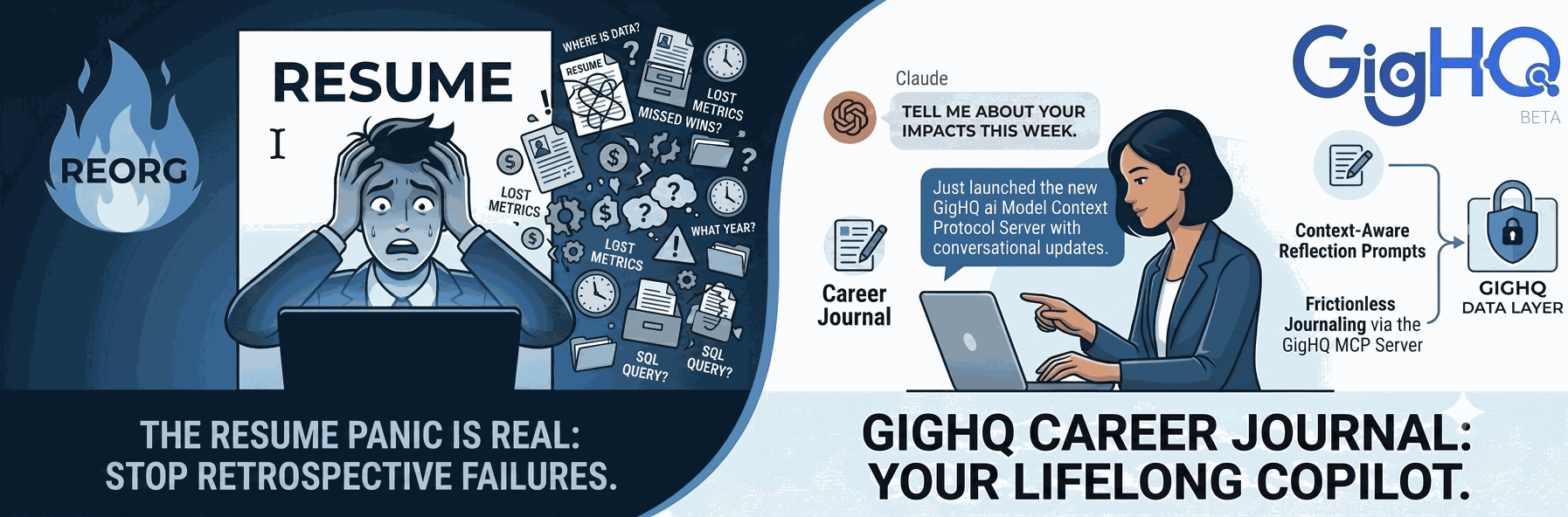
For advanced users, you can even connect Claude or ChatGPT directly to your GigHQ account using our native MCP integration, allowing you to manage your pipeline, analyze skills gaps, and draft emails entirely through conversation. (See how the GigHQ Ecosystem and MCP Server work together).
The Bottom Line: Optimization is Empathy
When you tailor your resume, quantify your achievements, use clean formatting, and write concise, highly targeted cover letters using tools like CoverGenius, you are not just jumping through bureaucratic hoops.
You are being deeply considerate of another person’s constraints.
You are giving the exhausted human on the other side of the screen an application that answers their questions quickly, proves your capability immediately, and signals fit without forcing them to do unpaid interpretive labor.
This emotional reframe matters because it takes the bitterness out of the job search. Instead of feeling like you are fighting an adversarial machine, you are actively helping a tired person do their job. And in a noisy, automated market, the candidate who makes the hiring manager’s life easier is the one who ultimately gets the offer.
Stop applying blind. Start applying smart.
Create your free GigHQ.ai account today and supercharge your job search.
Our Platform Tools:

ResumeRank
Scan your resume, get a score, fix what matters.

CoverGenius
Generate personalized, AI-powered cover letters in seconds.

OutreachAgent
Craft perfect networking and AI-powered follow-up emails with ease.

CareerCompass
Instantly generate a personal marketing plan from your resume to define your brand and attract the right opportunities.

Smart Prep
Simulates a real interview based on your resume and the job description, giving you real-time feedback to build your confidence.

Profile Spark
Optimize your LinkedIn profile to attract recruiters and opportunities.