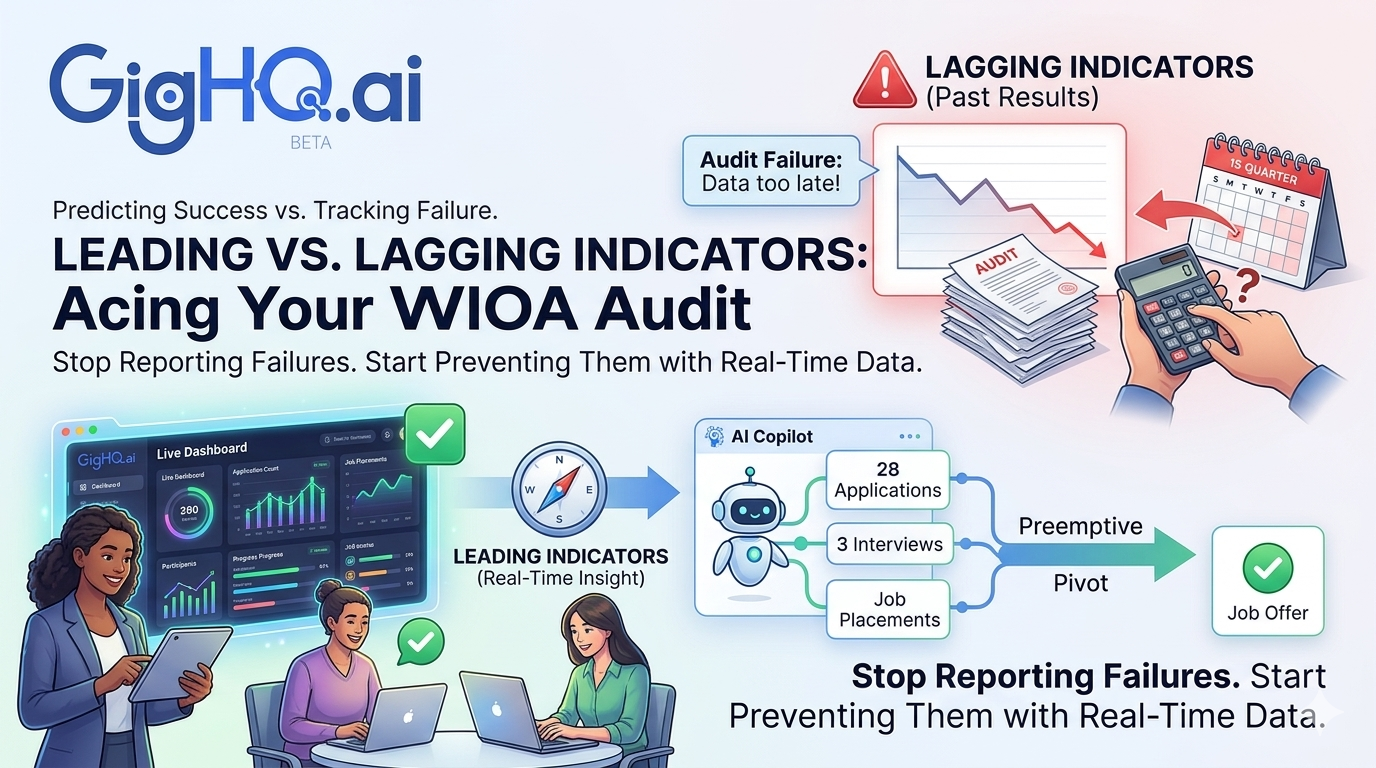

For decades, the NACE First Destination Survey (FDS) has been the gold standard for proving university value. Career centers across the country exhaust their budgets and staff time chasing alumni to answer one simple question: “Did you get a job?”
But as we enter a new era of outcome-based accreditation and legislative scrutiny—exemplified by Iowa’s HSB 550 and Texas’s House Bill 8—the FDS is proving to be a fragile foundation.
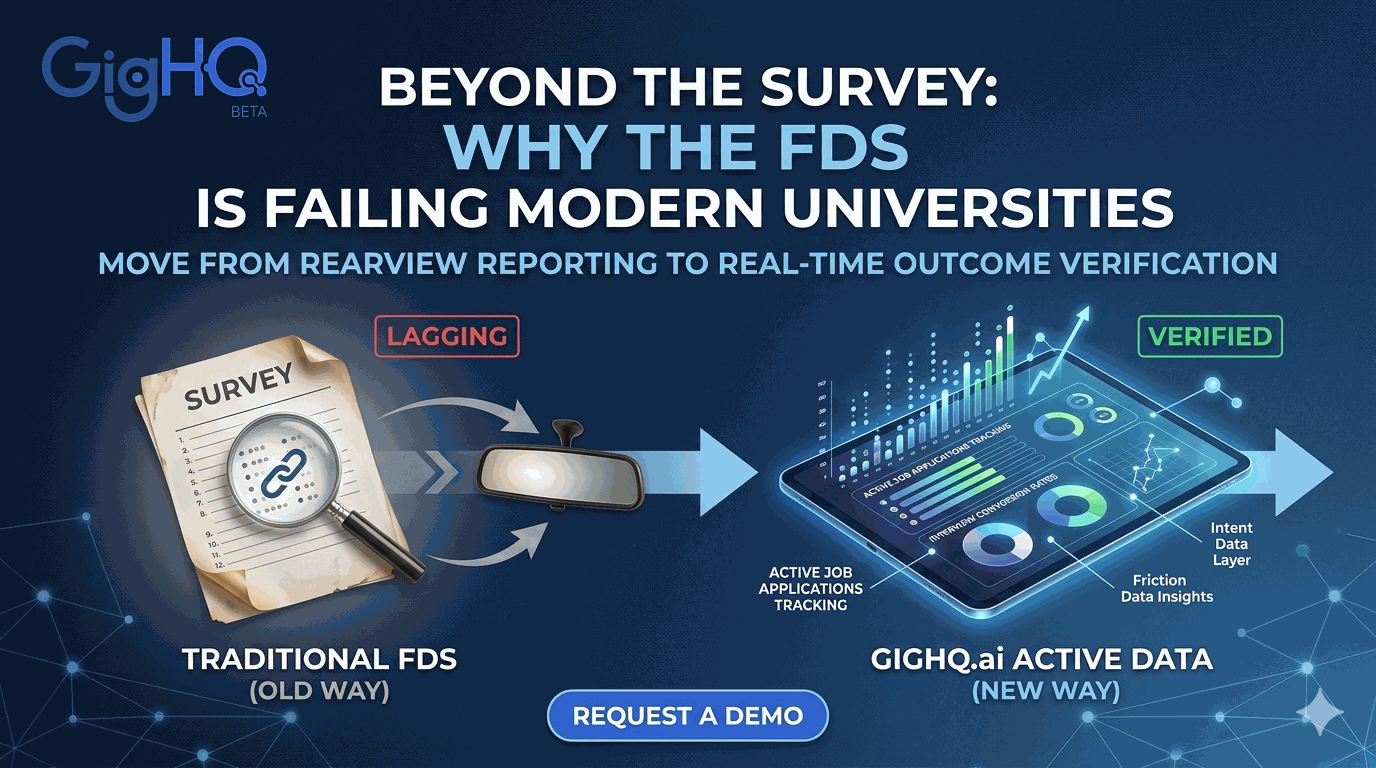
The hard truth is that the traditional survey methodology is failing modern universities. It is slow, biased, and increasingly ignored by the very students it seeks to track. To survive the shift from “reporting” to “verifying,” institutions must move beyond the survey and embrace active outcome data.
The Fatal Flaws of the FDS Methodology
Relying on a self-reported survey conducted six months after graduation creates three systemic points of failure:
1. The Response Rate Crisis
The average response rate for alumni surveys is abysmally low, often hovering between 10% and 20%. When only a small fraction of a cohort responds, the data is not statistically significant—it’s anecdotal. This makes it impossible for universities to defend their programs against rigorous new outcome-based accreditors that demand cohort-wide transparency.
2. Deep-Seated Response Bias
Who actually answers a First Destination Survey? Generally, it is the students who have landed impressive roles at high-profile companies. Students who are underemployed, struggling to find work, or have pivoted out of their field are far less likely to respond. This “success bias” paints an artificially rosy picture of graduate outcomes while leaving the students who need the most help invisible to the institution.
3. Massive Data Lag
By the time a career center analyzes FDS results, the data is already 12 to 18 months old. This “rearview mirror” approach prevents universities from intervening in real-time. If a specific major is struggling to convert interviews into offers, the university doesn’t find out until that class has already left the building and the next class is halfway through the same cycle.
Introducing a High-Fidelity Alternative: Intent and Friction Data
At GigHQ.ai, we believe that employment verification shouldn’t be a post-graduation chase—it should be a passive byproduct of a student’s job search.
By using the GigHQ Compliance Platform, universities can capture “Intent Data” and “Friction Data” in real-time, providing a high-fidelity alternative to the FDS.
- Intent Data: Instead of waiting to see if a student got a job, we track where they are applying, which resumes they are using, and which companies are engaging with them. This allows career counselors to see a student’s trajectory before they graduate.
- Friction Data: We identify exactly where the “broken marketplace” is affecting your students. Is it a lack of interviews (a resume/branding issue) or a failure to close after the final round (an interview prep issue)?
From “Post-Mortem” to “Preventative”
The shift toward WIOA-grade compliance and performance-based funding means that institutions can no longer afford to treat graduate outcomes as a post-mortem exercise.
Modern universities are utilizing GigHQ’s data layer to turn the chaotic, unobservable job search into a structured, auditable data stream. By empowering students with tools like ResumeRank and SmartPrep, and also making their job application available inside ChatGPT and Claude, universities provide immediate value to the student while simultaneously capturing the passive data necessary to prove their impact to regulators.
The survey is a relic of an analog era. The future of higher education belongs to the institutions that can verify their value in real-time.
Are you ready to move beyond the survey? Request a demo of the GigHQ Compliance Platform and see how we’re helping universities secure their funding through real-time outcome tracking.
Our Platform Tools:

ResumeRank
Scan your resume, get a score, fix what matters.

CoverGenius
Generate personalized, AI-powered cover letters in seconds.

OutreachAgent
Craft perfect networking and AI-powered follow-up emails with ease.

CareerCompass
Instantly generate a personal marketing plan from your resume to define your brand and attract the right opportunities.

Smart Prep
Simulates a real interview based on your resume and the job description, giving you real-time feedback to build your confidence.

Profile Spark
Optimize your LinkedIn profile to attract recruiters and opportunities.