The modern job market feels like a paradox. On one side, job seekers are sending out hundreds of applications into what feels like a digital void. On the other, hiring managers are drowning in a sea of resumes, often struggling to find the right fit despite the volume.
We recently sat down with a hiring insider who shared a rare glimpse into the “other side” of the screen. By understanding how managers actually interact with hiring platforms, you can stop guessing and start optimizing.
Here is what is actually happening when you hit “apply.”
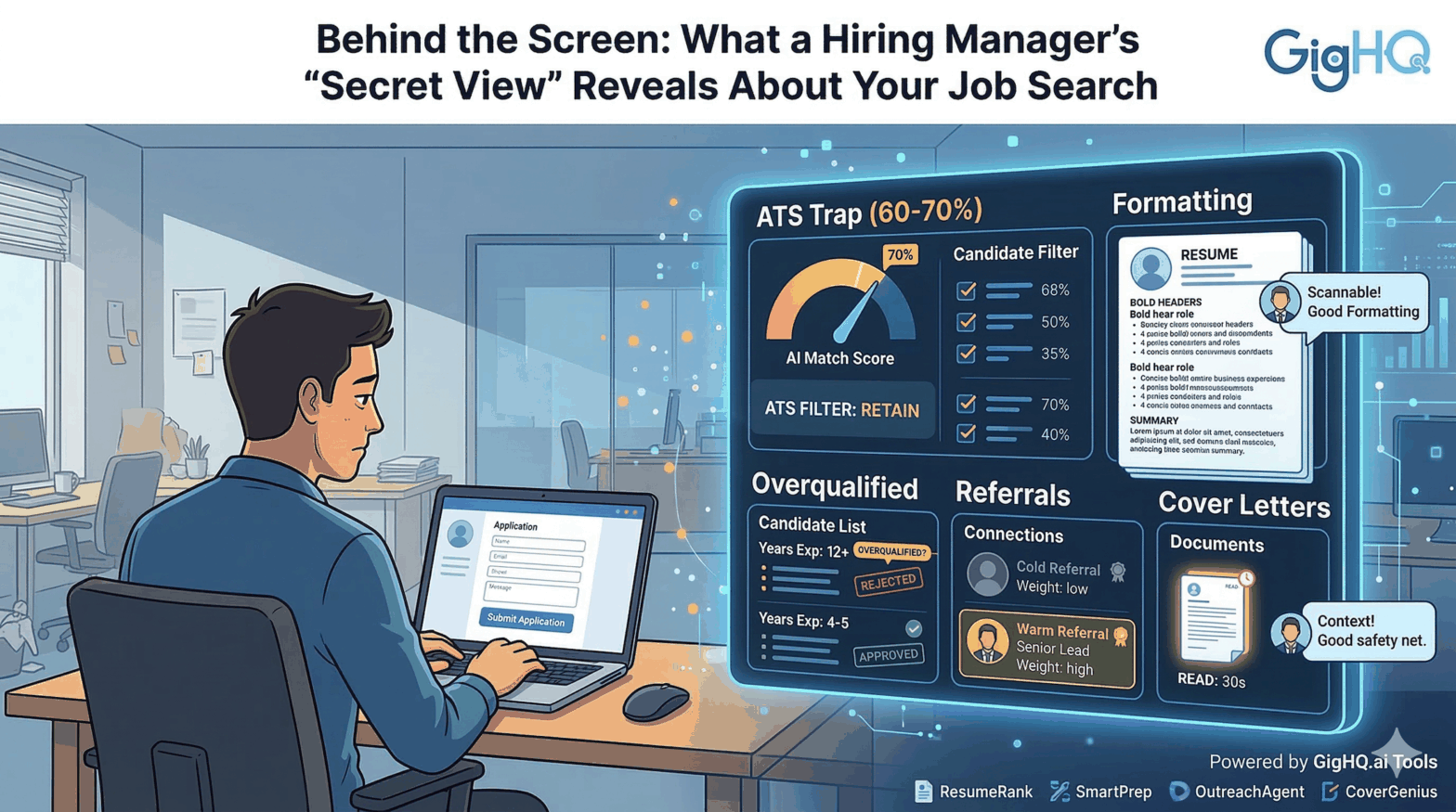
1. The ATS Trap: Why 60-70% is the Magic Number
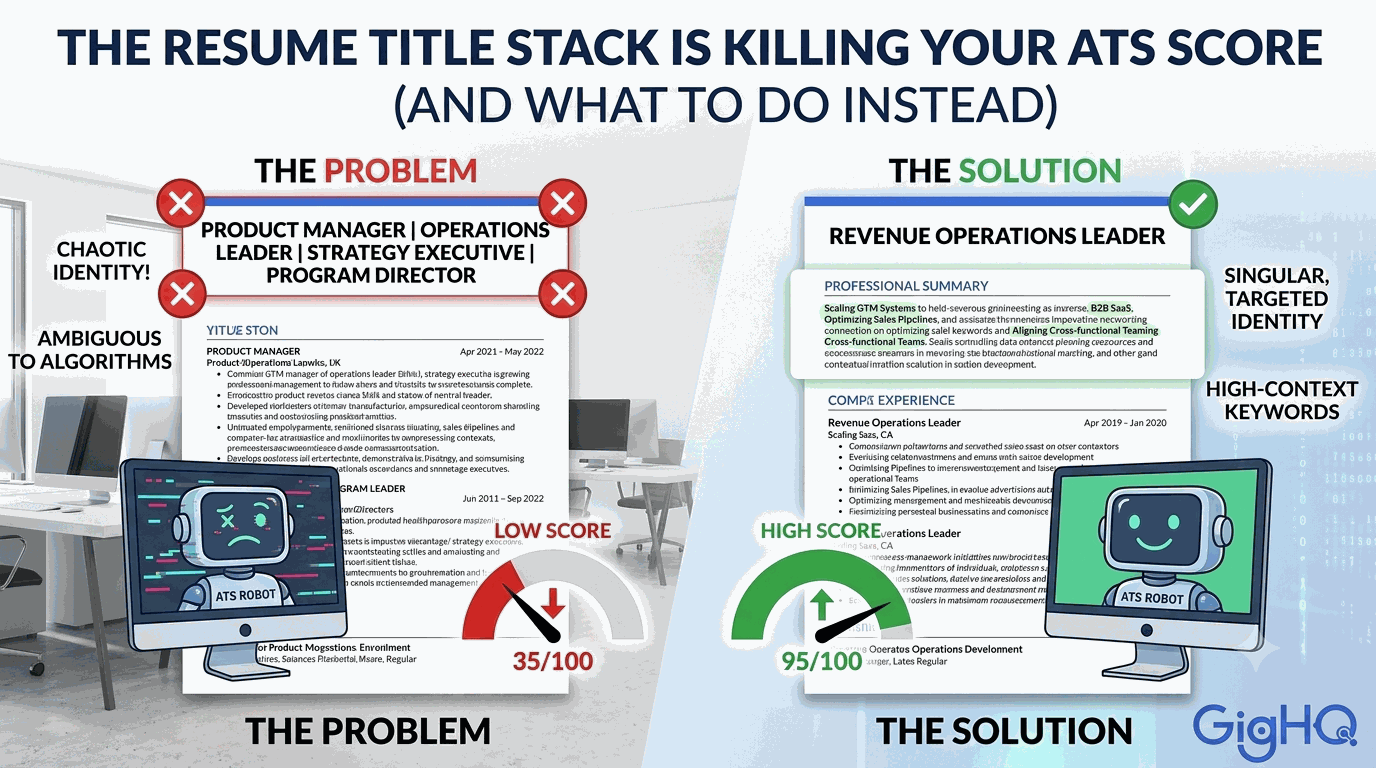
Many candidates assume they need a 100% match to get noticed. In reality, strict AI filters often penalize candidates for trivial reasons—like having “Coordinator” in a title instead of “Analyst,” or being six months short of an arbitrary “5-year” requirement.
The Insider Insight: Managers are often finding great candidates that the AI initially rejected.
The Strategy: Don’t let a machine discard you. Match your job titles to the posting (if the work was equivalent) and aim for a 60–70% match score.
- GigHQ Tool: Use ResumeRank to check your match percentage before you apply.
2. Formatting for Fatigue
Hiring managers often view your resume through a “tiny box” inside their recruitment software. If your font is 9pt or your margins are non-existent, they won’t download the file to read it—they’ll just skip it.
The Insider Insight: Prose doesn’t matter; scannability does. High-achievers often make the mistake of including 8-10 bullet points per job, which reads as a wall of text to a tired manager.
The Strategy:
- Use bold text to draw eyes to key achievements.
- Keep bullet points concise (4-6 per role).
- Include a strong, easy-to-read Summary at the top.
- GigHQ Tool: Use SmartPrep to refine how you talk about your experience so it hits hard and fast.
3. The “Overqualified” Rejection is Real
If a job asks for 3-5 years of experience and you show 15+, you might think you’re a “slam dunk.” However, many managers are instructed to filter out overqualified candidates to avoid “flight risk” or salary mismatches.
The Insider Insight: Roughly 25% of the applicant pool is often discarded simply for having too much experience.
The Strategy: If you truly want a role that is “below” your seniority level, trim your resume. Remove your earliest roles to align your experience with the job’s expectations.
4. The Truth About “Cold” Referrals
We’ve all been told to “get a referral.” But a referral from a LinkedIn stranger you’ve never spoken to carries very little weight.
The Insider Insight: If a manager doesn’t know the person referring you—or worse, if the referrer isn’t a high-performer themselves—the referral status is ignored.
The Strategy: Focus on building genuine connections or use targeted outreach rather than collecting “referral clicks” from strangers.
- GigHQ Tool: Use OutreachAgent to craft personalized messages that actually start conversations.
5. Cover Letters: The 30-Second Tie-Breaker
Only about 50% of applicants submit cover letters. While they aren’t always read, they act as a “safety net.”
The Insider Insight: A cover letter can save a candidate who has a low AI match score or a non-traditional background. It provides the context that a resume lacks.
The Strategy: Always include one, but keep it brief. A manager will spend about 30 seconds scanning it for “Why you?” and “Why us?”
- GigHQ Tool: Generate tailored, concise letters in seconds with CoverGenius.
Final Thoughts: Beating the Bias
Hiring managers are human, which means they deal with unconscious biases regarding location, education prestige, and age. If you are applying for a remote role but live in a high-cost-of-living area, or if you’re concerned about work authorization, address it clearly and early.
The “void” isn’t personal—it’s a product of overwhelmed systems. By optimizing your resume for the way managers actually work, you move from being a “data point” to being a “candidate.”
Ready to take control of your search? Explore the full power of GigHQ.ai and turn the hiring manager’s “Secret View” into your competitive advantage.
Our Platform Tools:

ResumeRank
Scan your resume, get a score, fix what matters.

CoverGenius
Generate personalized, AI-powered cover letters in seconds.

OutreachAgent
Craft perfect networking and AI-powered follow-up emails with ease.

CareerCompass
Instantly generate a personal marketing plan from your resume to define your brand and attract the right opportunities.

Smart Prep
Simulates a real interview based on your resume and the job description, giving you real-time feedback to build your confidence.

Profile Spark
Optimize your LinkedIn profile to attract recruiters and opportunities.