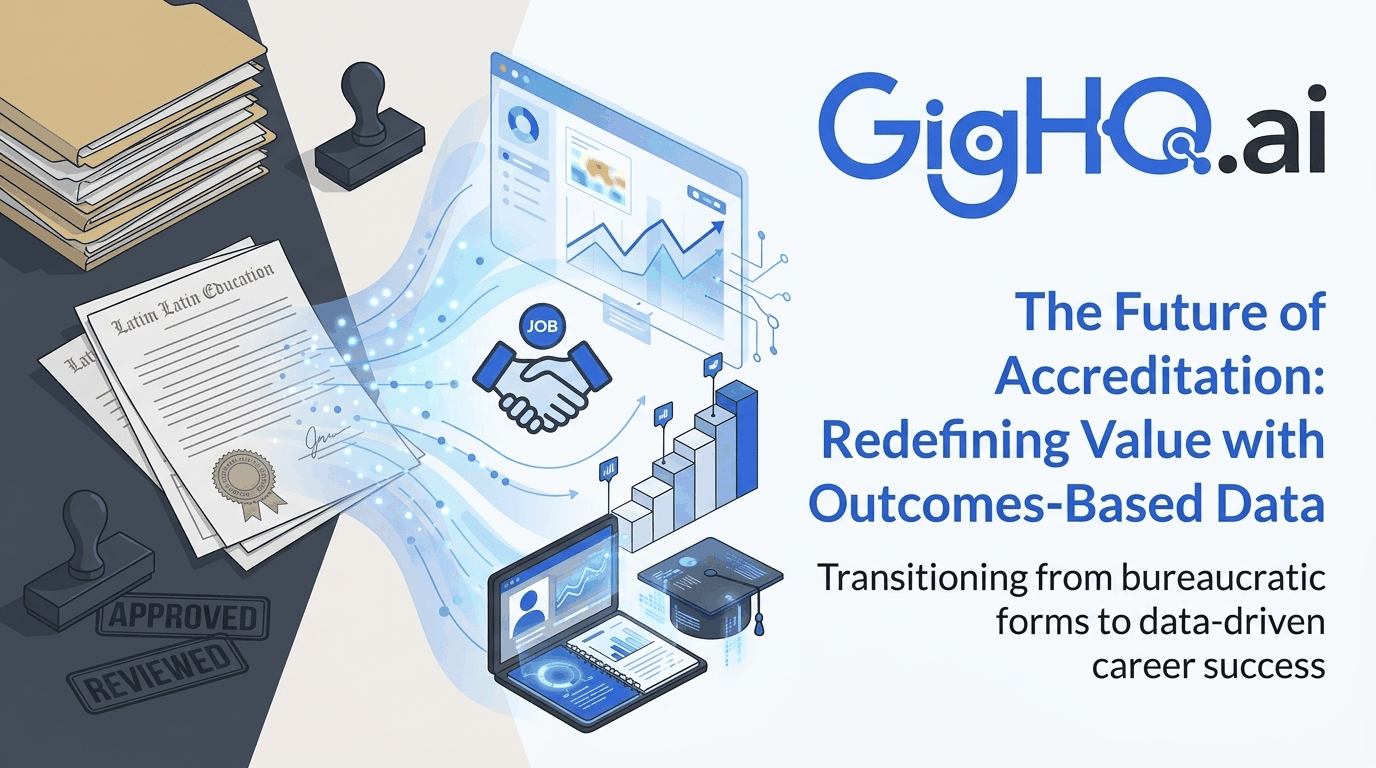
The higher education triad is experiencing its most seismic shift in decades. The U.S. Department of Education has issued a proposed rule to overhaul and modernize America’s higher education accreditation system—a move designed to dismantle entrenched bureaucratic monopolies and place student outcomes firmly at the center of higher education governance.
As leaders across the country point out, this reform pivots accreditation away from administrative checkboxes and political agendas, redirecting focus toward tangible results: graduation rates, job placement, earnings, and return on investment (ROI).
For higher education administrators, career service directors, and workforce leaders, the message is clear: The era of “enrollment-based” trust is officially over. The era of “outcomes-verified” accountability is here.
1. What’s in the Proposed Accreditation Overhaul?
For years, traditional regional accreditors evaluated universities primarily on inputs and processes—faculty headcount, library sizes, governance structures, and strategic narratives.
The Department of Education’s proposed rule signals a decisive transition toward output-driven accountability:
- Focus on Real-World Outcomes: Demanding verifiable proof of graduation rates, job placement numbers, and post-graduation wage growth.
- Breaking Monopolies: Opening up competition among accreditors, allowing institutions to seek accreditation from bodies that align with workforce-first and outcome-focused missions.
- Eliminating Bloat & Ideological Mandates: Ending requirements that force institutions to adopt administrative structures unrelated to student career success.
- Protecting Taxpayers and Students: Ensuring public funds and Title IV financial aid support programs that deliver a true economic return.
This federal alignment reflects state-level initiatives across the nation—from Florida and Texas to Iowa’s House Study Bill 550 and the formation of the Commission for Public Higher Education (CPHE). Under frameworks like the CPHE’s Standard 19, institutions must now prove workforce alignment and clear ROI to maintain standing.
2. The Institutional Analytics Crisis: “Flying Blind in a Data Storm”
While policymakers and accreditors demand high-fidelity outcome metrics, most career centers and institutional research teams face a major obstacle: They lack real-time visibility into the student job search.
Why Legacy Tracking Fails:
- Survey Fatigue: Traditional First Destination Surveys (FDS) suffer from abysmal response rates, leaving institutions with incomplete, biased cohorts.
- Lagged Data: State Unemployment Insurance (UI) wage records and federal data lag by 2 to 4 quarters. By the time a university learns a cohort is struggling, it’s too late to intervene.
- The “Out-of-State” Black Hole: When graduates move across state lines for work, state wage databases lose track of them, penalizing institutions that successfully export top talent.
- Market Inefficiencies & Ghost Jobs: Students spend hundreds of hours applying to inactive “ghost jobs,” dragging down placement velocity without the career center ever knowing why.
Under new outcomes-based standards, relying on self-reported surveys once every six months is no longer just inefficient—it’s a regulatory and financial risk.
3. How GigHQ.ai Bridges the Gap: One Platform, Two Outcomes
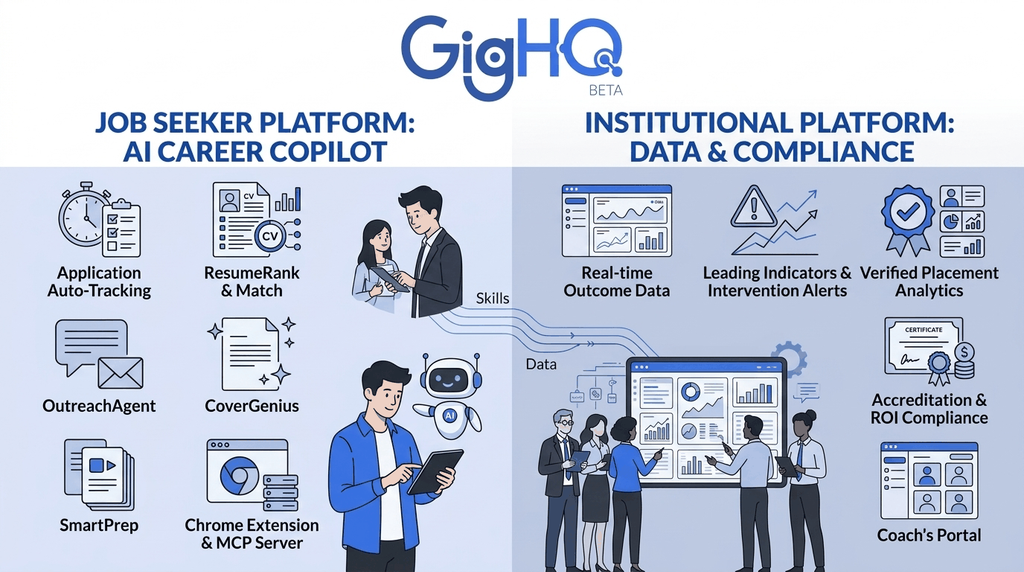
At GigHQ.ai, we built our platform to solve this exact information asymmetry. GigHQ acts as an AI-powered career copilot for job seekers and a real-time data layer for institutions.
A. Empowering Students with AI Copilot Tools
Instead of filling out manual spreadsheets or struggling with generic ChatGPT prompts, students use GigHQ’s suite of tools directly in their workflow:
- Automated Application Tracking: Apply with a dedicated
@gighq.aiemail, and GigHQ automatically tracks applications, responses, and interview invites. (Watch how to track job applications without spreadsheets). - ResumeRank: Instantly score resumes against specific job descriptions, surface skill gaps, and optimize keywords.
- CoverGenius: Generate tailored, high-converting cover letters in seconds.
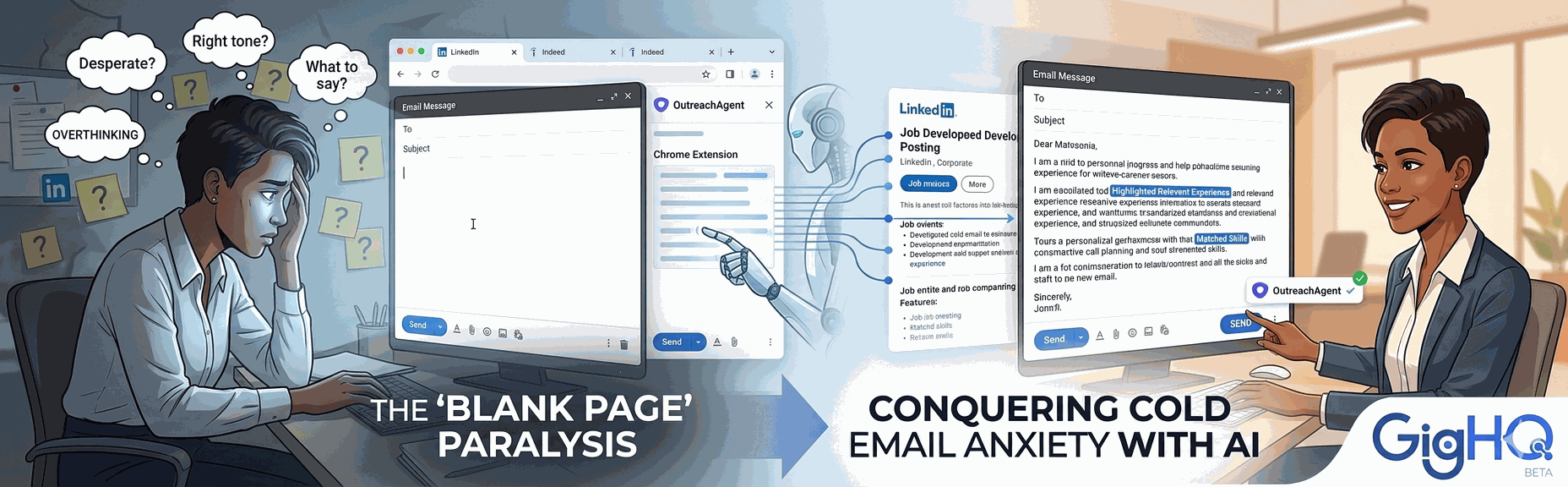
- OutreachAgent: Identify network contacts and draft personalized recruiter outreach.
- SmartPrep: Practice multi-turn AI mock interviews tailored specifically to the targeted job listing.
- CareerCompass: Build professional positioning statements, extract core competencies, and define career objectives.
- GigHQ Chrome Extension: Detect job listings, bypass ghost jobs, and auto-track applications right from the browser. (Watch Chrome extension demo).
- GigHQ MCP Server: Connect GigHQ directly into Claude.ai and ChatGPT so AI can query application statuses and run skills-gap analyses natively. (Watch how to connect Claude to GigHQ | Inside the GigHQ Ecosystem).
Want to see how this works for students? Check out our Student Workflow Video Demo.
B. Giving Higher Ed Leaders the “Data Layer” for Accreditation
When students use GigHQ, institutions gain access to a real-time sensor network across the job market. Rather than waiting for six-month survey results, career leaders and provosts get leading indicators:
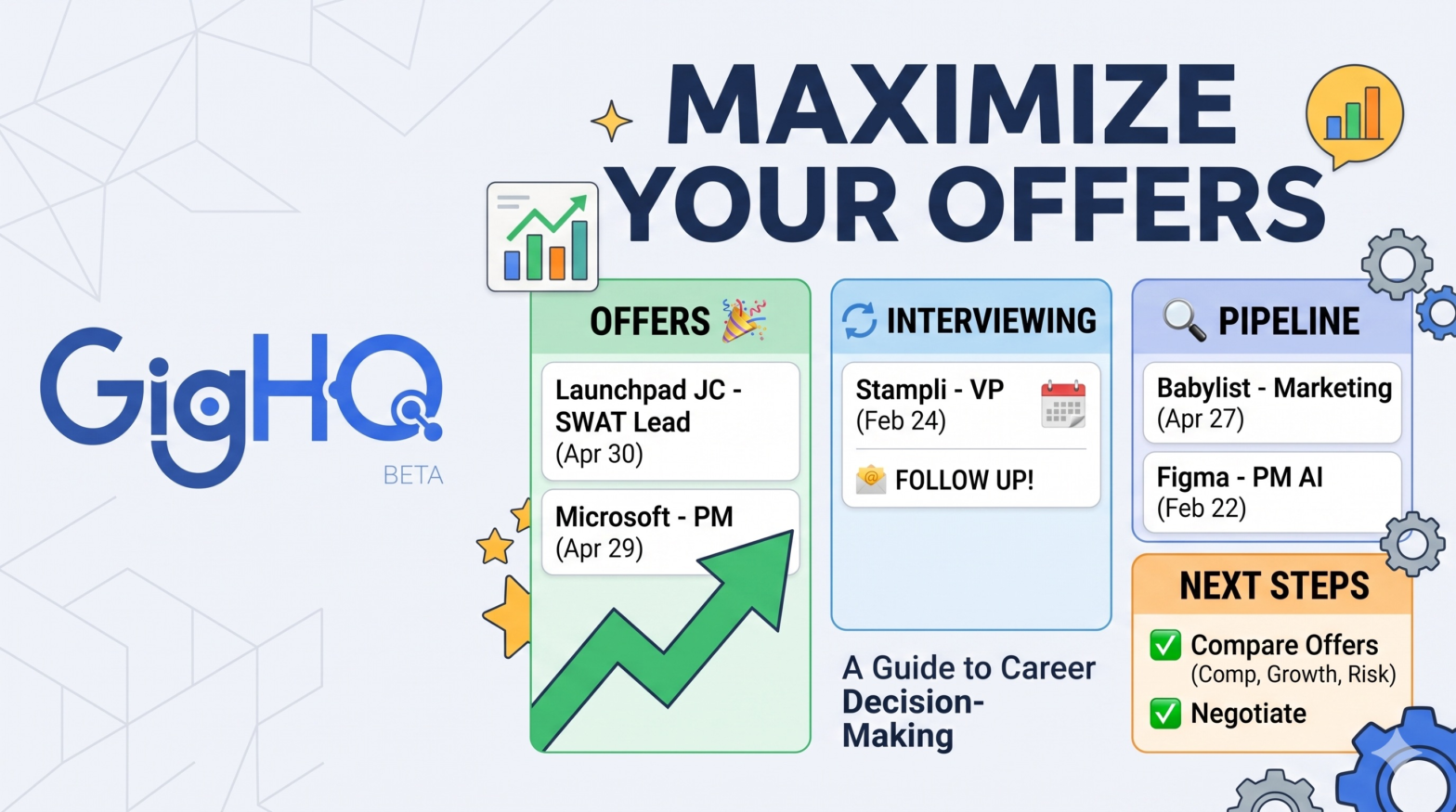
- Active Application Pipelines: See how many applications students are submitting, response rates by major, and average time-to-interview.
- Early Intervention Alerts: Identify at-risk students (e.g., 50+ applications sent with zero interviews) in October rather than discovering employment failure in May.
- Out-of-State Placement Capture: Verify offer letters and salary details for graduates moving out of state, protecting your institution’s median wage and placement benchmarks.
- Accreditation Readiness: Provide verifiable proof of workforce alignment, ROI, and job quality for accrediting site visits and state reporting.
Career coaches and advisors can manage client rosters and monitor progress seamlessly through the GigHQ Coach’s Portal.
4. Strategic Takeaways for Higher Education & Workforce Leaders
To prepare for the new Department of Education rules and the shift toward outcomes-based accreditation, higher ed leaders should take three proactive steps:
- Shift from Lagging to Leading Indicators: Stop relying exclusively on post-graduation surveys. Measure student search behaviors while they are still enrolled.
- Unify Student Value and Compliance: Provide students with tools they actually want to use (like AI resume optimization and automatic tracking). The compliance data will naturally follow.
- Build an Audit-Ready Data Stack: Ensure your career outcome data can demonstrate continuous improvement, workforce alignment, and verified starting salaries.
Modernize Your Career Services with GigHQ.ai
The regulatory tide has turned. Accreditation, federal funding, and state support now depend on proving that higher education leads to meaningful, high-wage careers.
GigHQ.ai gives your students the AI copilot they need to land great jobs, while giving your institution the verified outcome data required to succeed in this new era of accountability.
- For Job Seekers: Get started for free at GigHQ.ai or download the Chrome Extension.
- For Higher Ed & Workforce Leaders: Schedule a partnership demo to see how GigHQ can transform your placement reporting and accreditation readiness. Request a Demo Today.
- Join our community: Connect with us on the GigHQ Discord!
Our Platform Tools:

ResumeRank
Scan your resume, get a score, fix what matters.

CoverGenius
Generate personalized, AI-powered cover letters in seconds.

OutreachAgent
Craft perfect networking and AI-powered follow-up emails with ease.

CareerCompass
Instantly generate a personal marketing plan from your resume to define your brand and attract the right opportunities.

Smart Prep
Simulates a real interview based on your resume and the job description, giving you real-time feedback to build your confidence.

Profile Spark
Optimize your LinkedIn profile to attract recruiters and opportunities.