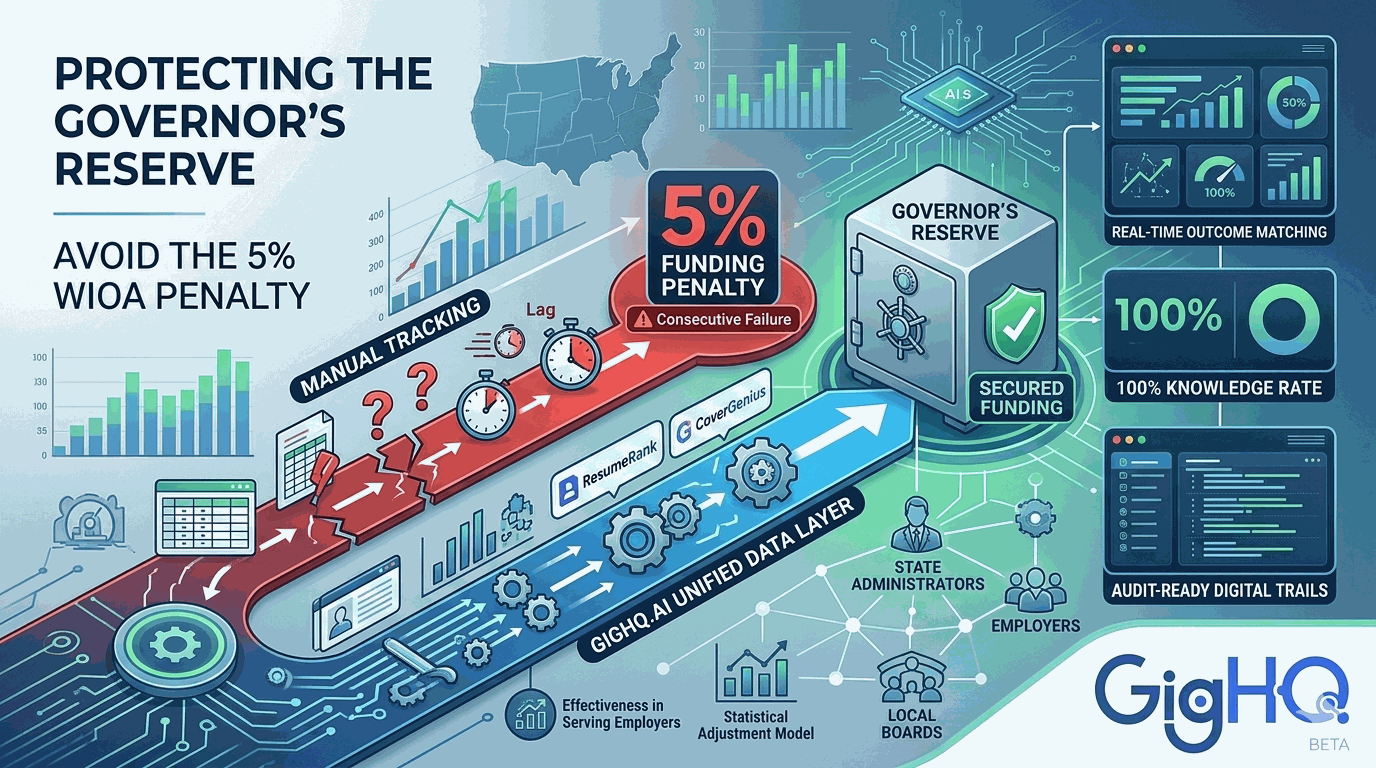
For Workforce Development Organizations (WDOs), community colleges, and vocational training providers, the regulatory ground beneath postsecondary education has officially shifted. We have entered the era of outcomes-based accountability.
Historically, higher education institutions and non-credit workforce programs were funded primarily on enrollment and contact hours—getting students in the door. Today, state and federal policies demand proof that programs get students out into high-wage, high-demand careers.
With the federal launch of Workforce Pell Grants (unlocking ~$1.5 billion in federal financial aid for short-term training under Section 83002 of the One Big Beautiful Bill Act) and state-level performance funding like Texas House Bill 8 (HB8), short-term certificate programs face unprecedented scrutiny.
If your institution cannot provide auditable, verified proof of student job placement, living wage attainment, and career retention, you risk losing eligibility for critical federal and state funding.
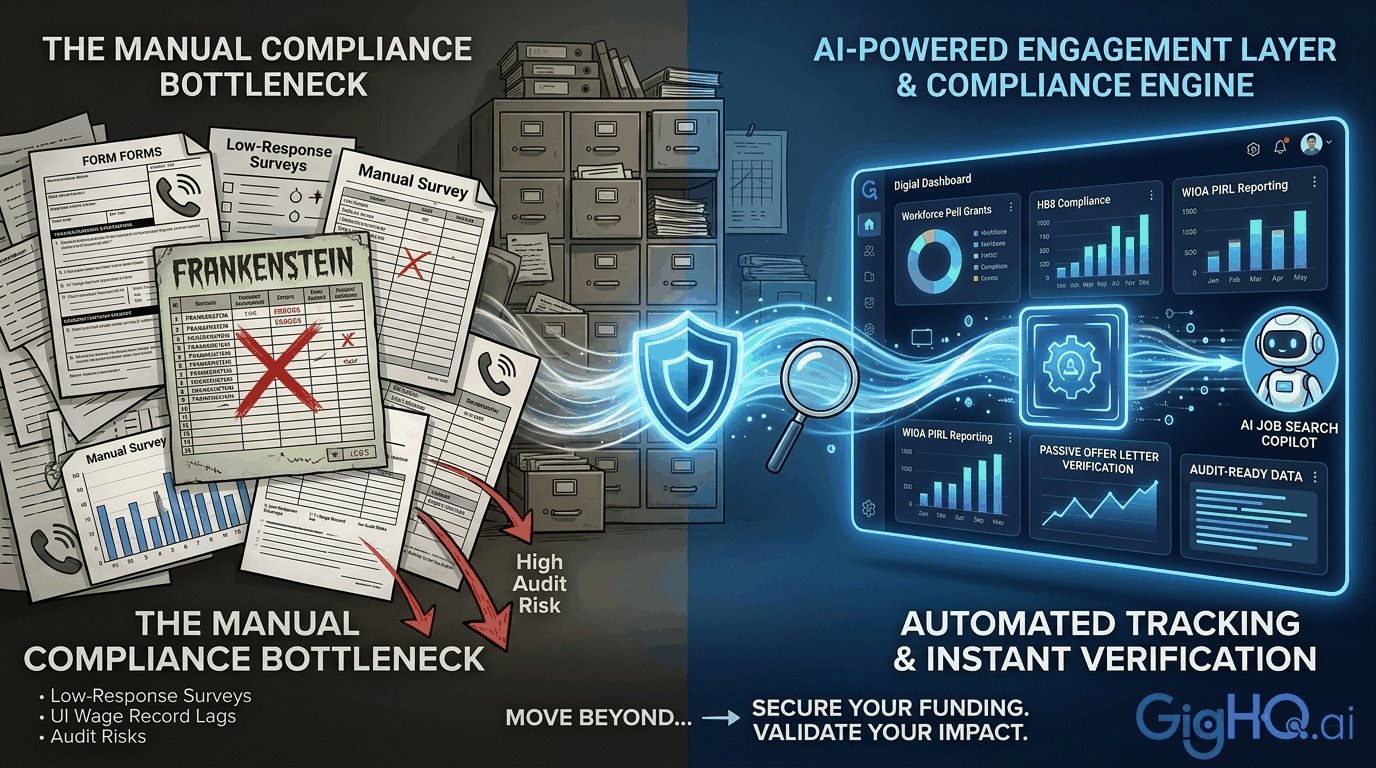
Yet, behind the scenes, most career centers and workforce teams are attempting to meet these strict compliance standards using outdated alumni surveys, manual phone calls, and fragile “Frankenstein” spreadsheets.
The Compliance Tsunami: Workforce Pell, WIOA, and HB8
The shift to performance-based funding is no longer theoretical—it is codifying across every level of workforce governance:
1. Workforce Pell Grants (July 2026 Rollout)
Authorized under Section 83002 of the One Big Beautiful Bill Act (OBBBA), Workforce Pell opens federal financial aid to high-quality short-term programs (150 to 600 clock hours, 8 to 15 weeks in duration). However, eligibility hinges on performance. Programs must continuously demonstrate verifiable student job placement thresholds (often exceeding 70%), positive Return on Investment (ROI), and alignment with regional high-demand occupations.
2. Texas House Bill 8 (HB8) and State Performance Models
Texas HB8 completely overhauled funding for the state’s 50 community college districts, shifting state dollars to a dynamic outcomes-based formula. Dollars are directly tied to “Credentials of Value”—certificates and degrees that lead to wages exceeding the high school graduate median and allow students to recoup their educational costs within 10 years. States across the country (including Florida, California, and Kentucky) are rapidly adopting similar metrics.
3. WIOA Reauthorization & TEGL Data Validation Standards
Under Department of Labor (DOL) Training and Employment Guidance Letters (TEGL 26-16 and TEGL 23-19) and the reauthorization framework in A Stronger Workforce for America Act (H.R. 6655), self-reported student check-boxes are no longer sufficient for audit compliance. WIOA performance reporting requires time-stamped, verifiable source documentation for Quarter 2 (Q2) and Quarter 4 (Q4) post-exit employment rates and Retention with the Same Employer.
The Noncredit Data Deficit: The Failure of “Frankenstein” Spreadsheets
Meeting these rigorous standards is almost impossible with traditional tracking tools.
As highlighted in the landmark Harvard Project on Workforce report, The Agile Community College: Dynamic Labor Market Alignment in an AI-Driven Economy, noncredit workforce data has historically been fragmented, manual, and uncollected at the federal level.
When students graduate or exit a short-term certificate program, they fall into an administrative “black box.” Career centers attempt to piece together student outcomes using:
- Low-Response Alumni Surveys: Traditional NACE First Destination Surveys (FDS) suffer from response rates under 20–30%, skewing data toward eager high-earners while missing struggling graduates.
- Lagged State Unemployment Insurance (UI) Wage Records: State UI wage data lags by 2 to 6 quarters, fails to capture out-of-state employment, and omits non-traditional or 1099 employment.
- Manual Case Manager Outreach: Staff spend hundreds of hours making manual follow-up calls, texting alumni, and manually updating disparate spreadsheets—creating high administrative costs and massive audit risks.
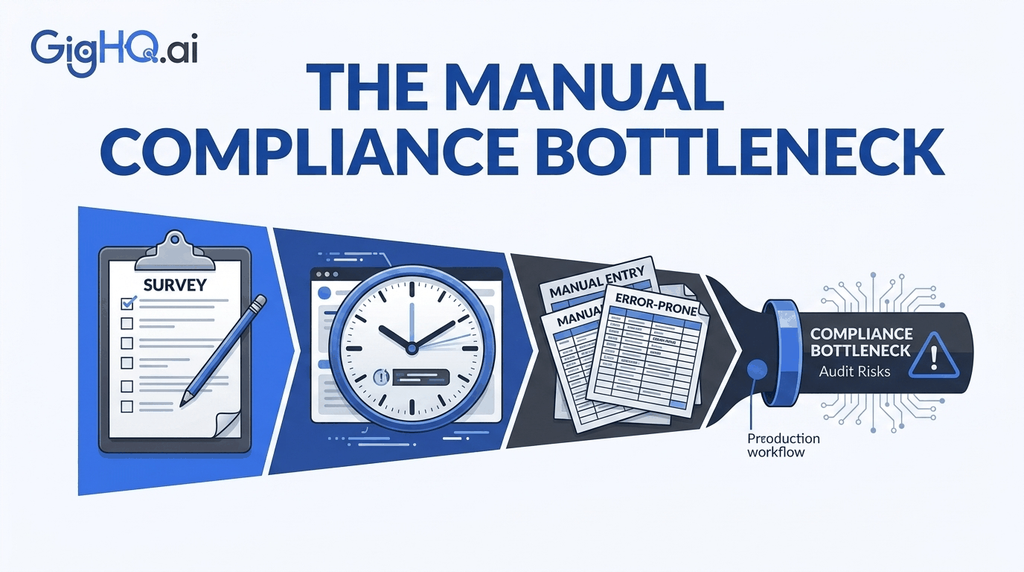
When an auditor or accreditor asks for proof of placement under Workforce Pell or WIOA, a row in a self-maintained spreadsheet without time-stamped source documentation can lead to disallowed fund repayments and loss of grant eligibility.
GigHQ.ai: The Automated Compliance Engine for WDOs
This is where GigHQ.ai transforms workforce operations.
GigHQ functions as an AI-powered engagement layer and compliance engine that converts the student job search into a continuous stream of objective, audit-ready data. Instead of chasing graduates months after they leave, GigHQ provides students with a high-value AI job search copilot that passively captures employment verification as a natural byproduct of their search.
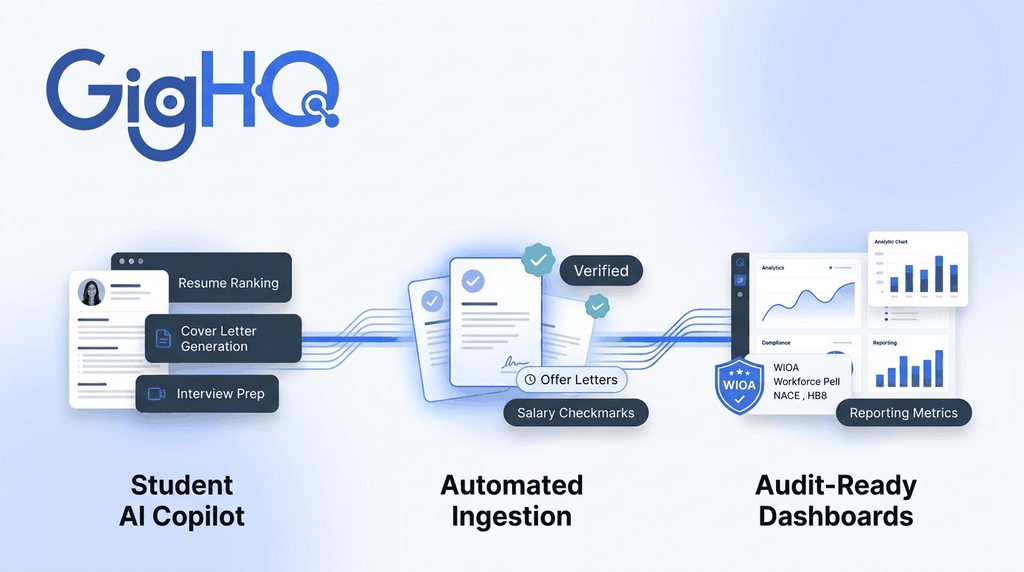
How GigHQ Protects Institutional Funding and Saves Staff Time:
- Passive Offer Letter Verification: When a student receives an official job offer or interview request via their dedicated
@gighq.aijob-search workflow, GigHQ automatically captures time-stamped, 3rd-party verifiable records (employer name, job title, starting salary, and start date). This creates an indisputable “source of truth” for Workforce Pell, NACE, and WIOA compliance without requiring manual uploads from busy graduates. - Elimination of the “Black Box”: Through the GigHQ Coach’s Portal, case managers and career advisors see aggregated, real-time cohort analytics. Instead of guessing who is employed, counselors receive real-time alerts for students who have high application volumes but zero interview callbacks—allowing for early coaching intervention before the student drops out of the pipeline.
- Automated WIOA PIRL & NACE Reporting: GigHQ maps outcomes data directly to federal Participant Individual Record Layout (PIRL) specifications and NACE First Destination Survey standards, eliminating manual data entry bottlenecks and acting as a robust “audit shield” against regulatory penalties.
- Programmatic Expense Eligibility: Because GigHQ provides direct, individualized career services to students—including AI resume optimization (ResumeRank), cover letter drafting (CoverGenius), and mock interviews (SmartPrep)—WDOs can classify the platform as a Direct Programmatic Cost, bypassing the strict 10% administrative funding cap under WIOA Title I grants.
Shift from Data Chasers to Strategic Advisors
When institutions replace manual tracing with automated data collection, the entire organization gains institutional agility:
- For Case Managers & Counselors: Save 10+ hours per week per cohort by eliminating manual follow-up calls and spreadsheet logging, refocusing staff time on high-impact student mentoring.
- For Program Directors: Instantly track program placement velocity and adjust curricula based on live employer response rates and skill demand signals.
- For Executive Leadership & Board Members: Gain real-time, audit-ready dashboards that prove program ROI, secure performance-based state funding under HB8, and protect federal Workforce Pell eligibility.
See how GigHQ automates tracking for student cohorts in our Student Experience Overview, or explore how advanced AI integration works with our GigHQ MCP Integration Walkthrough.
Secure Your Funding. Validate Your Impact.
The era of “train and pray” workforce development is over. In an outcomes-driven regulatory environment, you cannot measure what you cannot see—and you cannot fund what you cannot verify.
Transition your institution from reactive, high-risk compliance reporting to continuous, automated outcome intelligence.
👉 Request a Workforce Compliance Demo with GigHQ.ai and see how our platform turns chaotic job searches into an audit-ready data layer for your institution.
Our Platform Tools:

ResumeRank
Scan your resume, get a score, fix what matters.

CoverGenius
Generate personalized, AI-powered cover letters in seconds.

OutreachAgent
Craft perfect networking and AI-powered follow-up emails with ease.

CareerCompass
Instantly generate a personal marketing plan from your resume to define your brand and attract the right opportunities.

Smart Prep
Simulates a real interview based on your resume and the job description, giving you real-time feedback to build your confidence.

Profile Spark
Optimize your LinkedIn profile to attract recruiters and opportunities.