
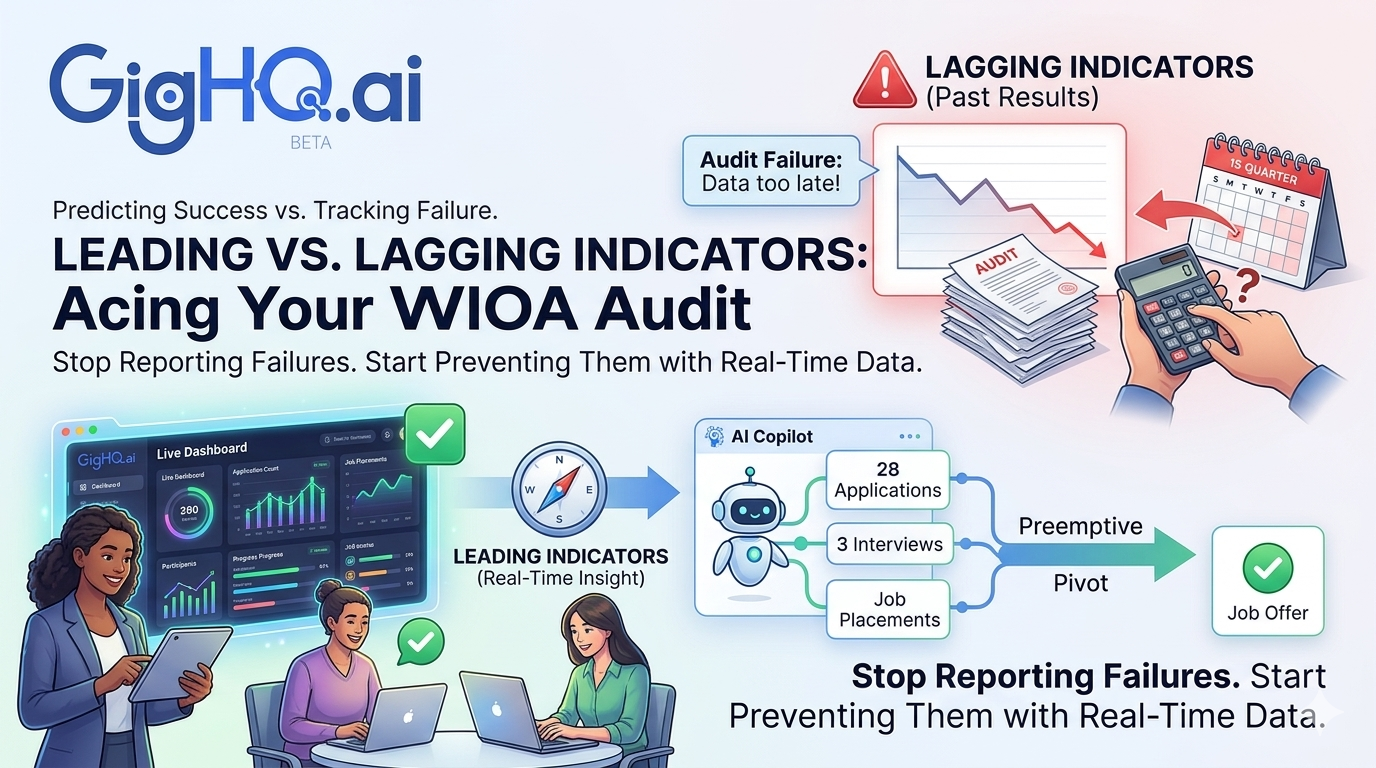
For many agencies operating under the Workforce Innovation and Opportunity Act (WIOA), there is a fundamental flaw in the way outcomes are tracked: the data arrives too late.
Author: Hasnain Baxamoosa
Hasnain is the Founder and CEO of GigHQ.ai (formerly NextGig.ai). Hasnain and the team are building GigHQ.ai to be every job seeker’s AI-powered copilot. We help people take control of their job search—tracking applications, identifying real opportunities, and automating the busywork—so they can focus on what really matters: landing their next gig.
Overcoming Geographic Blindness in Outcome Reporting
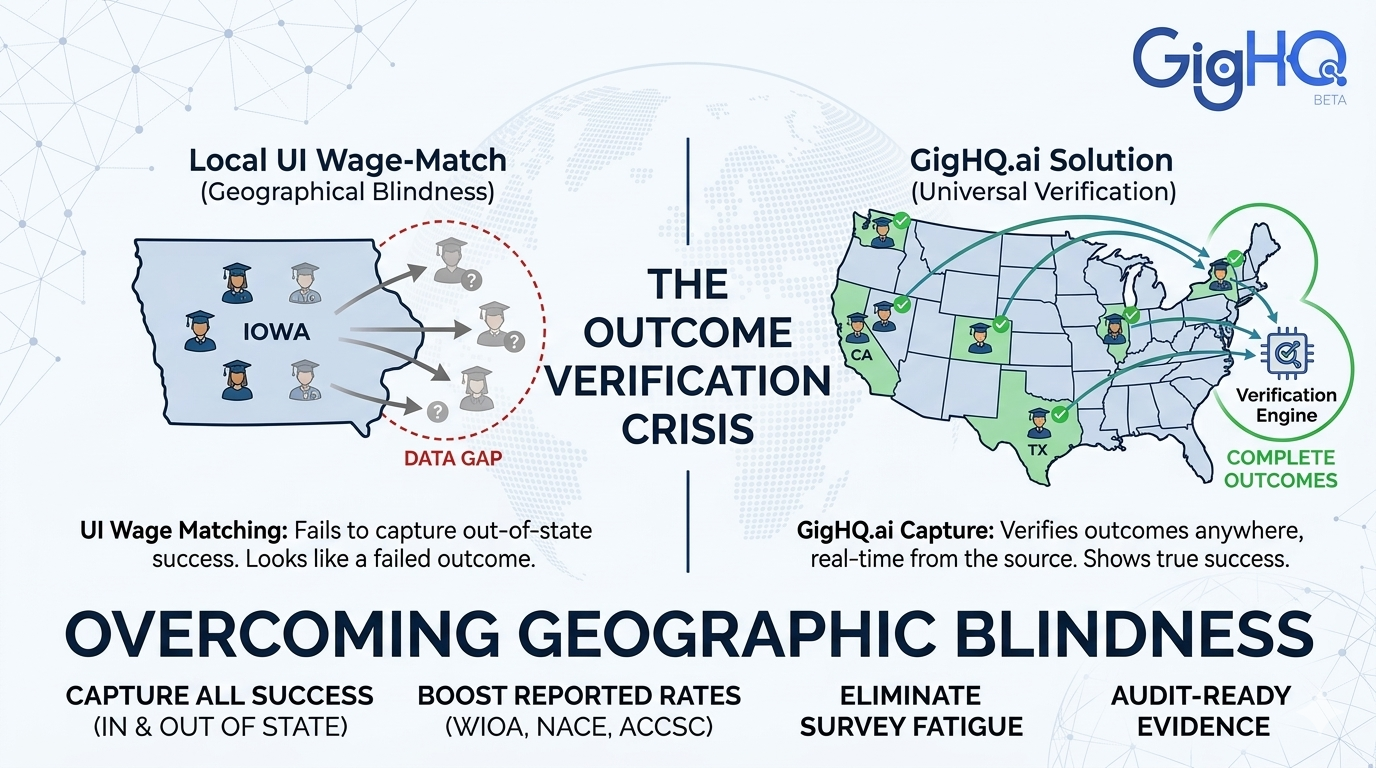
In the world of workforce development and higher education, “brain drain” is a term often whispered with frustration.
While states often view this as a policy challenge, there is a hidden, administrative side to this problem that is quietly sabotaging university and workforce board success metrics: Geographic Blindness.
The ETPL “All-Student” Rule: Automating Training Provider Accountability
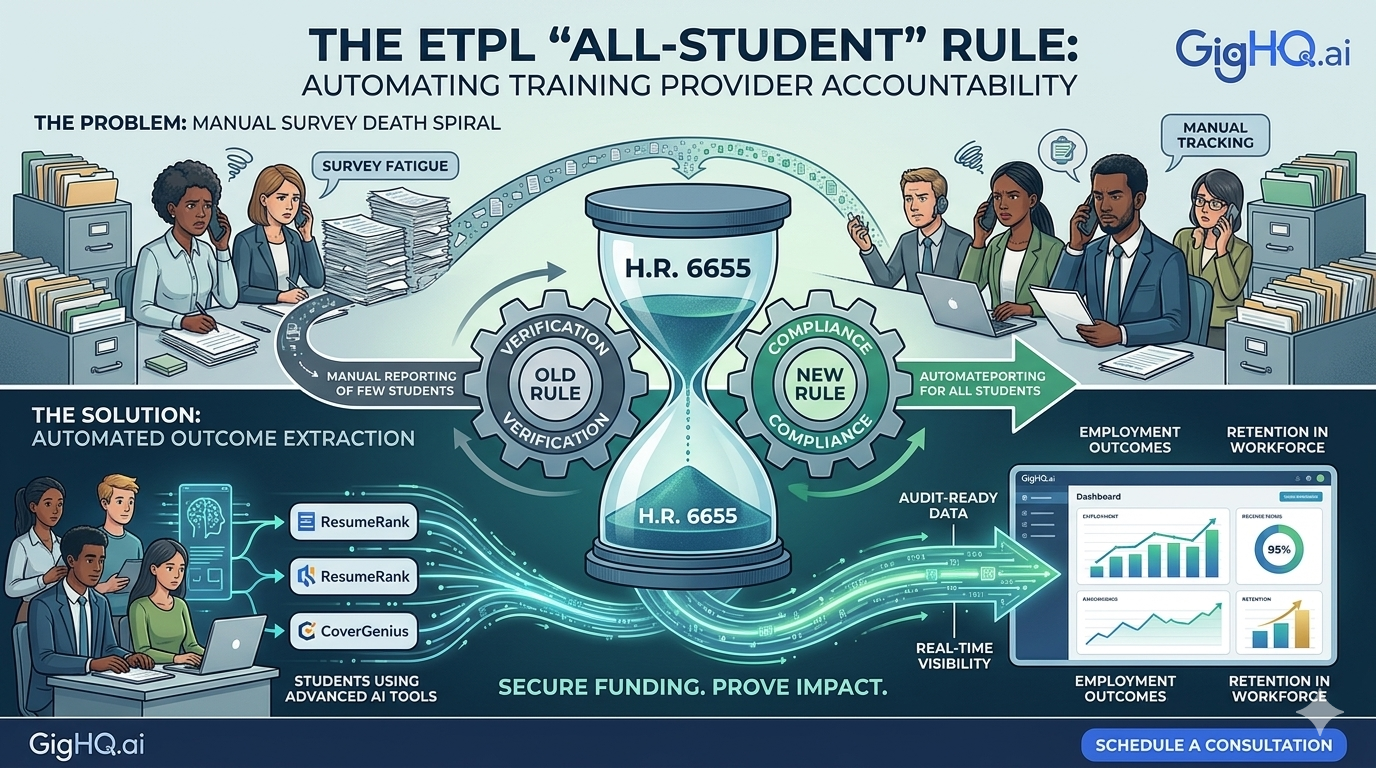
Institutions on the Eligible Training Provider List (ETPL)have access to federal funding through the Workforce Innovation and Opportunity Act (WIOA).
However, a critical change—cemented by H.R. 6655, the “A Stronger Workforce for America Act”—is turning what was once a “reporting chore” into a high-stakes survival mandate.
We’re talking about the “All-Student” Rule.
The $10 Million Risk: Avoiding Substantial Violations and Disallowed Costs
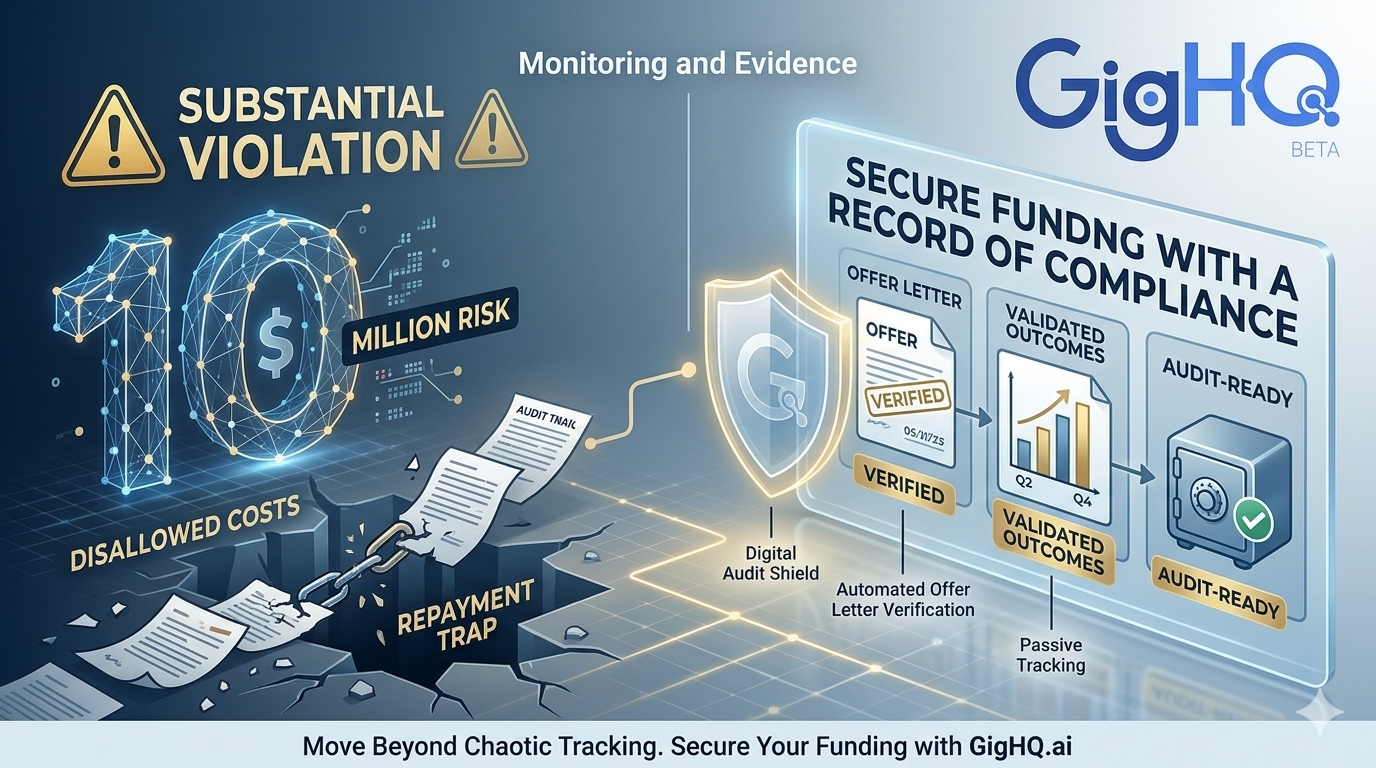
In the world of workforce development, there is a phrase that keeps executive directors and chief elected officials (CEOs) up at night: “Substantial Violation.”
When the monitors arrive, they aren’t looking for intentions; they are looking for evidence. If that evidence is missing, you are looking at a $10 million risk.
CPHE Compliance and the End of the “Train and Pray” Model
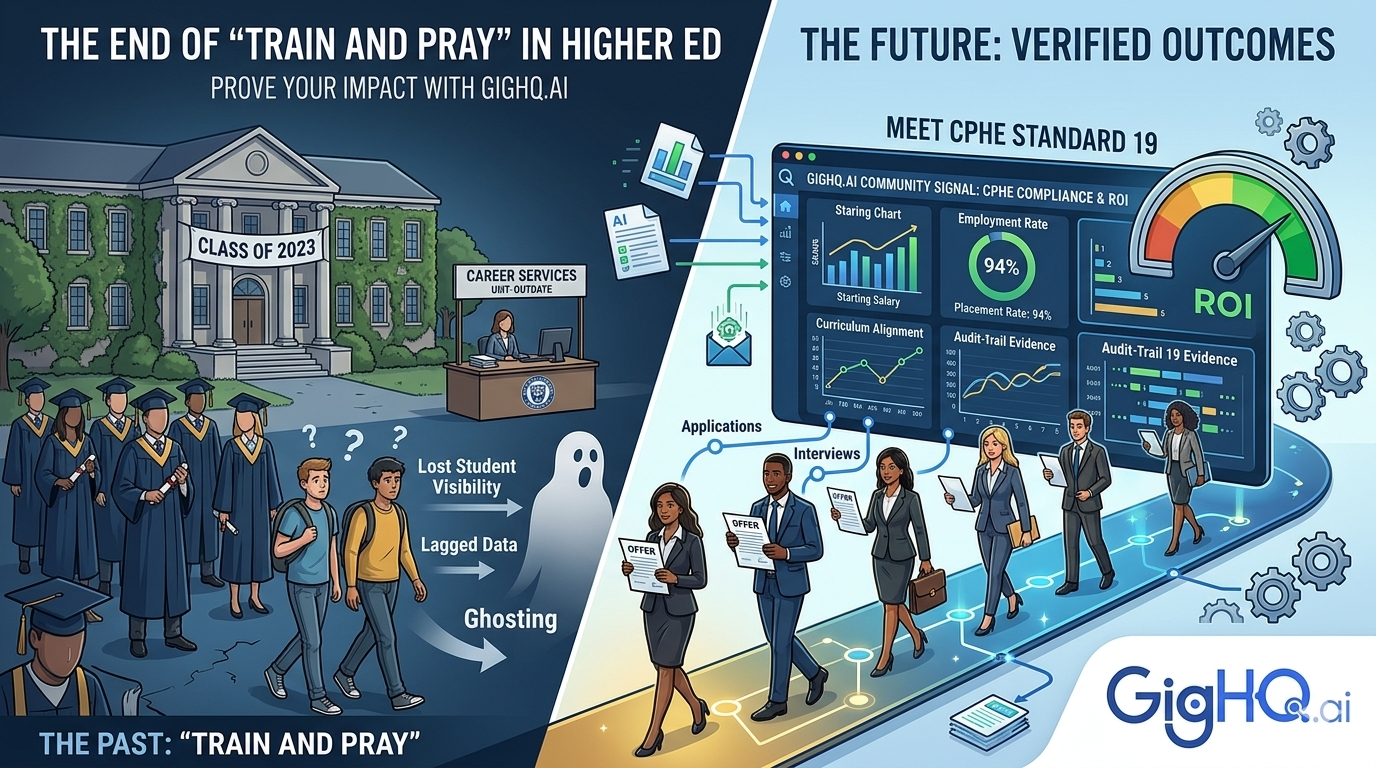
The standard operating procedure for many higher education institutions was a model we call “Train and Pray.” The Commission for Public Higher Education (CPHE) has signaled a permanent shift in how institutional quality is verified. The mandate that turns “return on investment” (ROI) from a marketing buzzword into a condition of existence.
Pay-for-Performance (PFP) Contracting: Unlocking the 10% Set-Aside Safely
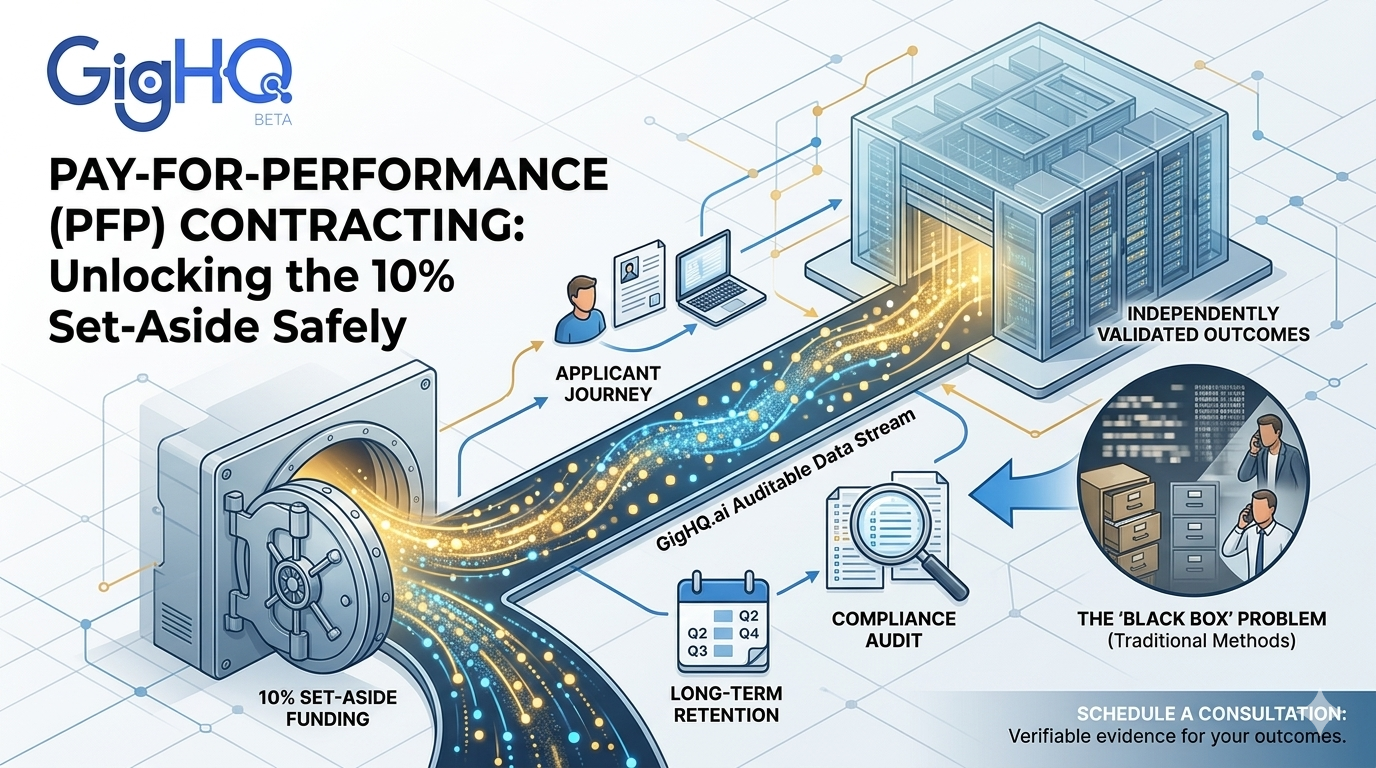
In the world of workforce development, the holy grail is the transition from “outputs” (how many people we trained) to “outcomes” (how many people stayed in high-wage jobs for the long haul).
From Placement to Promotion: Why GigHQ.ai is Evolving into Your Lifelong Career Copilot
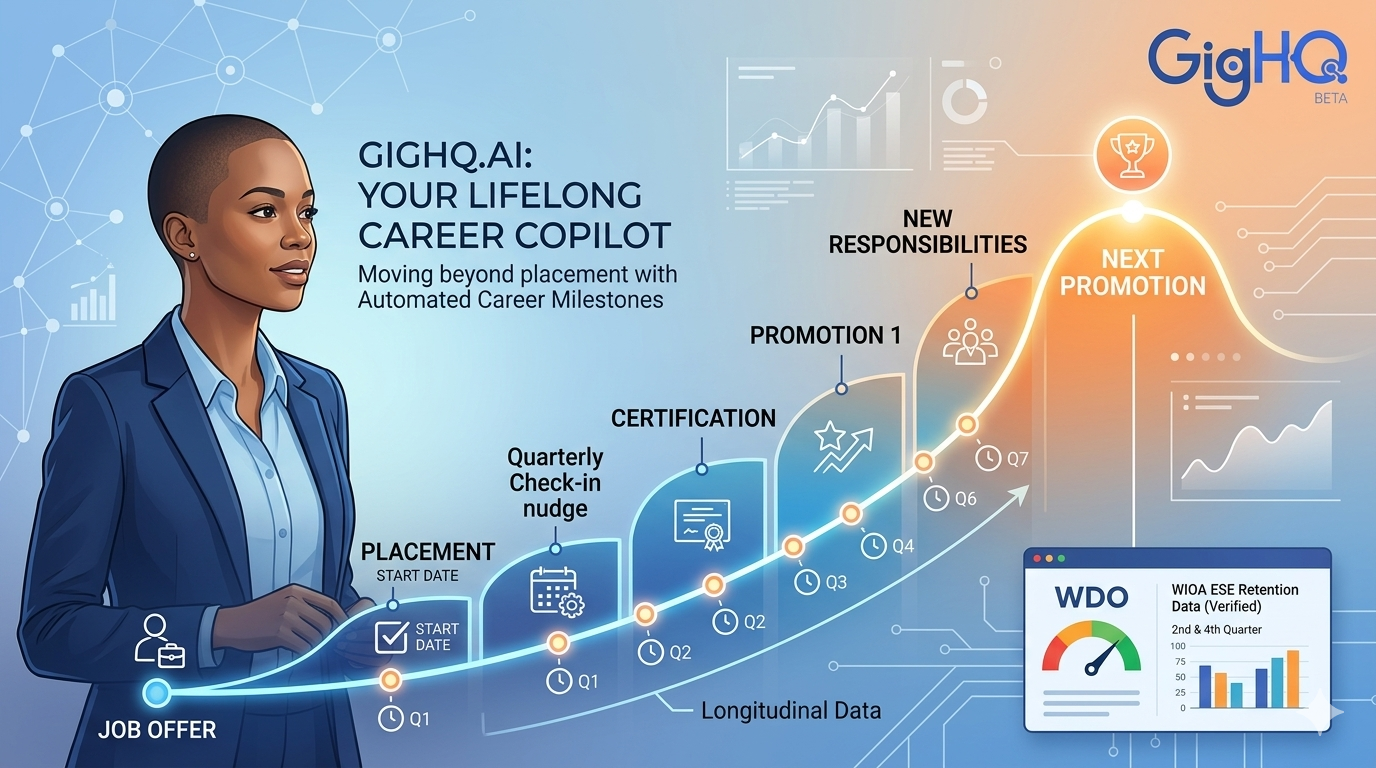
For years, the “finish line” in workforce development has been the job offer. You find a role, you sign the contract, and you move on. At GigHQ.ai, we’ve mastered this phase—helping thousands of users automate their search, vet “ghost jobs,” and land interviews with our AI-powered suite.
But a career isn’t a single event. It’s a decades-long arc.
Navigating the “Effectiveness in Serving Employers” (ESE) Final Rule with Your AI Career Copilot
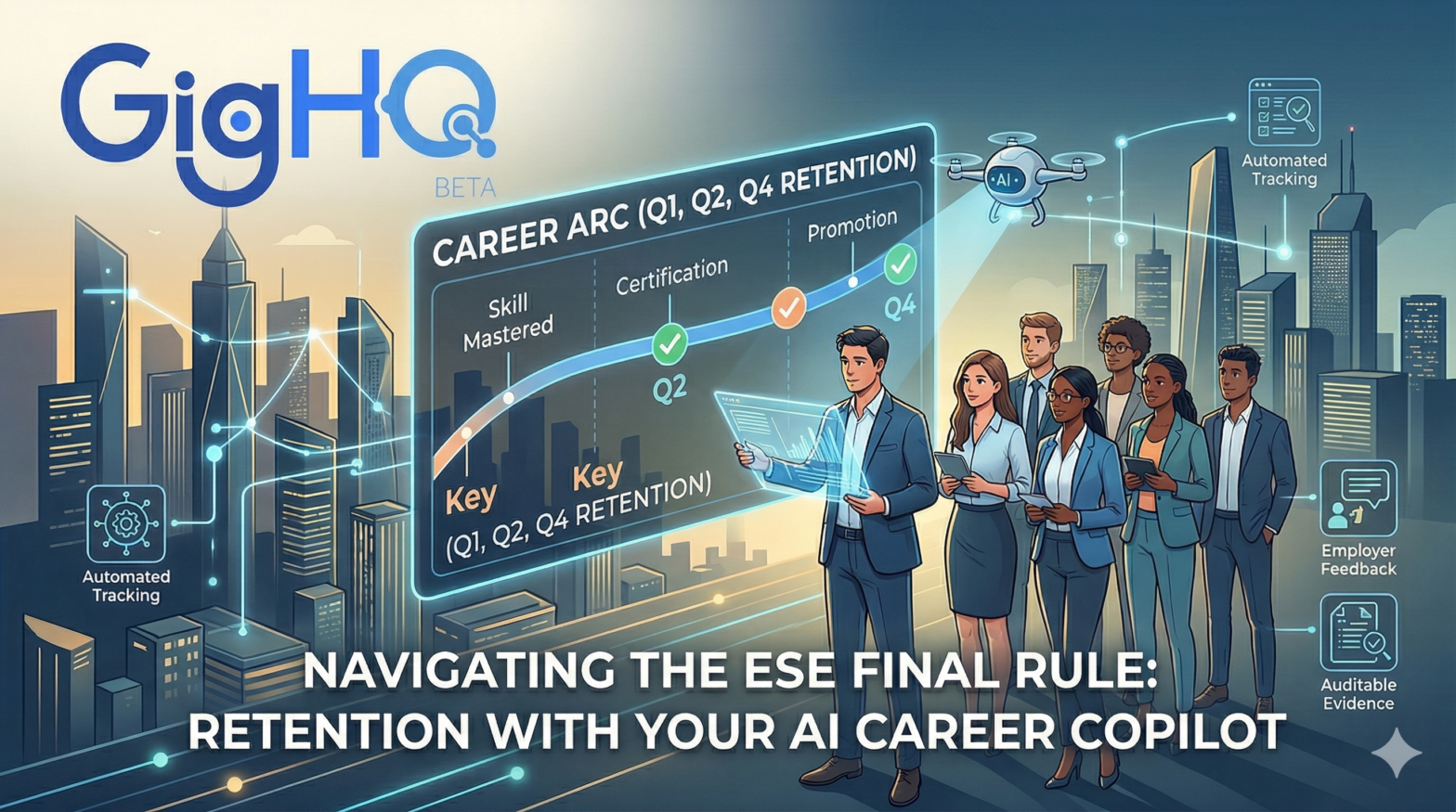
The regulatory bar for Workforce Development Organizations (WDOs) just got higher. With the recent release of the DOL/ED Effectiveness in Serving Employers (ESE) Final Rule, the primary indicator of success for all core WIOA programs has been officially standardized. The new metric? Retention with the Same Employer.
The 50% Upskilling Mandate: Thriving Under H.R. 6655’s New Budget Rules

With the bipartisan passage of H.R. 6655, also known as the “A Stronger Workforce for America Act” (ASWAA), the rules for how federal funds are spent have been rewritten.
The most disruptive change? The 50% Upskilling Mandate.
Credential Fluency: The New Currency of the Skills-First Economy

For decades, the four-year degree was the undisputed proxy for “work readiness.” But in an era where AI-driven shifts cause technical skills to depreciate in months rather than years, a diploma earned a decade ago is no longer the reliable signal it once was.