In the world of workforce development, “compliance” is often discussed as a matter of paperwork and audits. But there is a line in the Workforce Innovation and Opportunity Act (WIOA) that transforms compliance from an administrative task into an existential necessity.
It is the ultimate local penalty: Reorganization and Decertification.
If a Local Workforce Development Board (LWDB) fails to meet its primary indicators of performance for a third consecutive year, the Governor isn’t just permitted to act—they are legally required to take corrective action. This often means stripping the local board of its authority entirely.
Here is the anatomy of how a board loses control, and how to stop the clock before it’s too late.
The Three-Year Death Spiral
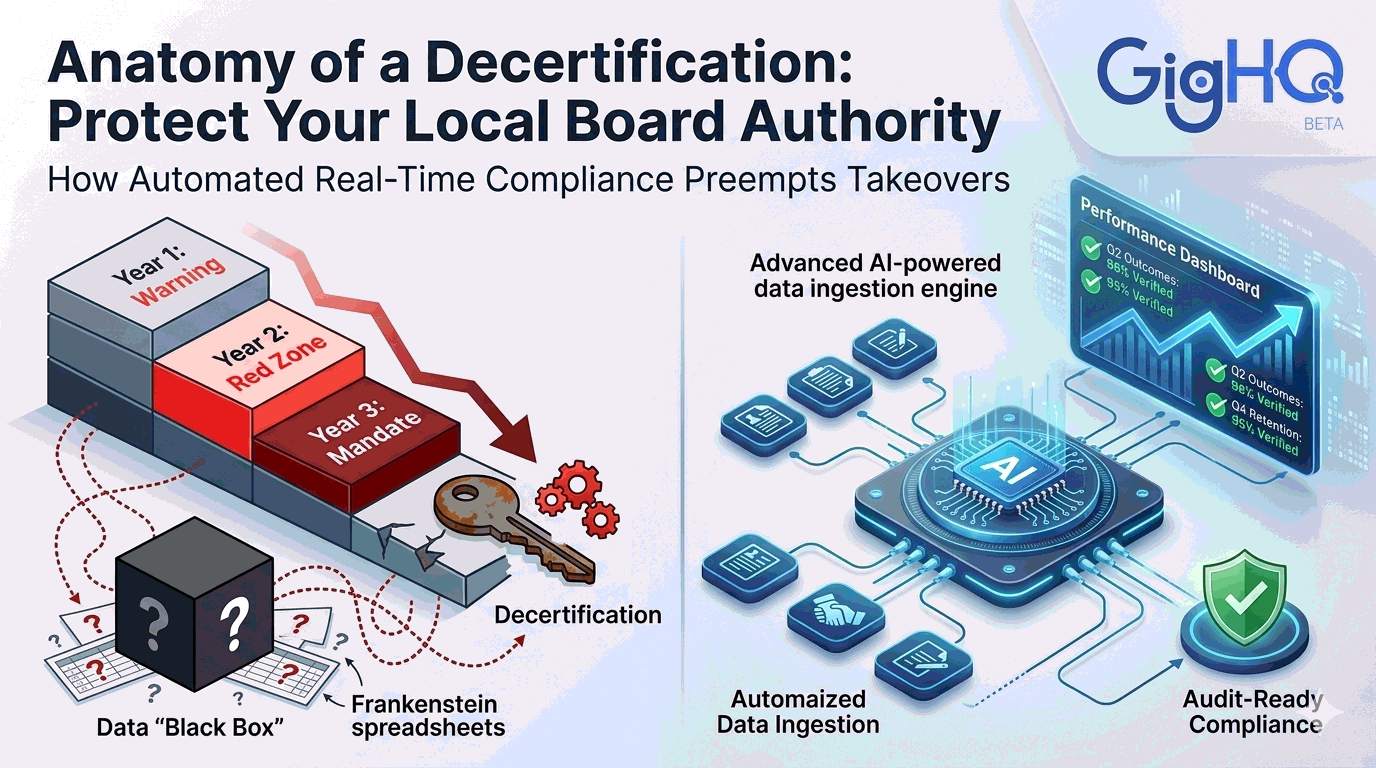
The path to decertification is rarely a surprise; it is a slow-motion cascade of reporting failures. Under WIOA Section 116(g), the timeline usually looks like this:
- Year 1: The Warning Shot. The board fails to meet negotiated levels of performance. Technical assistance is provided by the state.
- Year 2: The Red Zone. A second consecutive failure occurs. The Governor may now begin to impose a reorganization plan, which can include the appointment of a new board or the selection of an alternate entity to administer the program.
- Year 3: The Mandate. If the failure continues for a third consecutive year, the Governor shall take corrective actions. This is no longer discretionary. The Governor must develop a reorganization plan that can include decertifying the board and merging the local area into another.
Why Boards Fail: The Data “Black Box”
Decertification isn’t usually caused by a lack of effort; it’s caused by a lack of visibility. Most boards operate in a “black box” once a participant exits a program.
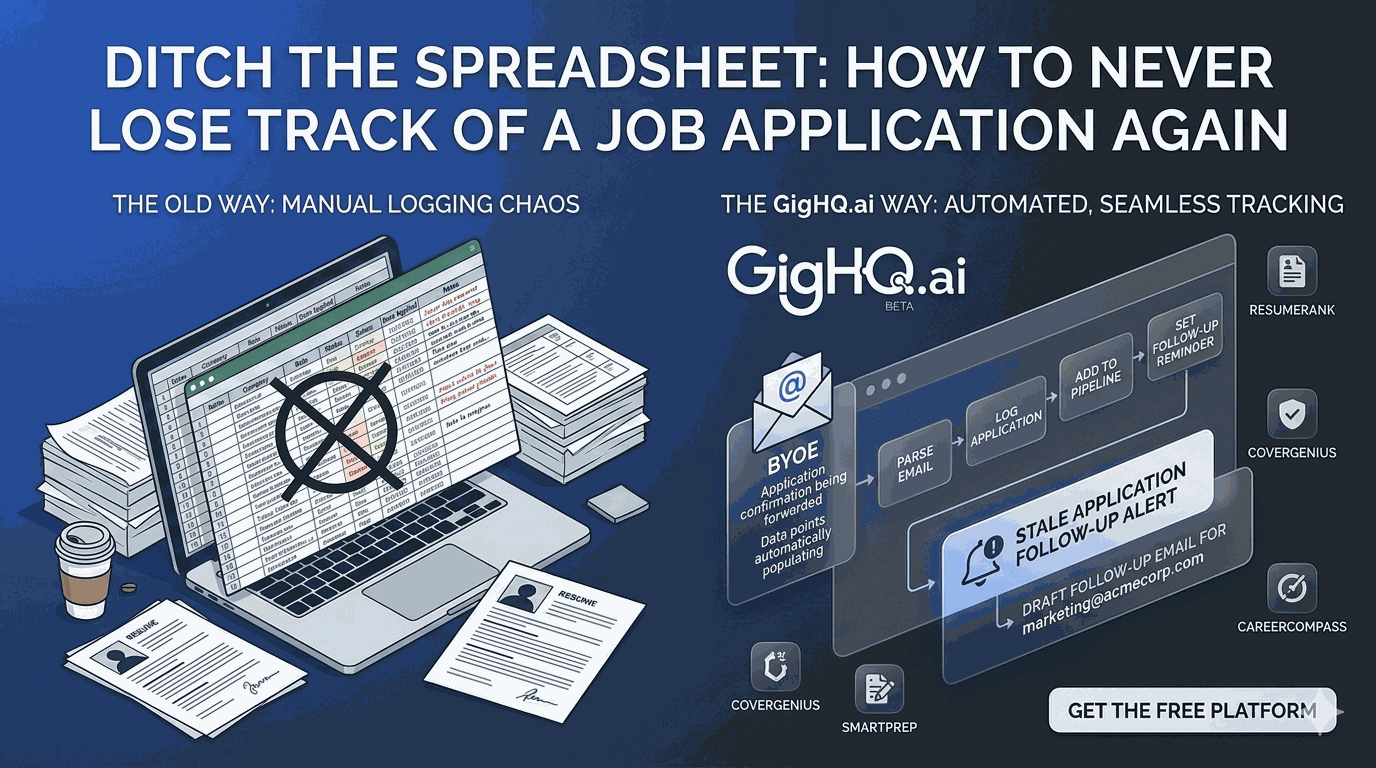
They rely on manual tracing, phone calls, and “Frankenstein” spreadsheets to capture Q2 and Q4 employment outcomes. This “train and pray” model is a recipe for disaster. By the time a board realizes their performance numbers are dipping, the program year is already over. They are essentially driving by looking in the rearview mirror.
Your Primary Defense: Automated Data Ingestion
To prevent consecutive performance failures, LWDBs must move from “reporting” outcomes to “verifying” them in real-time. This is where GigHQ.ai becomes the primary defense against decertification.
1. Eliminating the “Knowledge Rate” Problem
Traditional compliance relies on survey responses. If you can’t reach a graduate, that’s a zero in your performance column. GigHQ’s automated tracking captures application, interview, and offer data passively. We turn the chaotic job search into a structured, auditable data stream, ensuring your Knowledge Rate—and your performance score—stays high.
2. Early Warning Systems
Because GigHQ tracks activity as it happens, boards no longer have to wait 12 months for a Department of Labor report to see if they are failing. If a cohort isn’t hitting placement milestones by month six, you have the real-time intelligence to intervene, adjust your strategy, and save your certification status.
3. Securing the Governor’s Trust
When a board can present an automated, transparent Record of Compliance, they remove the “substantial violation” risk that often accompanies manual, error-prone reporting. You aren’t just meeting benchmarks; you are proving the integrity of your entire system.
Don’t Wait for Year Three
The legal requirement for a Governor to strip a local board of authority is a mechanism designed to protect federal funds from systemic failure. But for the local leaders, staff, and communities who depend on these boards, decertification is a tragedy that can be avoided.
Prevention is a matter of upgrading your infrastructure. Move beyond the spreadsheet. Stop acting like a call center and start acting like a data-driven workforce engine.
Is your board audit-ready? Schedule a consultation with GigHQ.ai today to see how our AI-powered compliance engine can protect your authority and your impact.
Our Platform Tools:

ResumeRank
Scan your resume, get a score, fix what matters.

CoverGenius
Generate personalized, AI-powered cover letters in seconds.

OutreachAgent
Craft perfect networking and AI-powered follow-up emails with ease.

CareerCompass
Instantly generate a personal marketing plan from your resume to define your brand and attract the right opportunities.

Smart Prep
Simulates a real interview based on your resume and the job description, giving you real-time feedback to build your confidence.

Profile Spark
Optimize your LinkedIn profile to attract recruiters and opportunities.