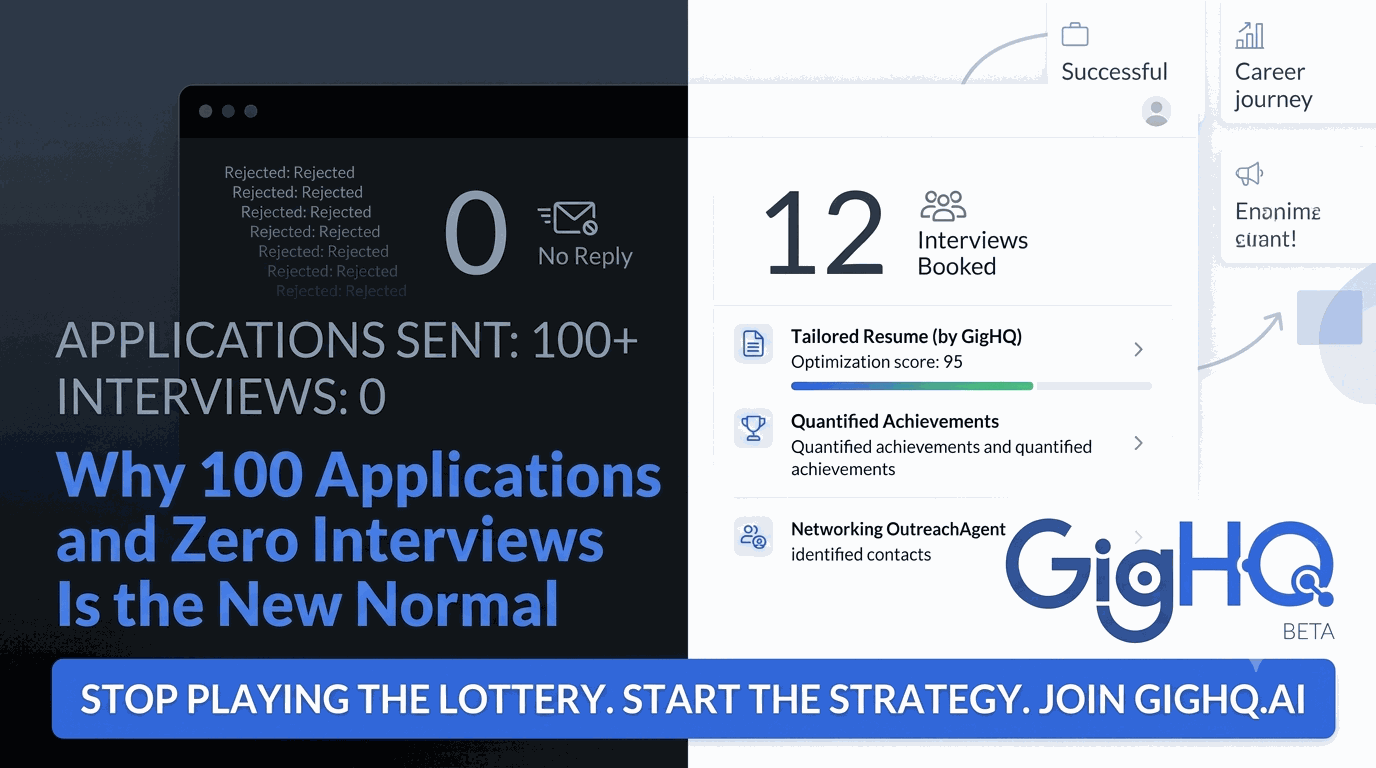
You’ve updated your resume for the 50th time. You’ve tailored your cover letter to perfection. You’ve clicked “Easy Apply” until your finger went numb. And yet? Silence.
If you’ve sent out 100 applications and heard nothing back, take a deep breath: This is not a you problem. It is a system problem.
The cold, hard truth is that the modern job search is governed by invisible rules. Research suggests that the average job seeker wins interviews only about 6% of the time on their own. When you’re flying blind, the odds are stacked against you before you even hit “send.”
The Job Search You Think You’re Doing vs. The One You’re Actually In
Most of us approach the job search like a customer service transaction: I send my resume, a human reads it, and they decide if I’m a fit.
But in the current market, you aren’t competing against other candidates for a hiring manager’s attention—you are competing against an algorithm for a machine’s approval.
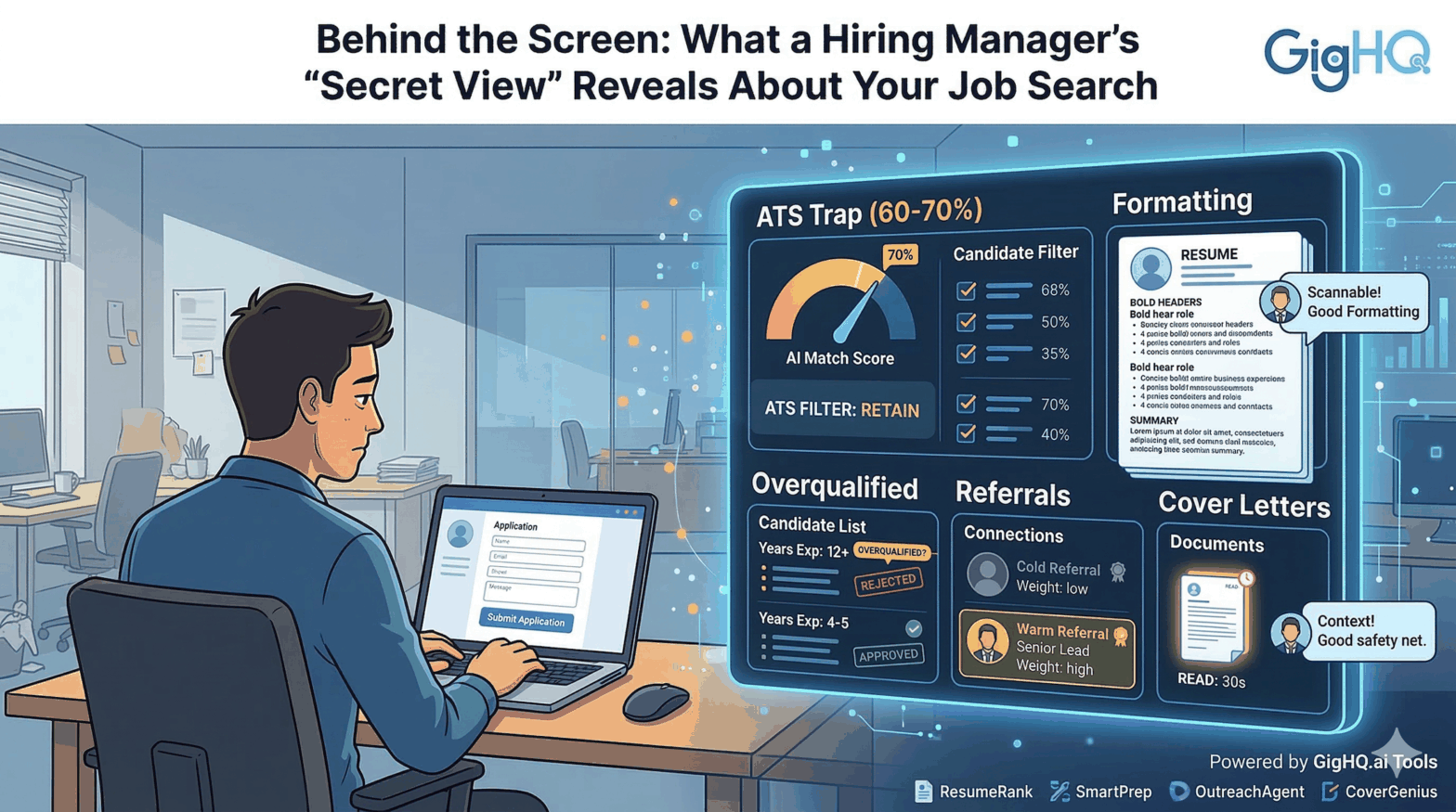
Enter the Applicant Tracking System (ATS). It’s not the “villain” of your story, but it is the gatekeeper. Companies are flooded with thousands of applications for a single role. They don’t have an army of recruiters to read every one, so they use software—Greenhouse, Lever, Ashby, or Workday—to triage, filter, and rank the incoming pile. If your resume doesn’t speak the specific language the ATS requires, you are filtered out before a human ever learns your name.
The Four Platforms Running the Show
The biggest myth is that every company treats your application as a fresh start. In reality, the dominant players—Greenhouse, Lever, Ashby, and Workday—operate like a consolidated ecosystem.
Because these platforms use shared algorithms and centralized data, your activity on one often builds a “digital footprint” that follows you across the others. If you are applying with a generic resume, missing key formatting requirements, or pinging the system with inconsistent info, that pattern accumulates. You aren’t just failing once; you’re building a reputation of “low relevance” that the algorithm eventually recognizes.
What the ATS Is Actually Looking For
The algorithm isn’t just searching for keywords. It’s looking for contextual congruency. It asks three fundamental questions:
- Relevance: Does your experience actually map to the specific role?
- Signal-to-Noise Ratio: Is your resume packed with quantifiable achievements (numbers, growth percentages, dollars saved), or is it just a list of responsibilities?
- Positioning: Are you one thing, or are you five things? A resume that tries to be a “Software Engineer, Project Manager, and Marketing Specialist” all at once triggers a “lack of focus” flag in the system.
If your resume is unformatted, lacks specific quantification, or suffers from identity confusion, the ATS will simply toss it into the “no” pile.
The Black Box Problem
We know the “black box” is frustrating. Until now, you’ve had no way to know why you were rejected. The algorithm just says “no.” While there are regulatory discussions brewing to force ATS vendors to log reasons for rejection, we aren’t there yet.
You still have to play the game as it exists today.
The Fix: Quality Over Quantity
The solution isn’t to apply to more jobs. It’s to apply better to fewer jobs.
At GigHQ.ai, we built the infrastructure to help you do exactly that. You need to treat your resume as a communication to an algorithm first, and a human second. Here is the blueprint:
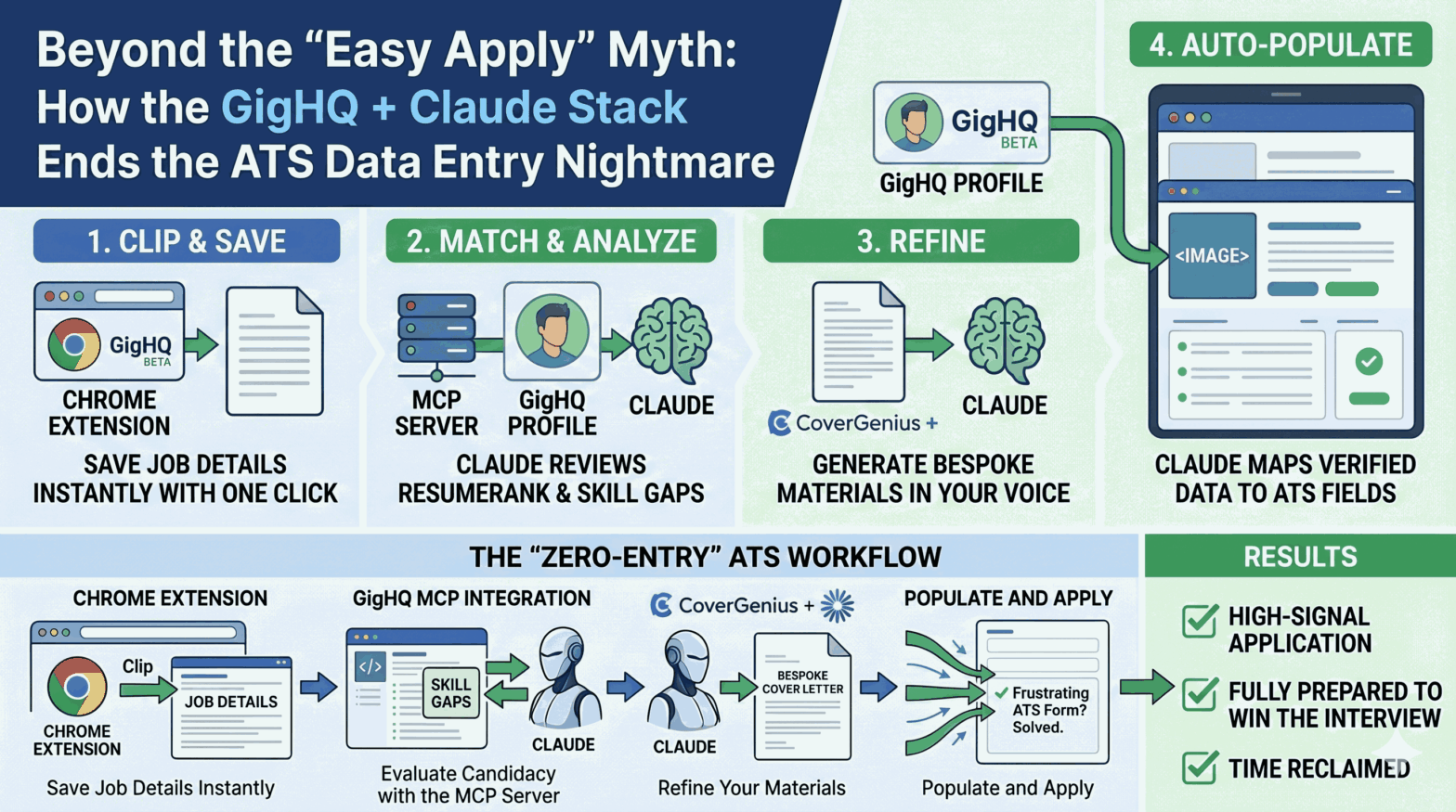
- Tailor per role, not per career path: Your resume should reflect the job description, not just your life story. Use tools like ResumeRank to score your resume against the specific job description before you apply.
- Quantify, quantify, quantify: If it doesn’t have a number, the ATS assumes it doesn’t have impact.
- The Hybrid Approach: Use CoverGenius to create tailored cover letters, and use the OutreachAgent to identify real human contacts for networking. The ATS gets your foot in the door, but networking is what gets you the offer.
- Track your search: Stop using spreadsheets. Use the GigHQ Chrome Extension to see real-time application trends, check for “ghost jobs,” and automate your tracking.
You Aren’t Broken
If you’ve sent 100 applications into the void and heard nothing, you’re not broken. You’ve just been playing by rules that were never explained to you. Now that you know what’s happening under the hood, you can stop playing the lottery and start building a strategy.
Ready to stop guessing and start getting interviews?
Sign up for GigHQ.ai for free and get your AI-powered job search copilot on your side.
Need to see it in action? Watch how students are using our platform to land roles or check out our quick demo on how to connect your job search data inside ChatGPT and Claude.
Our Platform Tools:

ResumeRank
Scan your resume, get a score, fix what matters.

CoverGenius
Generate personalized, AI-powered cover letters in seconds.

OutreachAgent
Craft perfect networking and AI-powered follow-up emails with ease.

CareerCompass
Instantly generate a personal marketing plan from your resume to define your brand and attract the right opportunities.

Smart Prep
Simulates a real interview based on your resume and the job description, giving you real-time feedback to build your confidence.

Profile Spark
Optimize your LinkedIn profile to attract recruiters and opportunities.