The passage of H.R. 6655, the “A Stronger Workforce for America Act,” has sent a clear signal to state agencies and educational institutions: the era of “train and pray” is officially over. At the heart of this legislative overhaul is a massive expansion of the Workforce Data Quality Initiative (WDQI), a federal push to build longitudinal data systems that connect K-12, higher education, and workforce data into a single, cohesive picture of economic mobility.
For state workforce boards and university administrators, however, the mandate is easier said than done. Achieving WDQI compliance requires solving a decades-old technical nightmare: the data silo.
The Technical Nightmare: Legacy Systems That Don’t Talk
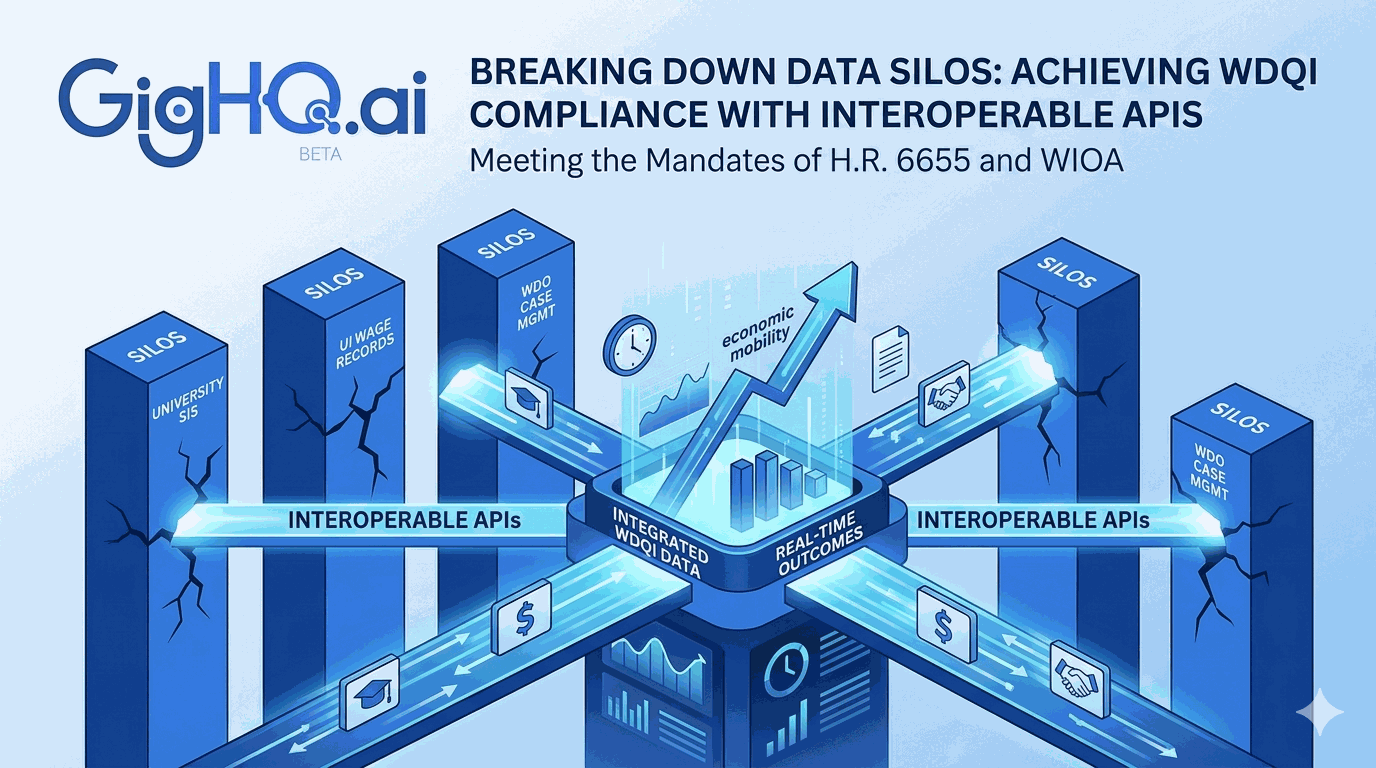
Currently, the data required to prove a program’s value is scattered across isolated “islands” of information:
- University SIS Platforms: Student Information Systems (like Banner or PeopleSoft) contain enrollment and credential data but have zero visibility into what happens after a student walks across the stage.
- State UI Wage Records: Unemployment Insurance records contain the “truth” about earnings, but these databases are notoriously difficult to access and rarely map back to specific educational interventions in real-time.
- WDO Case Management: Workforce Development Organizations (WDOs) often rely on “Frankenstein” spreadsheets and manual surveys to track outcomes, leading to “Survey Fatigue” and a catastrophic “Intelligence Gap.”
According to recent labor market analysis, nearly 45% of bachelor’s degree graduates remain underemployed six months after graduation. Without interoperable systems, institutions cannot see why this is happening or which specific skills are failing to convert into wages.
GigHQ.ai: The API-First Middleware for WDQI
To meet the requirements of H.R. 6655, states need more than just “better reporting”—they need a new data paradigm. GigHQ.ai serves as the critical interoperable API layer that bridges the gap between education and employment.
Unlike legacy software that requires manual data entry, GigHQ’s architecture is designed for seamless integration:
1. Seamless Data Translation
GigHQ acts as the “universal translator” between diverse data sources. Our APIs can ingest raw student data from an SIS and match it against real-time hiring signals—such as offer letters and interview invites—to provide a closed-loop record of success.
2. Achieving PIRL Compliance at Scale
The Participant Individual Record Layout (PIRL) is the federal standard for workforce reporting. Manually formatting data into PIRL-compliant files is an administrative burden that risks funding. GigHQ’s WIOA Compliance Engine automates this process (coming soon!), translating every tracked outcome into the specific fields required by the Department of Labor.
3. Breaking the “Wage Record” Lag
State wage records are often lagged by 6 to 12 months. H.R. 6655 demands more “real-time” labor market information. GigHQ’s Community Signal dataset provides immediate visibility into employment outcomes the moment an offer is accepted, allowing institutions to intervene and adjust curriculum long before the quarterly tax filings arrive.
The Cost of Inaction: Funding at Risk
H.R. 6655 raises the stakes for accountability. Programs that fail to meet strict placement thresholds—often as high as 70%—risk losing eligibility for WIOA and Pell funding.
The “Single State” local area provisions in the Act also give Governors the power to consolidate workforce programs if local boards cannot demonstrate effectiveness. In this high-stakes environment, data is no longer just a reporting requirement; it is funding security.
Conclusion: Future-Proofing with Interoperability
Breaking down data silos isn’t just about compliance—it’s about empowering the job seeker. When university SIS platforms, state wage records, and real-time hiring data are connected via interoperable APIs, we can finally see the clear path from classroom to career.
GigHQ.ai is building the definitive source of truth for workforce outcomes. By automating the data layer, we allow institutions to stop acting like call centers for alumni surveys and start acting like the engines of economic mobility they were meant to be.
Ready to bridge your data gap?
Explore how GigHQ.ai can automate your WIOA and WDQI compliance.
- For Institutions: Learn more about our Compliance Platform
- For Workforce Boards: See our WDO Solutions
Our Platform Tools:

ResumeRank
Scan your resume, get a score, fix what matters.

CoverGenius
Generate personalized, AI-powered cover letters in seconds.

OutreachAgent
Craft perfect networking and AI-powered follow-up emails with ease.

CareerCompass
Instantly generate a personal marketing plan from your resume to define your brand and attract the right opportunities.

Smart Prep
Simulates a real interview based on your resume and the job description, giving you real-time feedback to build your confidence.

Profile Spark
Optimize your LinkedIn profile to attract recruiters and opportunities.