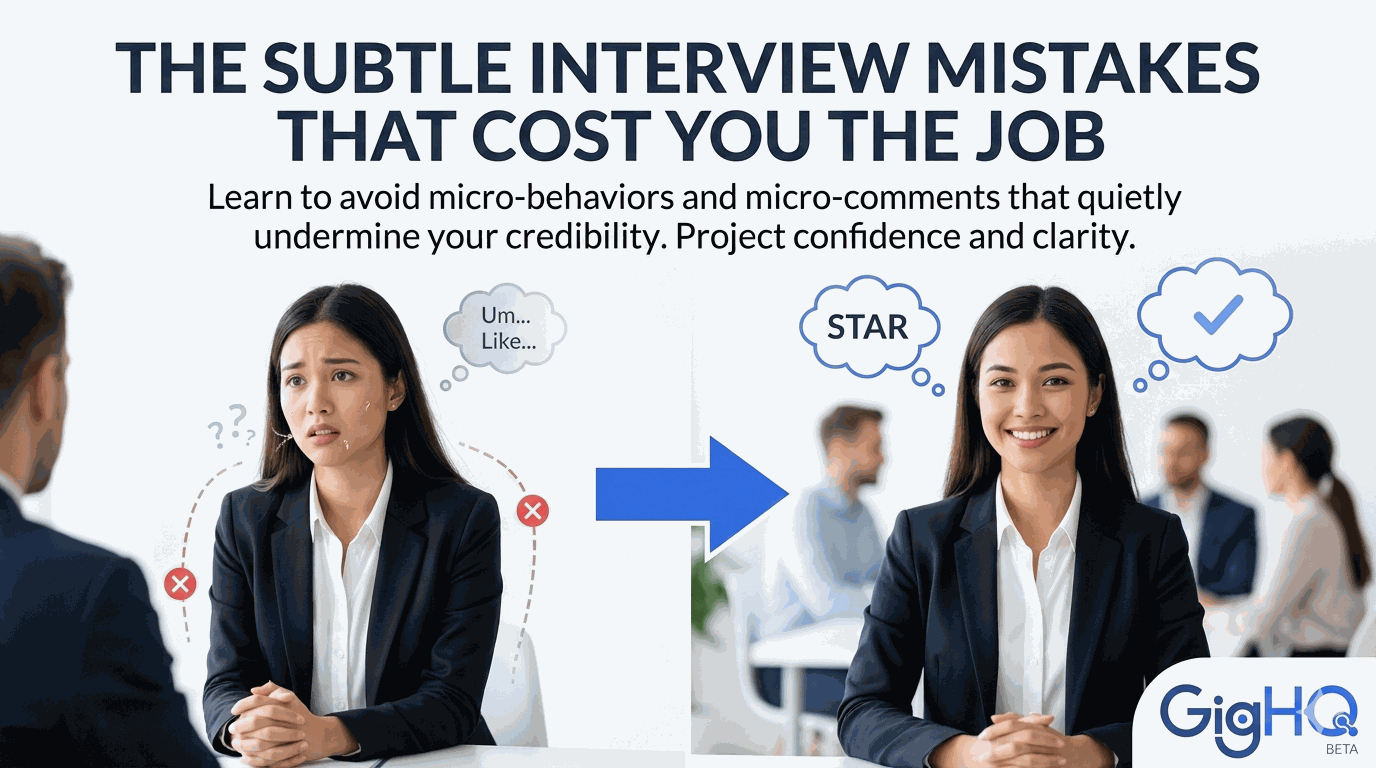
Even the most qualified candidates can stumble on small missteps that leave a negative impression. These aren’t glaring errors like showing up late or blanking on questions, they’re the micro-behaviors and off-hand comments that quietly undermine your credibility. By becoming aware of them and making a few simple adjustments, you’ll project confidence, clarity, and genuine fit.
Part of the Ultimate Guide to Acing Your Job Interview.
Speak with Purpose, Not Fillers
When nerves creep in, it’s natural to pepper responses with “um,” “like,” or “you know.” Unfortunately, those filler words dilute your message and signal uncertainty to interviewers. Instead of rushing to fill every silence, embrace quiet pauses. Take a breath before answering and use brief prompts like “Great question” or “Let me think” to buy yourself thinking time. Over a few practice runs—recording yourself or working with a peer—you’ll notice your speech sharpen as you replace fillers with thoughtful pauses.
Keep Your Stories Tight
Rambling anecdotes can obscure the very accomplishments you want to highlight. Rather than launching into a free-form narrative, use a simple framework (such as STAR: Situation, Task, Action, Result) to structure each example. Aim for roughly 60–90 seconds per story: set the context succinctly, focus on the actions you took, and close with the concrete impact you achieved. Practicing with a timer or mock interviewer can help you internalize this rhythm so that your stories feel both complete and concise.
Harness Body Language, Even on Zoom
It’s easy to underestimate the power of nonverbal cues, especially during virtual interviews. Sitting up straight, leaning in slightly, and maintaining regular eye contact (or camera contact) signals engagement and professionalism. Slouching or avoiding the camera lens can make you appear disengaged or insecure. Before your next call, check your posture on camera, adjust your lighting so your face is clear, and practice nodding or smiling naturally to reinforce your interest in the conversation.
Balance “I” with “We”
While it’s important to own your achievements, overemphasizing “I did X” can suggest you struggle with collaboration. When describing past projects, acknowledge your teammates’ contributions before clarifying your role. For example, “My team and I built the new onboarding workflow, and I led the user-testing phase that reduced drop-off by 20%.” This approach highlights both your individual impact and your ability to work effectively within a group.
Pause to Clarify
Jumping straight into an answer can lead to misinterpretation or a surface-level response. When asked a complex question, take a brief pause—count to three in your head or say, “That’s a great question, let me make sure I understand.” If anything feels unclear, don’t hesitate to ask a follow-up: “Just to confirm, would you like me to focus on my technical approach or the team coordination aspect?” These small clarifications show thoughtfulness and ensure you address exactly what the interviewer wants to hear.
Timing Is Everything
Bringing up salary or benefits in the very first conversation can give the impression that you’re more interested in your own compensation than in the role itself. Unless the interviewer introduces the topic, save those questions for later rounds or final discussions. Instead, focus early on expressing enthusiasm for the company’s mission and the job’s responsibilities. When the time is right, frame compensation questions in terms of value: “I’d love to understand how your compensation structure aligns with key performance metrics for this role.”
Dress for the Culture
Under- or over-dressing subtly undermines your perceived fit. If you’re unsure of attire norms, don’t guess—ask your recruiter or refer to the company’s social media for clues. A good rule of thumb is to dress one notch above the organization’s typical style. A clean, pressed outfit with well-groomed details signals respect and preparation without creating distance between you and the interviewers.
Research Your Interviewers
Generic answers can feel impersonal when you could easily tailor them to the people in the room. A quick LinkedIn scan can reveal interviewers’ roles, recent projects, or shared alma maters. Then, weave those insights into your questions: “I saw on your profile that you led the migration to that new analytics platform. What was the biggest lesson your team learned?” Such personalization not only demonstrates genuine curiosity but also creates rapport and distinguishes you from candidates who do minimal homework.
Ask Questions That Matter
When the opportunity arises, often at the end, don’t settle for “No, I’m good.” Prepare thoughtful, open-ended questions that draw on your research. Instead of asking, “What’s a typical day like?” try, “How does the product team measure success in the first 90 days after a release?” These kinds of inquiries reflect strategic thinking and help you collect valuable information about the role’s expectations.
Finish with Energy
Interviews should feel like a conversation, not an interrogation. If your enthusiasm wanes toward the end, interviewers may doubt how invested you really are. Keep your energy consistent by varying your vocal tone, using gestures (even subtly), and smiling when appropriate. As you close, restate your excitement: “I’ve really enjoyed our discussion about your new feature roadmap—this role feels like a perfect match, and I’d love the opportunity to contribute.” A strong finish leaves a memorable, positive impression.
Practice Makes Perfect
The best way to eliminate these subtle mistakes is through deliberate practice. Try SmartPrep to get personalized mock interview questions based on your resume and target role, or use our free job hunt tools to make sure you’re putting your best foot forward. Recording yourself answering common questions can reveal filler words and body language issues you didn’t know you had.
For ongoing feedback and support, join our Discord community where other job seekers share their experiences and help each other improve their interview skills.
Small Tweaks, Big Wins
These subtle missteps are easy to overlook but can tip the scales in a competitive process. By replacing fillers with intentional pauses, structuring concise answers, minding your posture, and tailoring every interaction, you’ll project professionalism, preparation, and genuine fit—qualities that help you stand out in any interview.
Remember: the goal isn’t perfection, it’s connection. Focus on being genuinely interested in the role and the people you’re meeting, and these techniques will help you communicate that interest clearly and confidently.
Our Platform Tools:

ResumeRank
Scan your resume, get a score, fix what matters.

CoverGenius
Generate personalized, AI-powered cover letters in seconds.

OutreachAgent
Craft perfect networking and AI-powered follow-up emails with ease.

CareerCompass
Instantly generate a personal marketing plan from your resume to define your brand and attract the right opportunities.

Smart Prep
Simulates a real interview based on your resume and the job description, giving you real-time feedback to build your confidence.

Profile Spark
Optimize your LinkedIn profile to attract recruiters and opportunities.